Answering 24/7
Whole-house dehumidifiers for Minneapolis homes
A basement dehumidifier on the floor needs emptying and only reaches one room. A whole-home unit ties into the ductwork or the basement, drains itself and holds humidity where you set it, all summer.
- 24/7 calls answered
- Minneapolis service office
- Self-draining no bucket
- Pints per day sized to the house
Quick answer
A whole-home dehumidifier in Minneapolis removes moisture through the ductwork or directly in the basement, drains to a floor drain or pump, and runs on its own control. With June averaging a 56 degree dew point at MSP, it keeps basements from turning musty and lets the AC cool without over-chilling the house.
Cooling
Why humidity is a summer problem here
Air conditioners remove moisture as a side effect of cooling. On humid days that are not very hot, the AC barely runs, so the house stays damp. Basements are worst: cool walls and floors pull moisture from the air, and the result is a musty smell, damp carpet and mold on stored boxes.
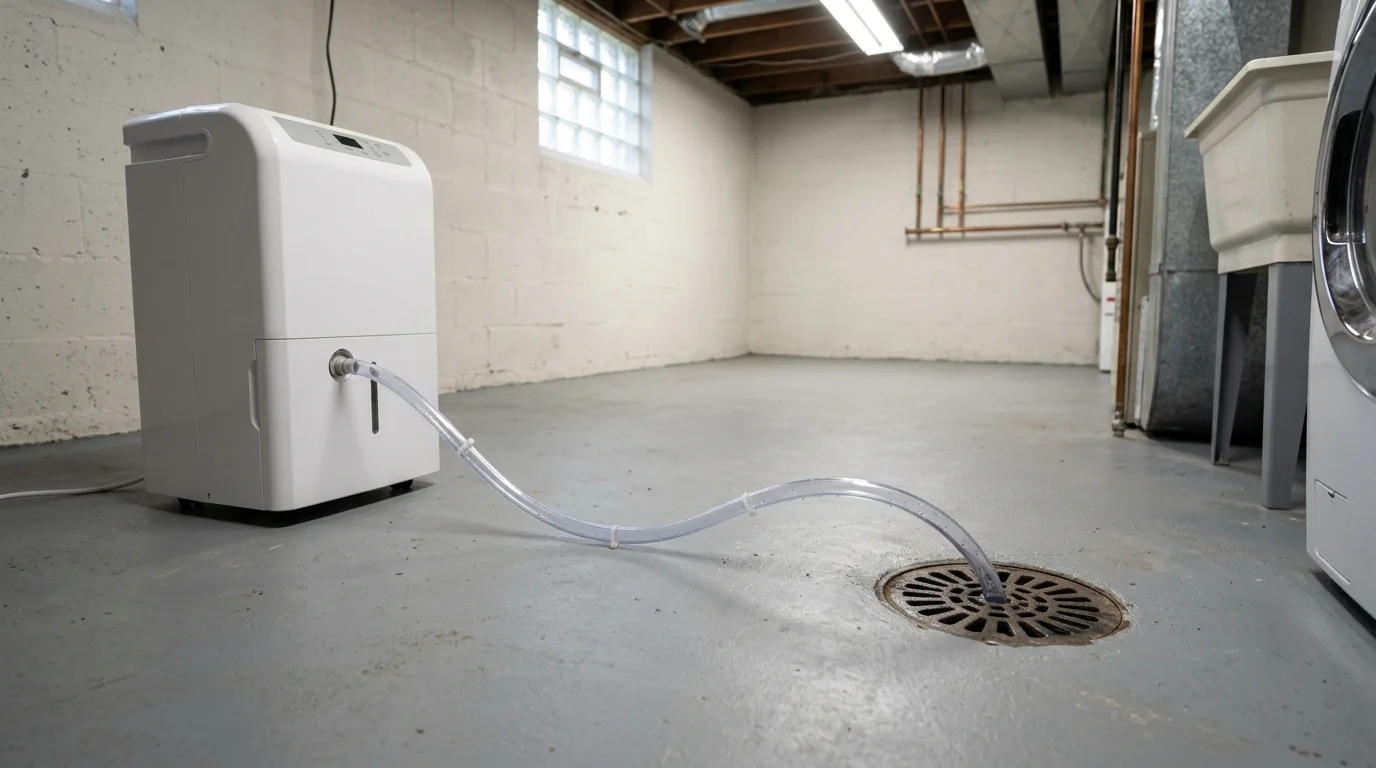
A whole-home dehumidifier removes moisture regardless of temperature. It runs on its own humidistat, drains continuously and moves far more water than a portable unit, without anyone emptying a bucket.
Compare
Portable or whole-home
| Portable | Whole-home | |
|---|---|---|
| Area covered | One room | Whole basement or whole house |
| Draining | Bucket or hose | Continuous to a drain |
| Capacity | About 35 to 50 pints per day | About 70 to over 100 pints per day |
| Noise | In the room | In the mechanical area |
Cost factors
What moves the price
Whole-home dehumidifier projects are priced by capacity and how the unit connects.
- Capacity. Higher pints-per-day units cost more.
- Ducted or basement-only. Ducted installs need supply and return connections.
- Drain. A floor drain nearby is simplest; a pump adds parts.
- Electrical. A dedicated outlet or circuit may be needed.
- Controls. Wall humidistats or thermostat control.
- Filter. Units with a filter need periodic replacement.
- Water entry fixes. Foundation or drainage problems are separate work.
Ducted dehumidifier setup
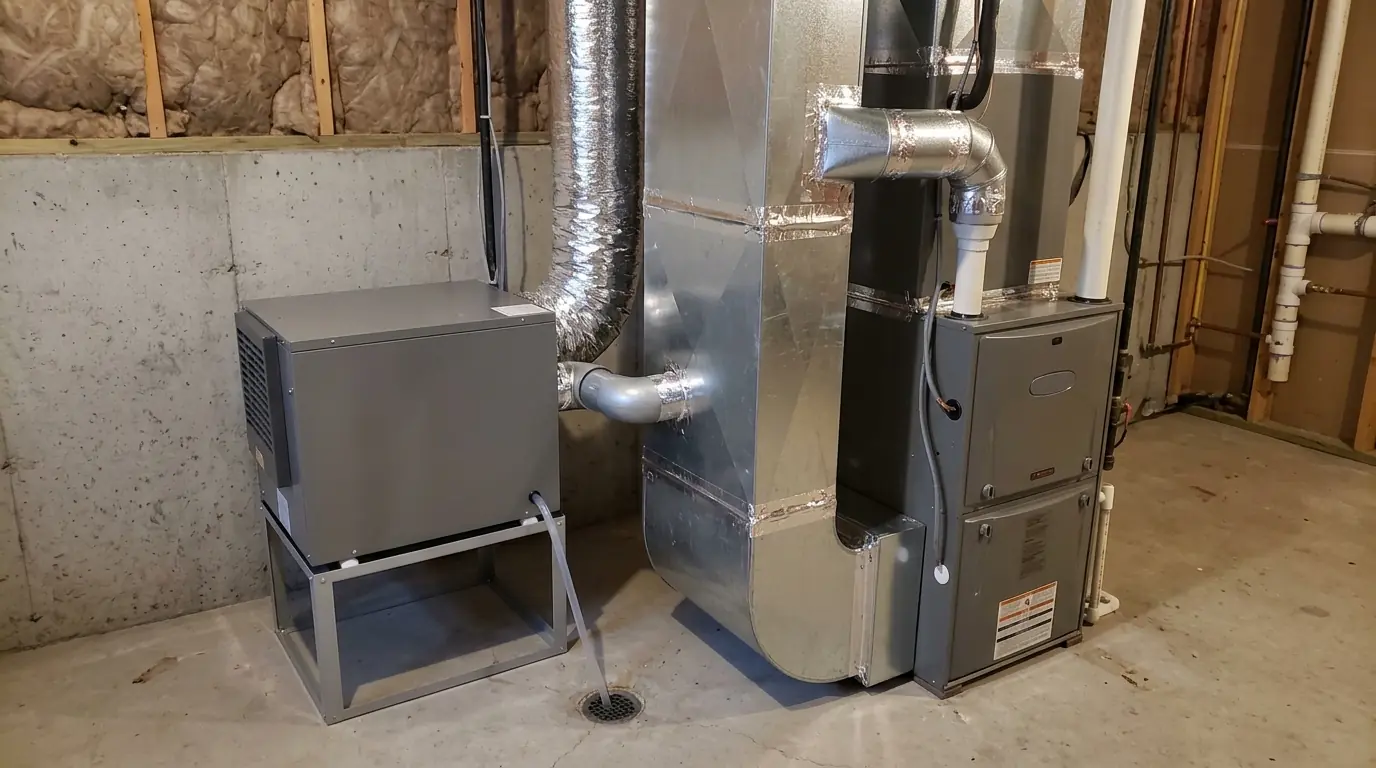
A ducted dehumidifier pulls air from the return side of the system, removes moisture, and sends it back into the supply so drier air reaches every ducted room. It can run with the furnace blower or on its own. We mount it near the furnace, connect it with supply and return ducts, run the condensate to a floor drain or pump, and wire its control. Set to about 50 percent in summer, it keeps the house comfortable at a higher thermostat setting, which the AC appreciates.
Basement dampness and musty air
Basements in the Twin Cities stay cool and damp through summer, and that dampness drives the musty smell most homeowners notice first. A basement-mounted whole-home dehumidifier, sometimes with a small duct to distribute dry air, targets the space where the moisture is. We check for water entry first, because a dehumidifier cannot keep up with a leaking foundation or a missing downspout extension, then size the unit to the basement's area and how damp it actually runs in July.
Sizing by pints per day
Dehumidifiers are rated by how many pints of water they remove per day. A portable unit might remove 35 to 50 pints; whole-home units commonly range from about 70 to well over 100. We size by the square footage served, how damp the space is, and whether the unit serves the whole house through the ducts or only the basement. An undersized unit runs constantly without reaching the target; an oversized one short cycles. We set the target and check the drain before leaving.
What we see on calls around Minneapolis
Minneapolis summers are humid enough to matter: June at MSP averages a dew point around 56 degrees with highs near 79, and July highs climb toward 84. On the many June days that are muggy but not hot, the air conditioner barely runs, so it removes little moisture. That is exactly when basements here start to smell, and why a dehumidifier running on its own control does more than turning the AC colder.
Step by step
How a dehumidifier install runs
- 1
Measure the problem
Humidity readings taken; water entry checked.
- 2
Size and place
Capacity chosen and location near the furnace or in the basement.
- 3
Install and duct
Unit mounted and connected to ducts where used.
- 4
Drain and power
Condensate run to a drain or pump; control wired.
- 5
Set and verify
Target humidity set and the unit run until draining.
Brands we service and install
Most of the air conditioners we service are Carrier, Lennox, Trane and Goodman, plus Daikin and Rheem condensers.
Timing
How long installation takes
A basement-mounted unit with a nearby floor drain is typically installed in half a day. A ducted whole-house unit with supply and return connections and a condensate pump usually takes most of a day. The house can be used normally throughout.
Questions we get on the phone
Whole-home dehumidifier installation questions from Minneapolis homeowners
Around 45 to 50 percent keeps it comfortable and discourages mold.
Only when it runs. On humid mild days it barely runs, which is why the house stays damp.
To a floor drain or a small pump that sends it to a drain.
It controls humidity. Water coming through the foundation needs to be fixed separately.
Usually yes. Winter air here is dry, and many homes need a humidifier instead.
More from this category
Related work we handle
Whole-Home Humidifier Installation
Bypass vs Fan-Powered Humidifiers and more.
Details on steam humidifiers for larger homesFrom our guides: Setting a humidifier through a Minneapolis winter.
Dry out the basement for good
Call to have humidity measured and a whole-home dehumidifier sized for your house.