Answering 24/7
Hydronic snowmelt for Minneapolis driveways and walks
A snowmelt system runs warm fluid through tubing under the driveway, walk or steps, so snow melts as it falls and ice never forms. It is planned at the same time as the new pavement, and it works best tied to a properly sized boiler.
- 24/7 calls answered
- Minneapolis service office
- Glycol loops freeze-protected
- Auto sensor snow-activated
Quick answer
A hydronic snowmelt system in Minneapolis circulates heated glycol through PEX tubing under a driveway, walk or steps, controlled by a snow and ice sensor. WarmlyYours puts a standard two-car driveway at $12,000 to $15,000 turnkey nationally in 2026, and the cheapest time to add one is during a pavement replacement.
Boilers & Water Heaters
What a snowmelt system involves
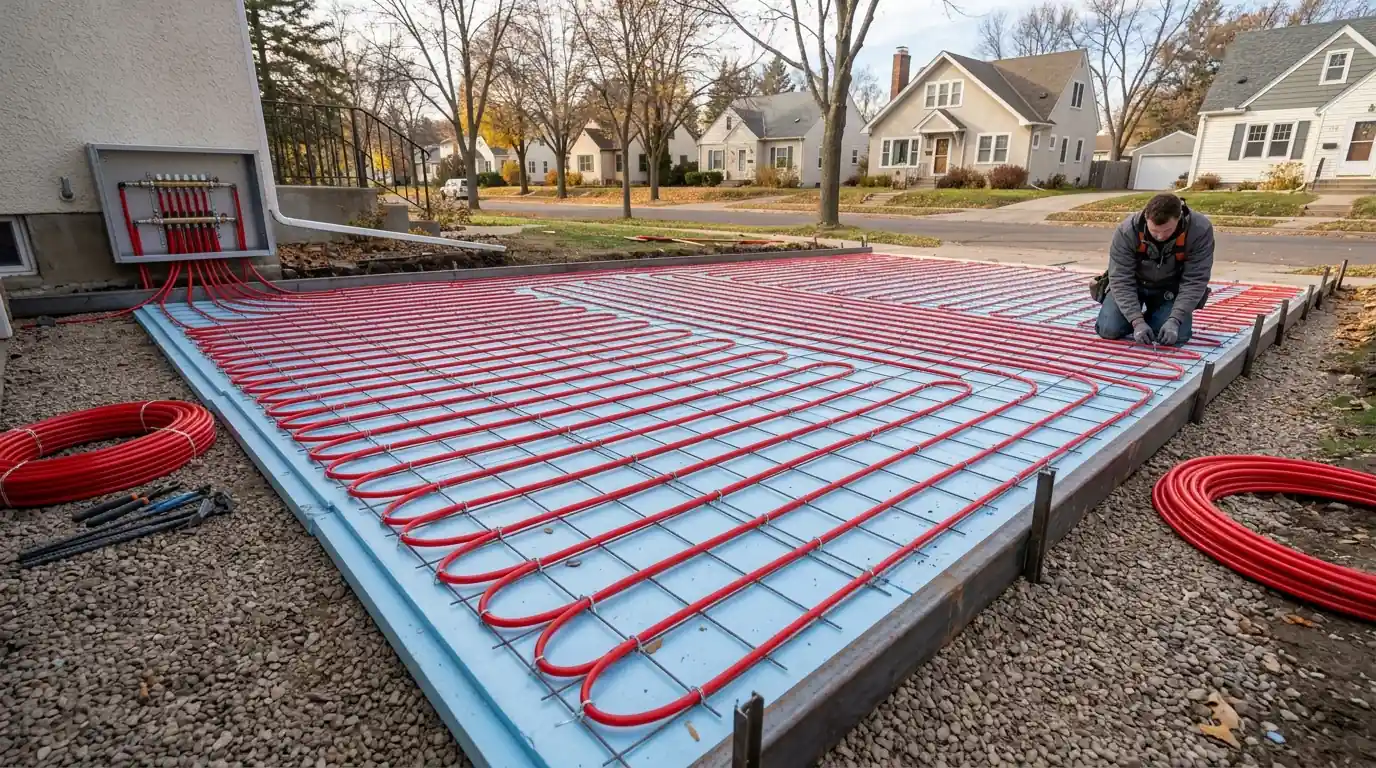
Snowmelt is a heating system for the outdoors. Loops of PEX tubing are laid in the base under concrete, asphalt or pavers, filled with a glycol mix that will not freeze, and fed by a boiler through a heat exchanger or mixing setup. A sensor in the pavement or on the roof turns it on when it detects snow or ice and a low surface temperature.
Because the tubing goes under the surface, snowmelt is nearly always planned with a pavement replacement. We work with your concrete or paving contractor on the layout and schedule, then handle the boiler, piping, pumps and controls.
Compare
Hydronic or electric snowmelt
| Hydronic | Electric cable or mat | |
|---|---|---|
| Best for | Large driveways, boiler homes | Small walks and steps |
| Operating cost | Lower with a gas boiler | Higher on electric rates |
| Upfront cost | Higher | Lower for small areas |
| Heat source | Boiler and glycol loop | Dedicated electric circuit |
Cost factors
What moves the price
WarmlyYours puts a standard two-car driveway at $12,000 to $15,000 turnkey nationally in 2026, with elements and controls alone at $2,500 to $8,000. Here is what moves a hydronic project.
- Area and coverage. Full coverage costs more than tire tracks or walks only.
- Surface type. Concrete, asphalt and pavers each install differently.
- Heat source. A dedicated boiler costs more than tapping spare capacity on an existing one.
- Distance to the mechanical room. Longer supply and return runs add trenching and pipe.
- Controls. Snow and ice sensors and idle-mode controls add cost but save operating money.
- Pavement work. Demolition and new pavement are usually by your paving contractor.
- Permits. Boiler and gas work need permits and inspection.
Hydronic driveway snowmelt
For a driveway, we lay out loops at a spacing matched to the heat output needed for Minnesota snowfall rates, over insulation where the base allows, and tie them to a manifold in the garage or basement. Full coverage melts the whole surface; tire tracks cover only the wheel paths and cost less. Steep driveways and north-facing slopes get priority because that is where ice is most dangerous. The loops are pressure tested before and during the pour so nothing is buried with a leak.
Sidewalks, steps and patios
Front walks and steps are often the most valuable place for snowmelt, because they are where people slip. Smaller areas can run from a boiler that already heats the house if it has capacity, with a heat exchanger to keep glycol separate from the heating water. Steps need tubing formed into each tread before the concrete is poured. We coordinate with the concrete crew so the forms, tubing and pour happen in the right order and the steps come out safe and warm.
Boiler and controls for snowmelt
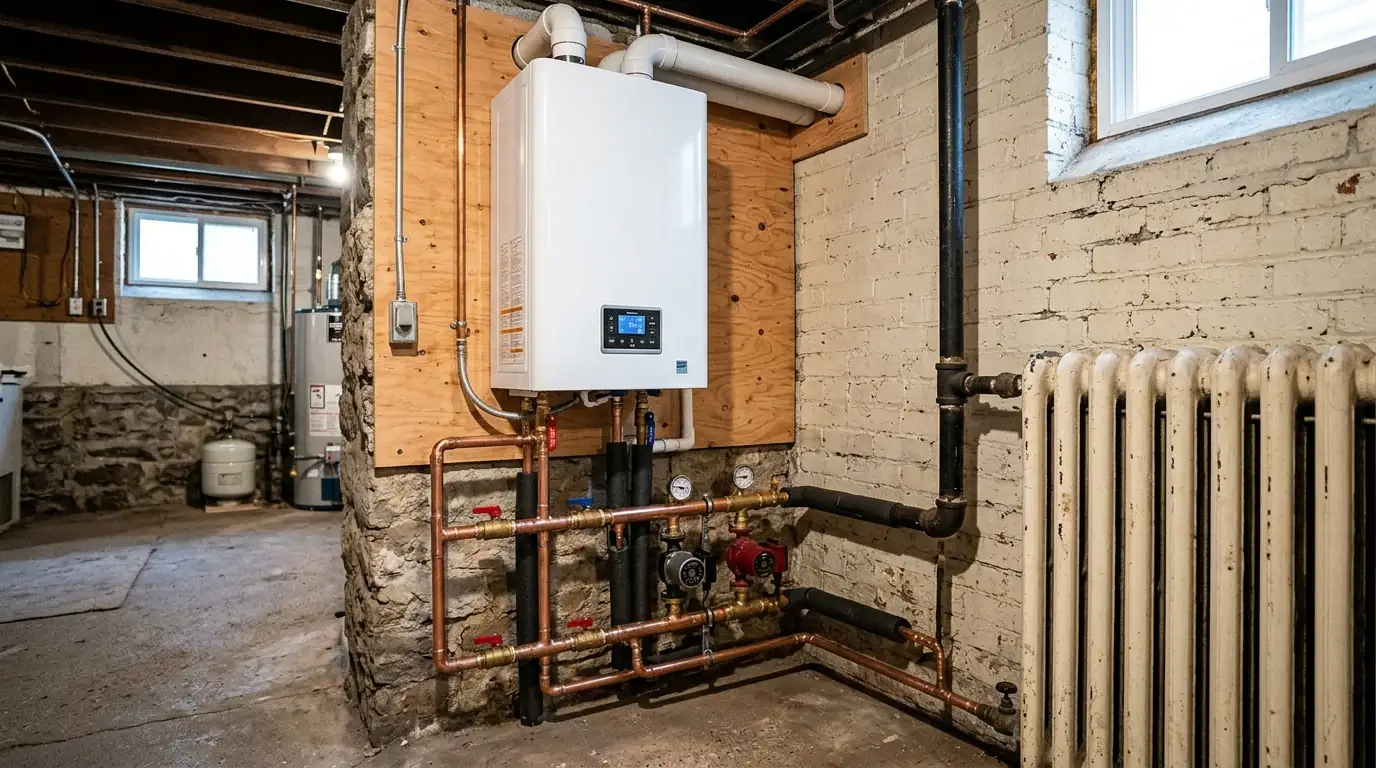
A snowmelt system needs a heat source sized for a large load that runs only in storms. That may be a dedicated condensing boiler, or spare capacity on an existing boiler with a heat exchanger and priority controls so the house still gets heat. The controls matter as much as the boiler: a snow and ice sensor, slab temperature limits, and an idle mode that keeps the slab just warm enough to respond quickly without running all winter. Good controls are what keep operating costs reasonable.
How Minneapolis homes shape this job
Minneapolis averages about 54 inches of snow a year and can have as many as 69 days when the temperature never climbs above freezing, so ice that forms on a shaded walk can stay there for weeks. That is why we steer snowmelt toward the places that matter most for safety, such as steep driveways, front steps and north-facing walks, rather than heating every square foot of pavement on the lot.
Step by step
How a snowmelt project runs
- 1
Plan with your paving contractor
Area, coverage and schedule set before demolition.
- 2
Size the heat source
Heat load calculated and boiler or heat exchanger chosen.
- 3
Lay and test tubing
Loops installed, pressure tested and kept under pressure during the pour.
- 4
Pipe the mechanical room
Manifold, pumps, glycol fill and heat exchanger installed.
- 5
Commission the controls
Sensor, slab limits and idle mode set and tested.
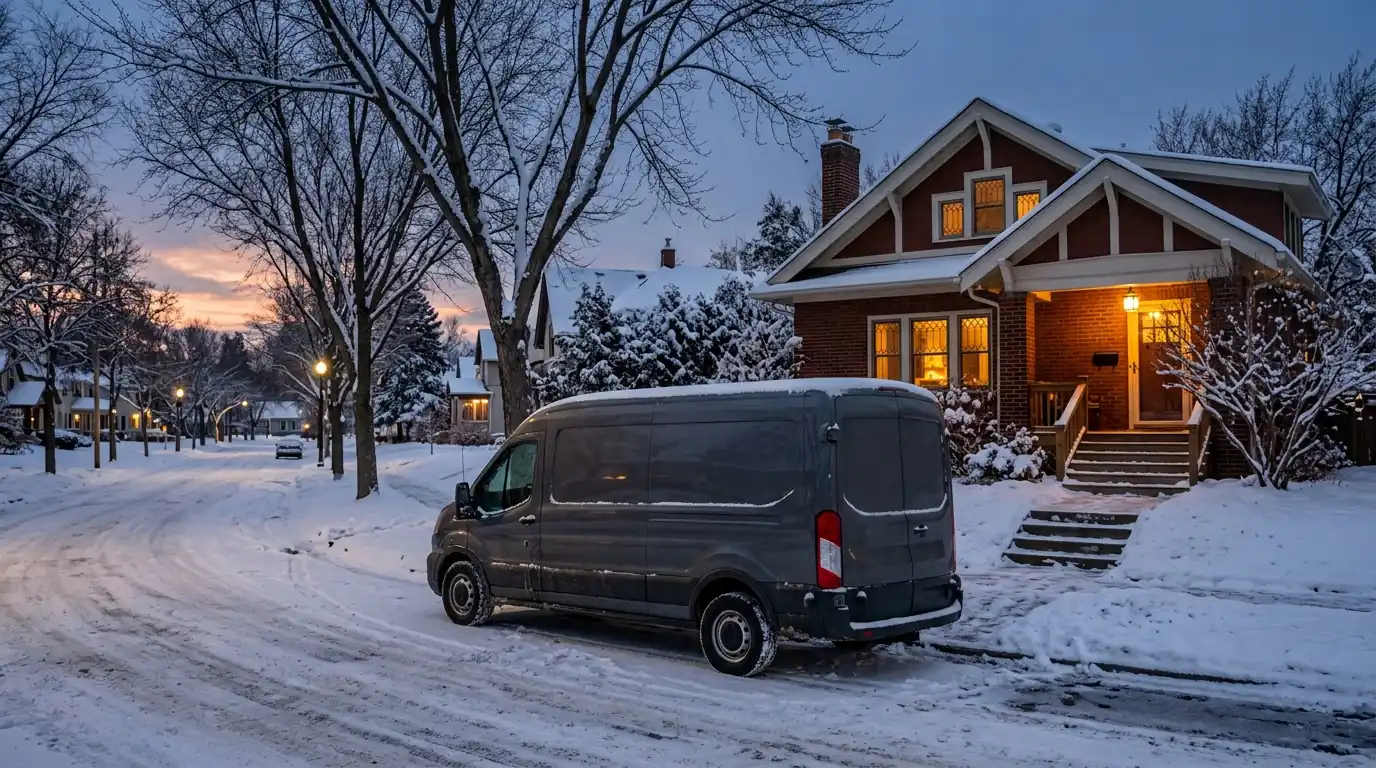
Replacing a driveway or front steps?
Call before the old pavement comes out. That is when snowmelt costs the least to add.
Timing
How long it takes
Tubing for a driveway is laid in a day or two, timed between the base prep and the pour. The boiler, piping and controls usually take two to four days in the mechanical room. The slab needs to cure before the system is brought up to temperature gradually.
Questions we get on the phone
Snowmelt system installation questions from Minneapolis homeowners
Not with hydronic tubing, which goes under the surface. It is planned with a replacement.
Sometimes, if it has spare capacity, with a heat exchanger and priority controls.
It depends on area, controls and fuel. Good sensors and idle settings keep it reasonable.
Steps are formed with tubing in each tread before the pour.
In heavy storms the system may take time to catch up, but it keeps surfaces clear of ice.
More from this category
Related work we handle
Radiant Floor Heating
In-Floor Heat for a Basement Finish and more.
Adding a Radiant Zone to an Existing BoilerPlan snowmelt with your new pavement
Call before demolition starts, and we will lay out the loops and size the heat source.