Answering 24/7
Dryer vent cleaning and rerouting in Minneapolis
A clogged dryer vent wastes energy, wears out the dryer and is a fire risk. We clean the full run from the dryer to the outside hood, and when the run itself is the problem, we reroute it.
- 24/7 calls answered
- Minneapolis service office
- Dryer to hood full run cleaned
- Rigid metal replacement duct
Quick answer
Dryer vent cleaning in a Minneapolis home clears lint from the whole run with rotary brushes and a vacuum, from the dryer connection to the exterior hood. If clothes take more than one cycle, the dryer is hot to the touch, or the outside flap barely opens, the vent is likely restricted.
Air Quality & Ducts
Why dryer vents clog
Every load leaves a little lint that gets past the screen, and it collects wherever the air slows down: at bends, at sagging flexible duct, and at the outside hood. Long runs and crushed foil duct behind the dryer make it worse.
Cleaning restores airflow. If the run is too long, full of bends, or made of the wrong material, cleaning only buys time, and a better route is the real fix.
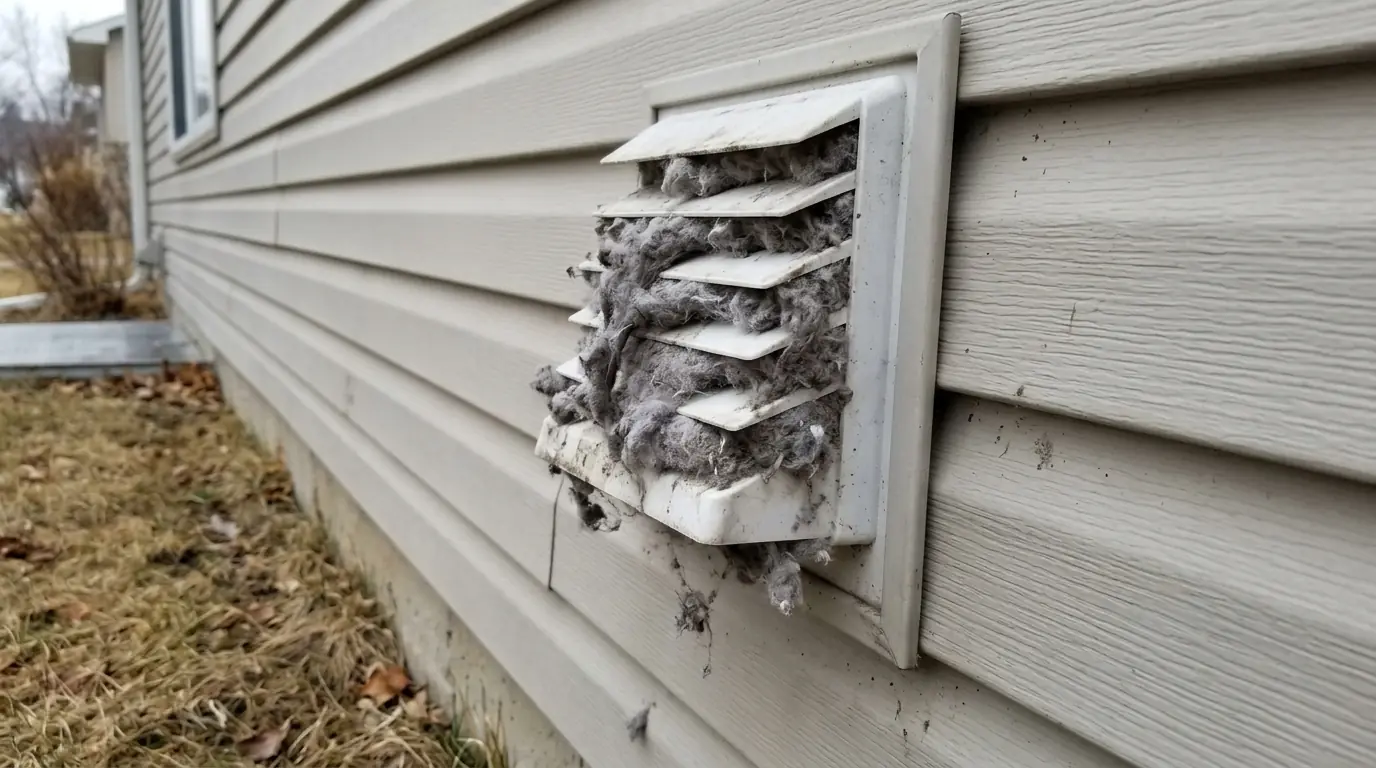
Lint blockage and long runs
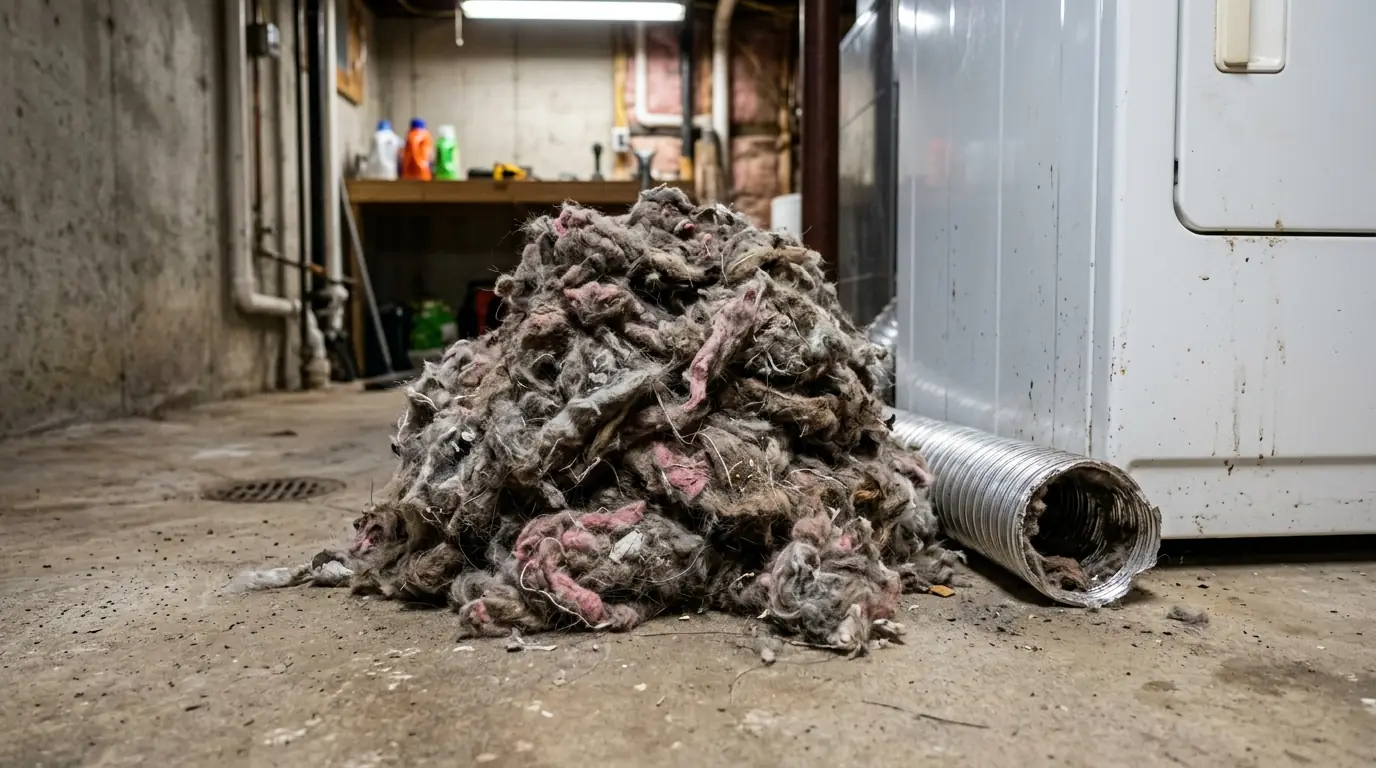
Long dryer vent runs, common where laundry sits in the middle of a basement, collect lint along their length and especially at each elbow. We disconnect the dryer, run a rotary brush through the whole duct from inside and out, vacuum the loosened lint, clean the transition behind the dryer and the lint trap housing, and clear the exterior hood and its flap. Then we measure airflow at the hood with the dryer running to confirm the vent is actually clear.
Rerouting a vent that ends in the attic
Some dryer vents were run up into an attic, or into a soffit, where the hot wet air and lint pile onto insulation instead of leaving the house. In winter that moisture frosts on the roof deck, and the lint is a fire hazard next to the framing. We reroute the vent to a proper wall or roof termination with a damper, use smooth rigid metal duct with sealed joints, and remove the lint that has already collected. It is one of the most important fixes we make in older homes.
Booster fan setup
When a laundry room is far from any outside wall and the run is longer than the dryer maker allows, a dryer booster fan keeps air moving. It mounts inline, senses when the dryer runs, and adds the push the dryer's own blower cannot. We install it where it can be reached for cleaning, wire it to its pressure switch, and add a lint trap access so it does not become a new clog point. Rerouting to a shorter path is always the first option we look at.
Local conditions that change the fix
The median single-family house in Minneapolis was built around 1928, long before laundry moved upstairs, so most dryers here sit in basements and vent through long runs to a rim joist or window well. Those long basement runs are where we pull the most lint, and a hood tucked into a window well is easy to forget until it clogs.
Step by step
How a dryer vent visit runs
- 1
Pull the dryer
Dryer moved and the transition duct disconnected.
- 2
Brush the run
Rotary brush run through the full vent from both ends.
- 3
Vacuum and clear
Lint vacuumed, hood and flap cleared.
- 4
Fix the transition
Foil or vinyl transition replaced with approved duct.
- 5
Measure airflow
Airflow checked at the hood with the dryer running.
Cost factors
What moves the price
Dryer vent work is priced by the run and what it needs.
- Run length. Long basement runs take longer to brush and vacuum.
- Number of bends. Each elbow collects lint and slows cleaning.
- Roof versus wall termination. Roof vents need roof access.
- Duct replacement. Replacing foil flex with rigid metal adds material.
- Rerouting. A new wall penetration and run costs more than cleaning.
- Booster fan. Adds equipment and wiring.
- Combined visit. Doing it with duct cleaning saves a trip.
Compare
What you can do yourself
| Homeowner | Our technician | |
|---|---|---|
| Clean the lint screen every load | Easy and important | Housing cleaned at service |
| Clear the outside flap | Safe if reachable | Hood inspected and replaced if damaged |
| Brush a short straight run | Possible with a kit | Full run brushed and measured |
| Rerouting or roof vents | Not a DIY job | Rerouted with rigid metal |
Questions we get on the phone
Dryer vent cleaning questions from Minneapolis homeowners
Once a year for most households, more often for large families or long runs.
Only for a short connection where allowed. Long runs should be smooth rigid metal.
No. It must terminate outside, with a damper.
A restricted vent is the most common cause.
Yes, when the roof can be accessed safely.
More from this category
Related work we handle
Clear the vent before it becomes a hazard
Call to book a dryer vent cleaning, and we will check the whole run to the outside.