Single and multi-zone
Mini-split repair for Minneapolis homes
A ductless system that heats a converted attic or cools a boiler-heated house usually has no backup. When the head stops blowing or starts dripping, we read the fault code, test the boards and sensors, and get that room comfortable again.
- 24/7 calls answered
- Minneapolis service office
- Error codes read on site
- Heat and cool both modes
Quick answer
Mini-split repair in Minneapolis usually starts with the blinking error code on the indoor head, which points to a sensor, board, fan motor, refrigerant or drainage fault. Published 2026 service-call rates here run $115 to $210, and most sensor, drain and capacitor problems are fixed on the first visit.
Step by step
How a mini-split repair visit runs
- 1
Read the code
We note the error code on the head or outdoor unit and the symptoms.
- 2
Check airflow and drainage
Filters, coil, blower and condensate path are inspected first.
- 3
Test electrical and sensors
Sensors, wiring and boards named by the code are measured.
- 4
Repair and verify
The failed part is replaced and the system run in heating and cooling.
- 5
Recommend maintenance
We tell you how often that head needs cleaning in your home.
Warning signs
Signs it is time to call
- Error light blinking on the indoor head
- Head blowing air but room not cooling or heating
- Water dripping from the head or down the wall
- Musty smell when the system starts
- Outdoor unit iced solid and not clearing
- Clicking or grinding from the head's fan
Heat Pumps & Ductless
What usually goes wrong with a ductless system
Mini-splits are reliable, but they depend on a handful of small parts: temperature sensors on the coil and in the room, a control board in each head and in the outdoor unit, a fan motor, a condensate path, and an inverter compressor. When one fails, the system shows an error code instead of simply stopping.
Dirty filters and coils cause more service calls than any failed part. A head that has not been cleaned in a few years can lose much of its airflow, freeze in cooling mode and drip water down the wall. That is the first thing we check.
Wall unit not cooling
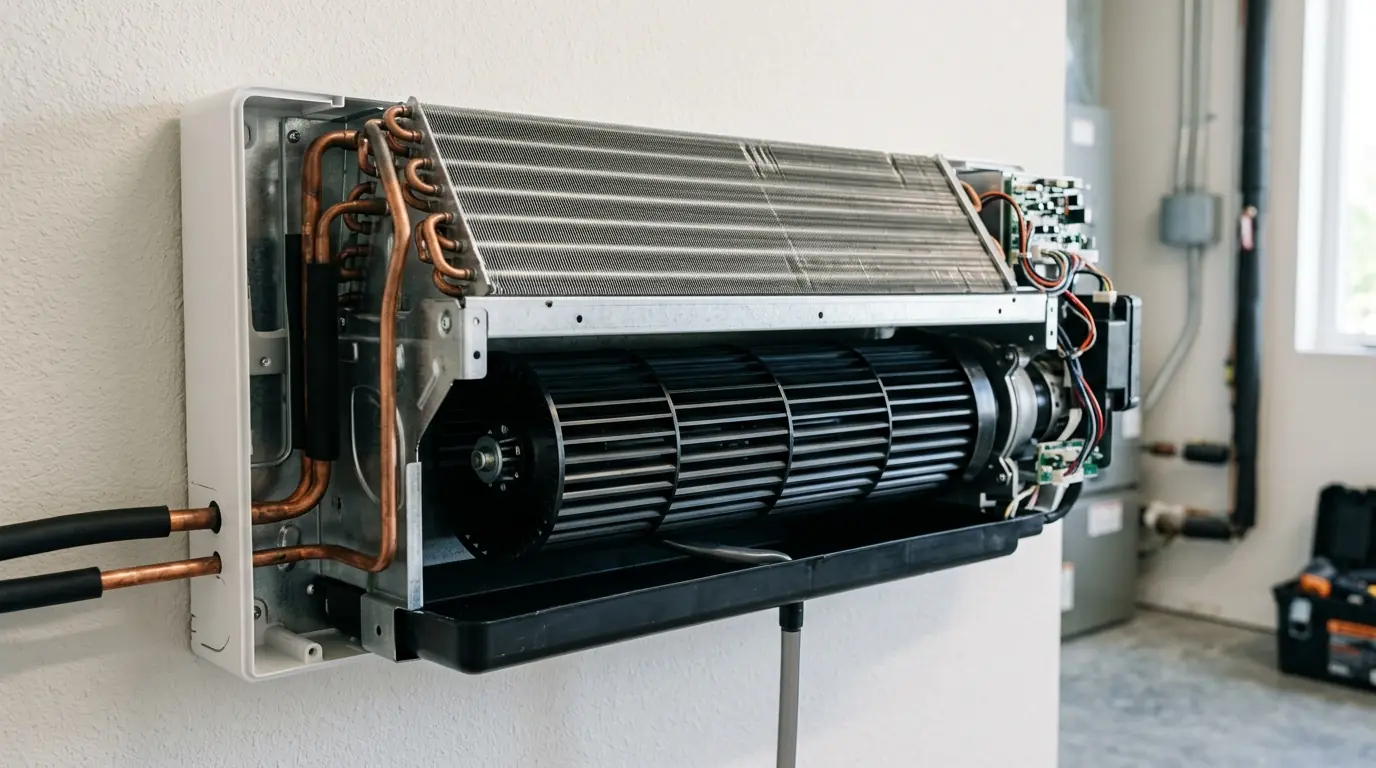
When a head runs but the room stays warm, we start with airflow: filters, the coil fins behind them and the blower wheel, which collects a sticky layer in homes with pets or cooking. Then we check the outdoor unit for a failed fan motor or capacitor, a blocked coil, or a low refrigerant charge that shows up as frost on the small line at the head. If the charge is low there is a leak, and we find it before adding refrigerant rather than topping it up and coming back next month.
Error codes and board faults
Each manufacturer uses its own codes, but most point to the same families of problems: a sensor reading out of range, a communication fault between the head and the outdoor unit, a high-pressure or overheating trip, or an inverter board fault. We read the code, test the sensor or wiring it names with a meter, and replace the part that actually failed. Communication faults are often a loose or corroded connection at the outdoor terminal block, which costs far less than the board it looks like.
Condensate pump failure
Heads mounted on inside walls often drain through a small condensate pump hidden in a line cover or behind the head. When that pump fails or its tubing clogs with algae, water backs up into the head and runs down the wall. We clear the drain pan and line, test or replace the pump, and wire its safety switch so the system shuts off instead of overflowing next time. Heads that drain by gravity get the line flushed and the slope checked.
Local conditions that change the fix
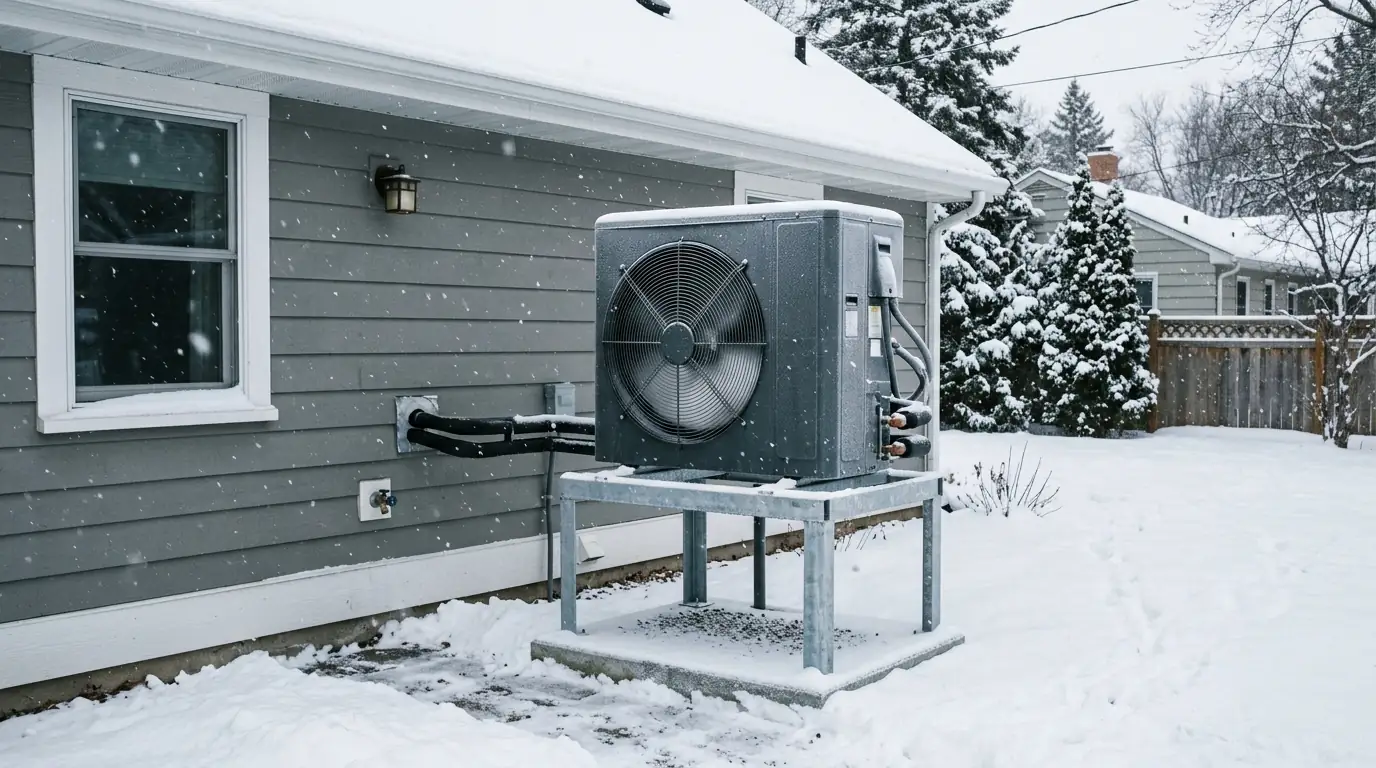
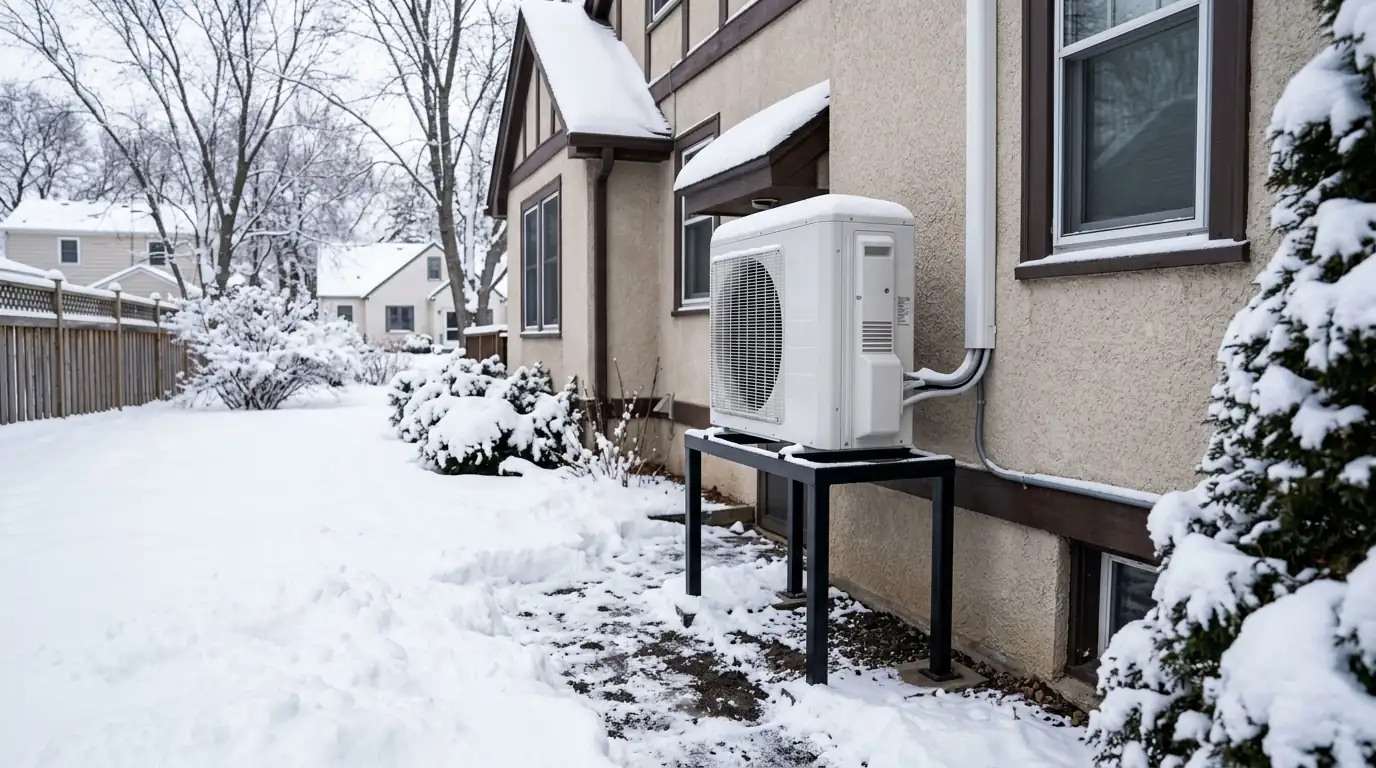
January in Minneapolis averages a low near 9 degrees, and the outdoor unit of a heat-pump mini-split spends much of that month in defrost, shedding ice off its coil. January is also the snowiest month, averaging about 12 inches. Units set on the ground or on a low bracket get buried by drifts and roof slide, then trip on defrost or airflow faults. Many of our winter repairs finish by raising the unit on a stand.
Brands we service and install
Cold-climate work is mostly Mitsubishi Electric, Daikin and Bosch, alongside Carrier and Lennox ducted heat pumps.
Questions we get on the phone
Ductless mini-split repair questions from Minneapolis homeowners
The blink pattern is an error code. It points to a sensor, communication, pressure or drainage fault. Tell us the pattern when you call.
Every heat pump loses capacity as it gets colder, and the unit defrosts more often. A unit buried in snow or undersized for the room struggles most.
Filters monthly in heavy use, and a professional coil and blower cleaning every year or two.
We work on Mitsubishi Electric, Daikin, Carrier, Lennox, Bosch and most other common makes.
Often yes for sensors, drains and fans. A failed compressor on a ten-plus year old unit usually points to replacement.
Cost factors
What moves the price
Published 2026 Minneapolis service-call rates run about $115 to $210. What happens after the diagnosis depends on the fault.
- Cleaning versus parts. A deep coil and blower cleaning often fixes weak airflow without any part.
- Sensor or board. A thermistor is inexpensive; an inverter board is not.
- Refrigerant leaks. Finding and repairing the leak comes before recharging.
- Number of heads. Multi-zone systems take longer to diagnose.
- Parts availability. Some brand-specific boards have to be ordered.
- Mounting fixes. Raising an outdoor unit or rerouting a drain adds labor.
- Time of the call. After-hours visits may cost more.
More from this category
Related work we handle
Mini-split not keeping up?
Call with the error code and the make, and we will bring the likely parts.