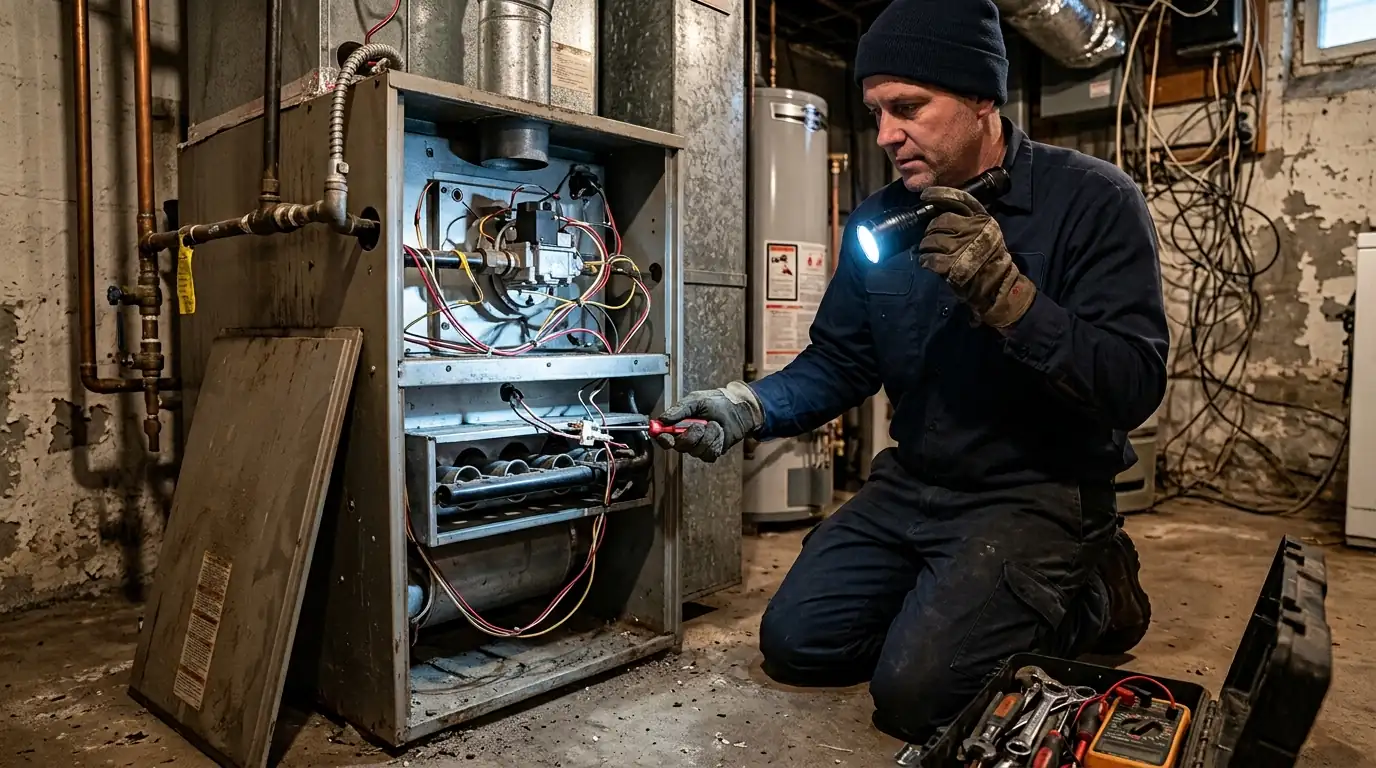
Answering 24/7
Gas line installation in Minneapolis homes
A gas line has to be sized for every appliance that might run at once, run in approved pipe, supported properly and pressure tested before anything is connected. We handle new lines for ranges, dryers, grills, fire pits and heating equipment.
- 24/7 calls answered
- Minneapolis service office
- Pressure tested every line
- Sized for the whole load
Quick answer
Gas line installation in Minneapolis starts with sizing the pipe for the total load of every gas appliance, then running black iron or CSST to the new appliance with a shutoff valve and sediment trap, and pressure testing before connection. Minneapolis HVAC permit fees run $84.20 to $216.60 depending on the job.
Heating
Why sizing comes before pipe
Adding a gas appliance changes the whole system, not just the new branch. A half-inch line that fed a furnace and a water heater may not carry a new range, a tankless water heater and a grill running together on a holiday. Undersized pipe starves appliances: burners that will not light properly, a furnace that locks out when the range is on.
We start by adding up every appliance's input, measuring the pipe lengths from the meter, and sizing each section. Then we run the line, test it, and connect the appliance.
Cost factors
What moves the price
Gas line work is priced by length, route and what the system needs upstream.
- Run length. Longer runs cost more in pipe and labor.
- Pipe material. Black iron, CSST and outdoor polyethylene differ.
- Route. Finished ceilings and walls take longer than open basements.
- Outdoor trenching. Underground runs add digging and backfill.
- Upsizing. Undersized upstream sections may need replacing.
- Valves and traps. Every appliance gets a shutoff and sediment trap.
- Permit and inspection. Required for new gas piping.
Gas line for a range or dryer
Switching from electric to a gas range or dryer is one of the most common gas line jobs. We tap the existing system at a point sized for the added load, run the branch through the basement ceiling or wall to the appliance location, and install an accessible shutoff valve and a sediment trap. The line is pressure tested before connecting a flexible appliance connector. For a dryer we also check the vent run, since a gas dryer produces combustion exhaust as well as lint.
Outdoor grill and fire pit lines
A natural gas grill or fire pit means no more propane tanks, but the line has to leave the house safely. We run the branch to an exterior wall, bring it outside with a shutoff where you can reach it, and continue underground in approved polyethylene pipe with tracer wire, or above ground where that works, to a quick-disconnect or fixed connection at the appliance. The route avoids decks and future digging, and the buried depth is kept below frost damage.
Upsizing a gas line for new equipment
New heating equipment often needs more gas than the old line can deliver. A tankless water heater, a larger furnace, a garage heater or a pool heater can push an older system past its capacity. We recalculate the whole system, replace the undersized sections from the meter outward where needed, and verify pressure at the appliances with everything running. Where the load exceeds what the meter can deliver, we coordinate with the gas utility on a meter or regulator upgrade before connecting the new equipment.
How Minneapolis homes shape this job
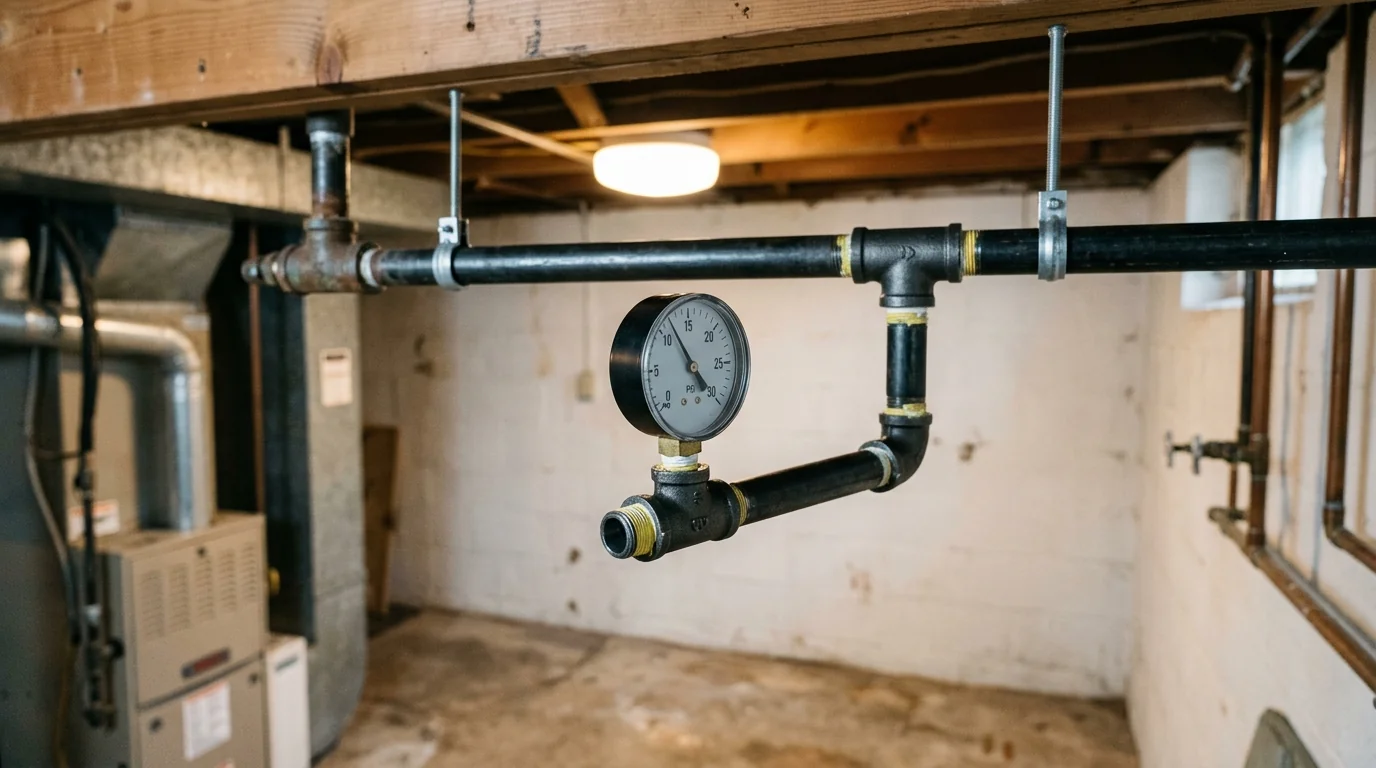
Minneapolis HVAC permit fees run from $84.20 to $216.60 depending on the job, and new gas piping is inspected before it is put into service. We pull the permit and leave the new line pressurized on a gauge for the inspector, so the test result is visible rather than taken on trust. Only after it passes do we connect the appliance and light it.
What is included
What a gas line install includes
- Total load calculation
- Pipe sizing from the meter
- Approved pipe and fittings
- Support and protection along the run
- Accessible shutoff valve
- Sediment trap at the appliance
- Pressure test before connection
- Permit and inspection
- Leak check and appliance start-up
Step by step
How a gas line job runs
- 1
Add up the load
Every appliance's input and pipe lengths measured.
- 2
Size and plan the route
Pipe sizes and route chosen.
- 3
Run the line
Pipe installed, supported, with shutoff and sediment trap.
- 4
Pressure test and inspect
Line tested and inspected before gas is turned on.
- 5
Connect and light
Appliance connected, leak-checked and lit.
Timing
How long it takes
A straightforward indoor line for a range or dryer is usually done in a day, including the pressure test. Outdoor grill and fire pit lines with trenching take a day or two. The inspection is scheduled after the line is tested.
Compare
Why gas piping is not a DIY job
| Homeowner | Our technician | |
|---|---|---|
| Sizing the pipe | Easy to undersize | Calculated for the whole house |
| Joints and connections | Leaks are invisible and dangerous | Pressure tested |
| Outdoor burial | Depth and tracer rules | Buried and marked correctly |
| Permit | Often skipped | Pulled and inspected |
If you smell gas at any time, leave the house and call the gas utility from outside.
Questions we get on the phone
Gas line installation questions from Minneapolis homeowners
It depends on the total load and pipe sizes. We calculate before adding anything.
Yes, new gas piping requires a permit and inspection.
Yes, with an outdoor shutoff and a buried or surface run as the site allows.
A short capped drop at the appliance that catches debris before it reaches the gas valve.
Leave the house and call the gas utility, then call us.
More from this category
Related work we handle
Tankless Water Heater Installation
Gas Line and Venting Upgrades and more.
Tankless Water Heater InstallationRun the gas line right the first time
Call with the appliance you are adding, and we will size and price the line.