Answering 24/7
Annual boiler service for Minneapolis homes
A boiler that gets serviced every fall can run for decades. We clean and test the burner, check pressure and the expansion tank, test the safeties, and bleed and balance the radiators so every room heats evenly.
- 24/7 calls answered
- Minneapolis service office
- Every fall service timing
- Radiators bled and balanced
Quick answer
Annual boiler maintenance in Minneapolis covers burner cleaning and combustion testing, a pressure and expansion tank check, relief valve and low-water cutoff testing, and bleeding or venting radiators. Boilers here often run 20 to 30 years, and fall service is what keeps them there.
Boilers & Water Heaters
What a boiler needs every year
A boiler has fewer moving parts than a furnace, which is why it lasts longer, but the parts it has matter. Burners collect soot and dust, expansion tanks lose their air charge, relief valves get lazy, and steam boilers build sediment that affects the water level reading.
An annual visit checks all of it and catches problems before they become a no-heat call in January. It also brings the radiators back into balance, because air collects in a hot water system every summer when it sits idle.
What is included
What boiler service includes
- Burner and pilot cleaning
- Heat exchanger inspection
- Combustion analysis and CO test
- Flue and draft check
- Expansion tank air charge check
- Relief valve and fill valve test
- Low-water cutoff blowdown on steam
- Radiators bled or steam vents checked
- Written service report
Annual boiler service
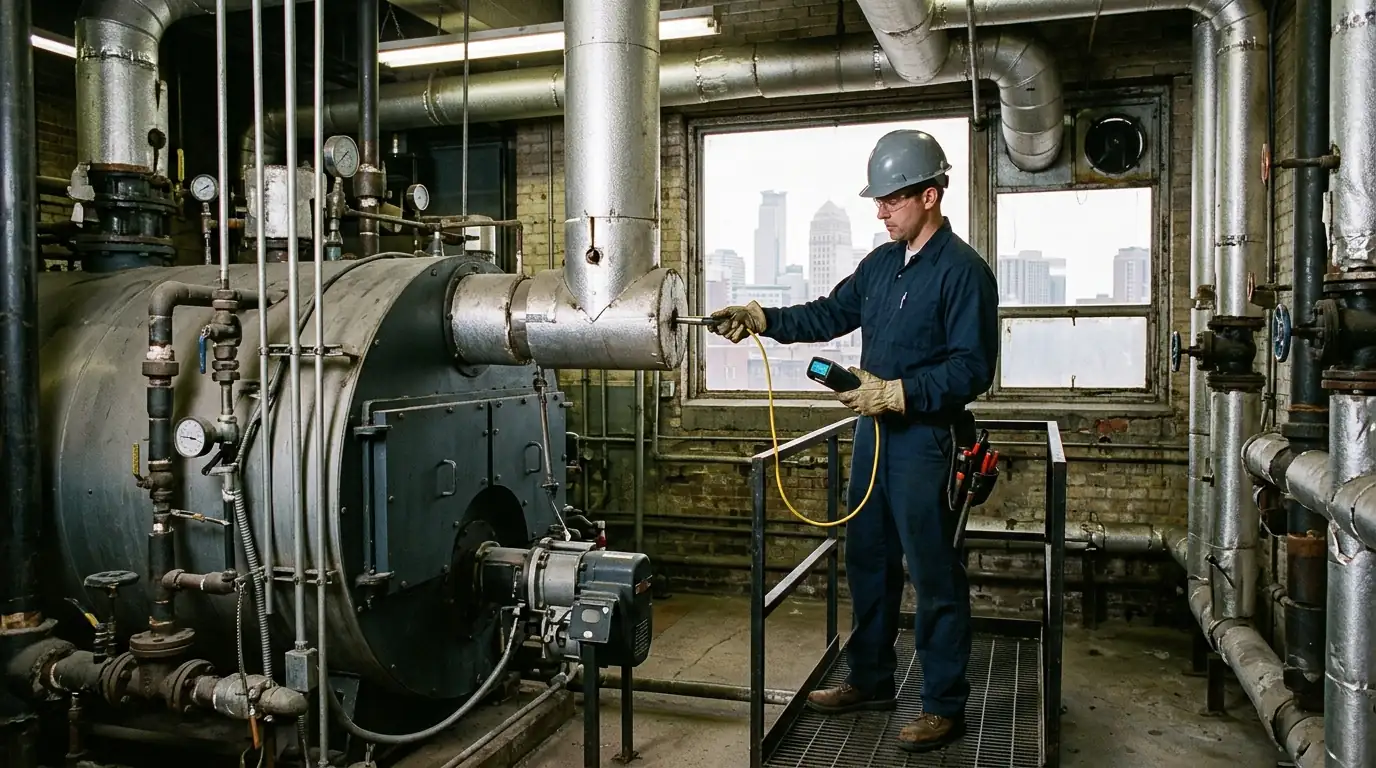
The annual service starts with the burner: we clean the burners and pilot, inspect the heat exchanger for cracks or leaks, and run a combustion analysis to check efficiency and carbon monoxide. We test the ignition and flame safeguard, check the flue and draft, and inspect the circulator or, on steam boilers, the low-water cutoff and pressure control. Condensing boilers get their condensate trap and neutralizer cleaned. Everything we find goes into a short written report, with anything that needs attention priced before we touch it.
Expansion tank and pressure check
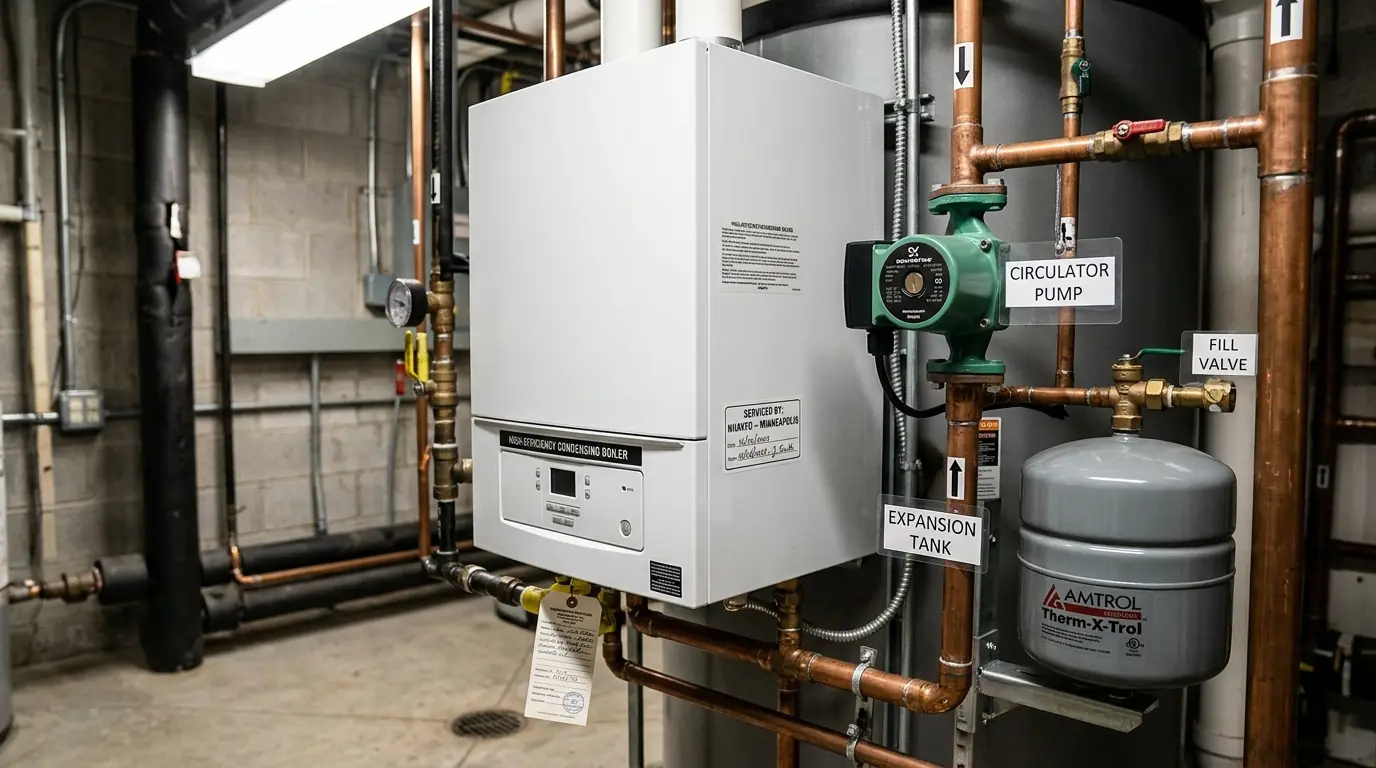
On a hot water system the expansion tank absorbs the water's expansion as it heats. When its air charge leaks down, pressure climbs every time the boiler fires and the relief valve starts to drip. We check the tank's air charge, recharge it or replace a waterlogged tank, confirm the fill valve holds the right cold pressure, and test the relief valve. On steam boilers we check the pressure control setting, which should be very low, and blow down the low-water cutoff.
Radiator bleeding and balancing
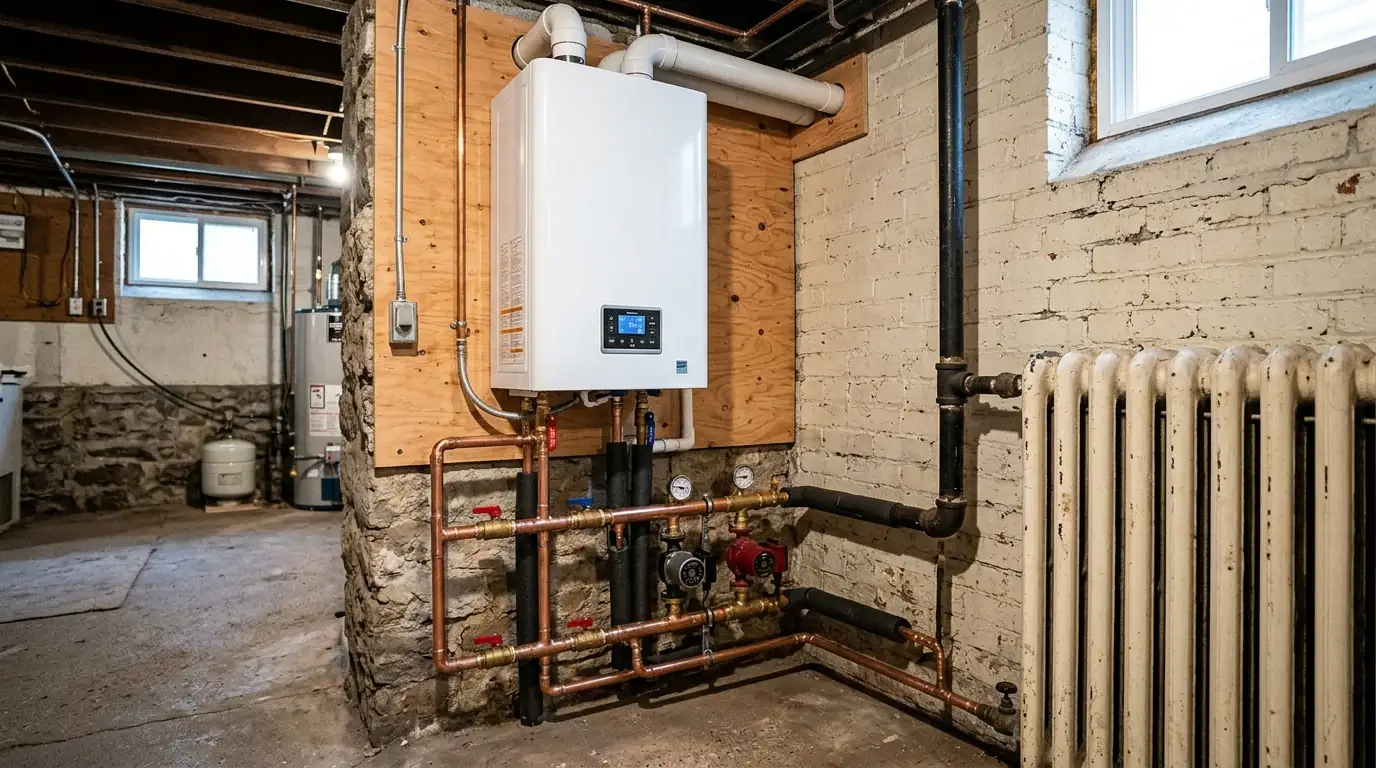
Air collects at the top of a hot water system over the summer, and radiators with air in them heat only partway. We bleed each radiator, top-floor first, and check the pressure after. Then we balance the system so the rooms near the boiler do not overheat while the far rooms stay cool. On steam systems we check and replace radiator air vents, which control how fast each radiator fills, and confirm the main vents in the basement are working.
How Minneapolis homes shape this job
Minneapolis has more boilers than most warmer cities because of its historic housing, and many of the ones we service have been in place for decades. A boiler typically lasts 20 to 30 years with regular care, longer than most furnaces. Fall service is how the older ones get there: a lazy relief valve, a waterlogged expansion tank or a sticking low-water cutoff found in October is a quick fix, not a January emergency.
Step by step
How a boiler service visit runs
- 1
Inspect
Boiler, piping, flue and controls looked over.
- 2
Clean and test the burner
Burners cleaned, combustion analyzed, ignition tested.
- 3
Check pressure and safeties
Expansion tank, relief valve, fill valve or low-water cutoff tested.
- 4
Bleed and balance
Radiators bled or steam vents checked, system balanced.
- 5
Report
Written findings and any repair recommendations.
Cost factors
What moves the price
Boiler service is priced as a set visit, with parts itemized if anything needs replacing.
- Steam or hot water. Steam boilers have different checks and vents.
- Boiler type. Condensing boilers add trap and neutralizer cleaning.
- Number of radiators. Large houses take longer to bleed and balance.
- Expansion tank. Recharging is part of service; replacing a failed tank is extra.
- Vents and valves. Replacing steam vents or a relief valve adds parts.
- Sediment and water treatment. Heavily fouled steam boilers may need extra flushing.
- Access. Crowded basements and old piping take more time.

Book boiler service before the cold
Fall appointments fill fast. Call now and get the boiler checked before the first cold snap.
Compare
What you can do between services
| Homeowner | Our technician | |
|---|---|---|
| Bleeding a hot water radiator | Reasonable with a key | Whole system bled and balanced |
| Watching the pressure gauge | Easy and useful | Cause of pressure swings fixed |
| Checking the steam sight glass | Easy, look for a steady level | Low-water cutoff tested |
| Burner, valves and safeties | Not a DIY job | Cleaned and tested yearly |
Questions we get on the phone
Boiler maintenance questions from Minneapolis homeowners
Once a year, ideally in early fall before heavy use.
Yes. Expansion tanks, relief valves and burners degrade slowly without obvious symptoms.
On a hot water system, yes, carefully. Watch the pressure and add water only as instructed.
Typically 12 to 15 psi cold on hot water systems; steam systems run under 2 psi.
Yes, including their condensate traps and neutralizers.
More from this category
Related work we handle
Radiant Floor Heating
In-Floor Heat for a Basement Finish and more.
When you need radiant floor heatingFrom our guides: Boiler warning signs to catch before winter.
Keep the boiler going for decades
Call to schedule fall service, and we will check everything from the burner to the top-floor radiator.