Answering 24/7
Air balancing and airflow testing in Minneapolis
Most uneven-temperature complaints are airflow problems. We measure what each register actually delivers, compare it with what the room needs, and adjust dampers and registers so the air goes where it should.
- 24/7 calls answered
- Minneapolis service office
- Every register measured
- Static pressure diagnosed
Quick answer
Air balancing in a Minneapolis home measures the airflow at every supply and return register, compares it with each room's load, and adjusts branch dampers so rooms heat and cool evenly. It also checks total static pressure, which shows whether the ducts and filter are choking the blower in the coldest metro climate in the country.
Air Quality & Ducts
What balancing fixes
A duct system can be the right size overall and still deliver too much air to the rooms near the furnace and too little to the far bedrooms. Many systems were never balanced when they were installed, and dampers get bumped or closed over the years. The result is the familiar one-room-always-cold complaint.
Balancing measures instead of guessing. We record each register's airflow, adjust the branch dampers, and measure again. When a room still falls short because its duct is too small or disconnected, the report says so plainly.
What is included
What an airflow test includes
- Total external static pressure
- Filter and coil pressure drop
- Airflow at every supply register
- Airflow at every return
- Room-by-room comparison with need
- Branch damper adjustment
- Dampers added where needed and approved
- Final readings recorded
- Written before-and-after sheet
Room-by-room airflow testing
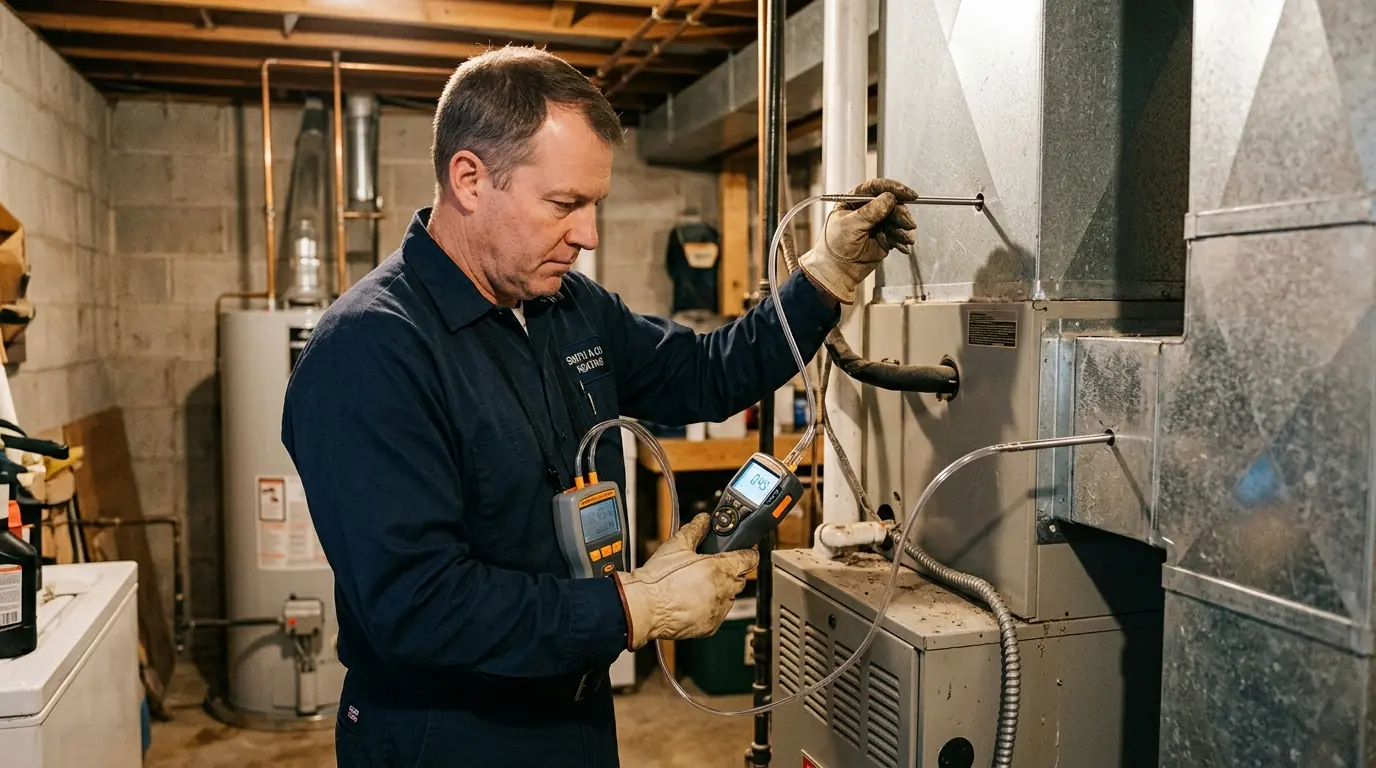
We measure every supply register with a flow hood and every return, then compare the readings with what each room needs based on its size, windows and exposure. The readings go on a room-by-room sheet you keep. That sheet shows at a glance which rooms are starved, which are getting too much, and whether the total supply roughly matches the blower's rated airflow. It is also a useful baseline before any duct changes or a new furnace.
Balancing dampers and registers
Most branch runs have a manual damper near the trunk in the basement ceiling. We adjust those dampers to trim air from rooms that get too much and push it toward rooms that get too little, working through the system several times because every change shifts the others. Registers are opened fully so their own louvers are not doing the damper's job. Where a branch has no damper, we can add one. Final readings are recorded next to the starting ones.
Static pressure diagnosis
Total external static pressure is the resistance the blower sees across the filter, coil and ducts. High static means the system is choking: a restrictive filter, a dirty coil, undersized returns, or crushed ducts. We measure static at the furnace, compare it with the manufacturer's rating, and identify where the pressure is being lost. Fixing a high-static system often improves every room at once, and protects the blower motor from early failure. The static reading is also the number to recheck after any filter or duct change.
What we see on calls around Minneapolis
At about 47 degrees, the annual mean temperature of the Minneapolis-St. Paul area is the coldest of any major metro in the continental United States, and that long heating season is when an unbalanced system shows. A bedroom over the garage or at the end of a long run can sit several degrees colder than the rest of the house for months. Balancing is usually the least expensive fix to try before adding zoning or equipment.
Step by step
How a balancing visit runs
- 1
Measure static pressure
Blower operating conditions recorded.
- 2
Measure every register
Supply and return airflow recorded room by room.
- 3
Compare with room needs
Starved and oversupplied rooms identified.
- 4
Adjust dampers
Branch dampers set in several passes.
- 5
Record final readings
Before and after airflow on one sheet.
Cost factors
What moves the price
Air balancing is priced by the number of registers and what the system needs.
- Number of registers. Each supply and return is measured.
- Damper access. Finished ceilings limit which dampers can be reached.
- Missing dampers. Adding dampers to branches adds parts.
- Number of passes. Larger systems need more rounds of adjustment.
- Static findings. Filter, coil or return fixes are quoted separately.
- Duct repairs. Disconnected or crushed runs found are quoted separately.
- Report. Before and after readings are included.
Questions we get on the phone
Air balancing and airflow testing questions from Minneapolis homeowners
Often, if the duct is sound and the problem is distribution. If the duct is too small, the report says so.
No. Balancing sets fixed airflow; zoning changes it with motorized dampers and thermostats.
High static means the blower is choking, which hurts every room and shortens motor life.
Yes, a new blower can change airflow noticeably.
Yes, before and after, room by room.
More from this category
Related work we handle
Duct Sealing and Repair
Sealing Leaky Basement Trunk Lines and more.
How we handle duct sealing and repairMeasure before you spend
Call to book an airflow test and get a room-by-room sheet of what your system actually delivers.