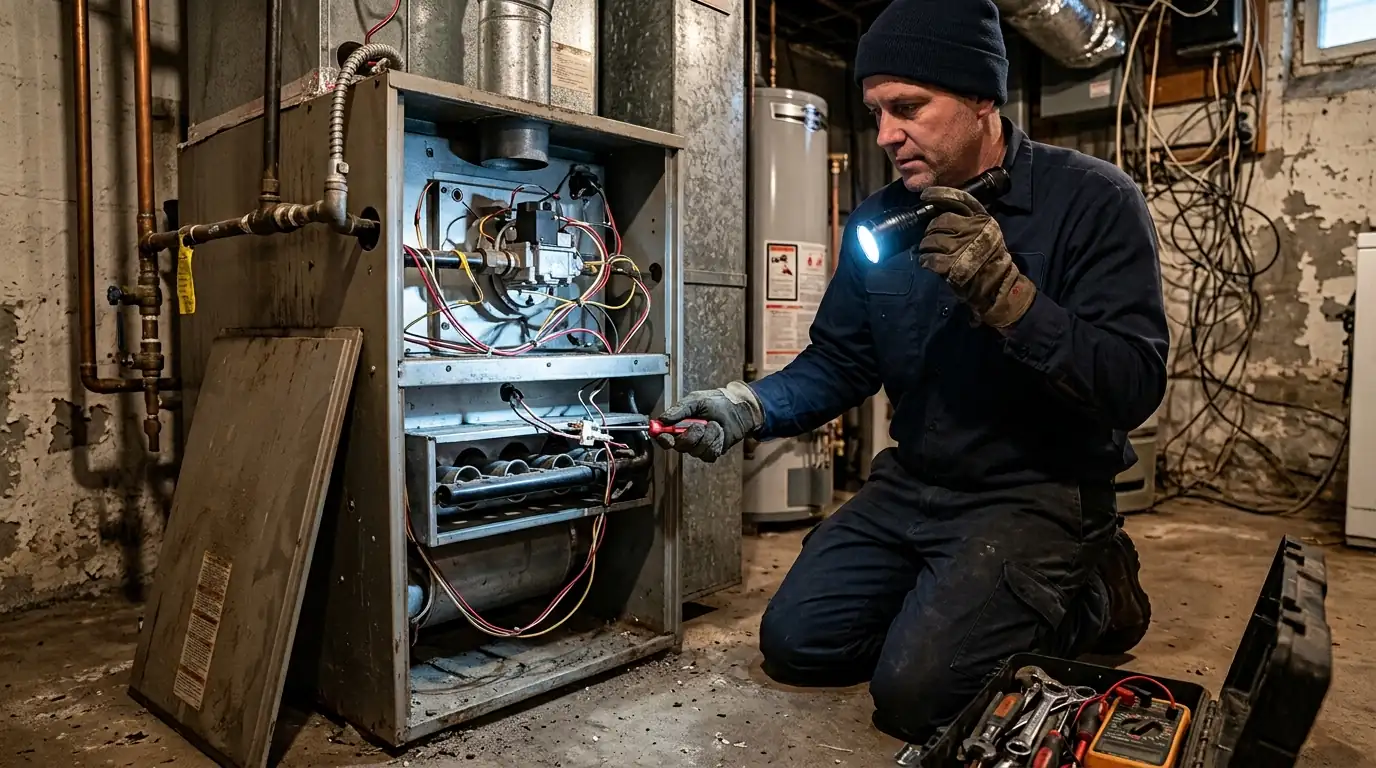
LP furnaces and conversions
Propane furnace repair and service around Minneapolis
Out past the gas mains, plenty of homes, cabins and outbuildings heat with propane. The furnaces are mostly the same as natural gas units, but the fuel supply, the regulator and the conversion parts are not, and those are where propane problems start.
- 24/7 calls answered
- Minneapolis service office
- LP kits conversions done
- Regulator checked every visit
Quick answer
Propane furnace service around Minneapolis covers the same ignition and blower repairs as a natural gas furnace, plus the LP-specific parts: the conversion orifices and gas valve spring, the pressure regulator, and the tank supply. Many no-heat propane calls turn out to be an empty or frozen supply, not a furnace fault.
Step by step
How a propane service call runs
- 1
Check the supply first
Tank level, regulators and line pressure confirmed.
- 2
Read the furnace
Fault code, ignition sequence and flame observed.
- 3
Test gas pressures
Inlet and manifold pressure measured against the LP rating.
- 4
Repair or convert
Failed part replaced or conversion kit installed and labeled.
- 5
Combustion and CO check
Flue analyzed and CO tested before we leave.
Warning signs
Signs it is time to call
- Furnace will not light and the tank gauge is low
- Yellow, lazy or lifting flames at the burners
- Soot around the burner door or flue
- Smell of gas near the tank, regulator or furnace
- Frost or ice on the regulator in a cold snap
- Furnace recently converted with no conversion label
Heating
What is different about propane
A propane furnace burns a denser gas at a higher pressure than natural gas, so it uses smaller burner orifices and a different gas valve setting. A furnace built for natural gas has to be converted with the manufacturer's LP kit, and a conversion done wrong burns dirty, soots the heat exchanger and can produce carbon monoxide.
The supply is the other difference. Propane comes from a tank with its own regulator, and a tank that runs low, a regulator that freezes up, or a line that has been damaged all look like a furnace failure from inside the house. We check the supply before replacing furnace parts.
Propane furnace repair
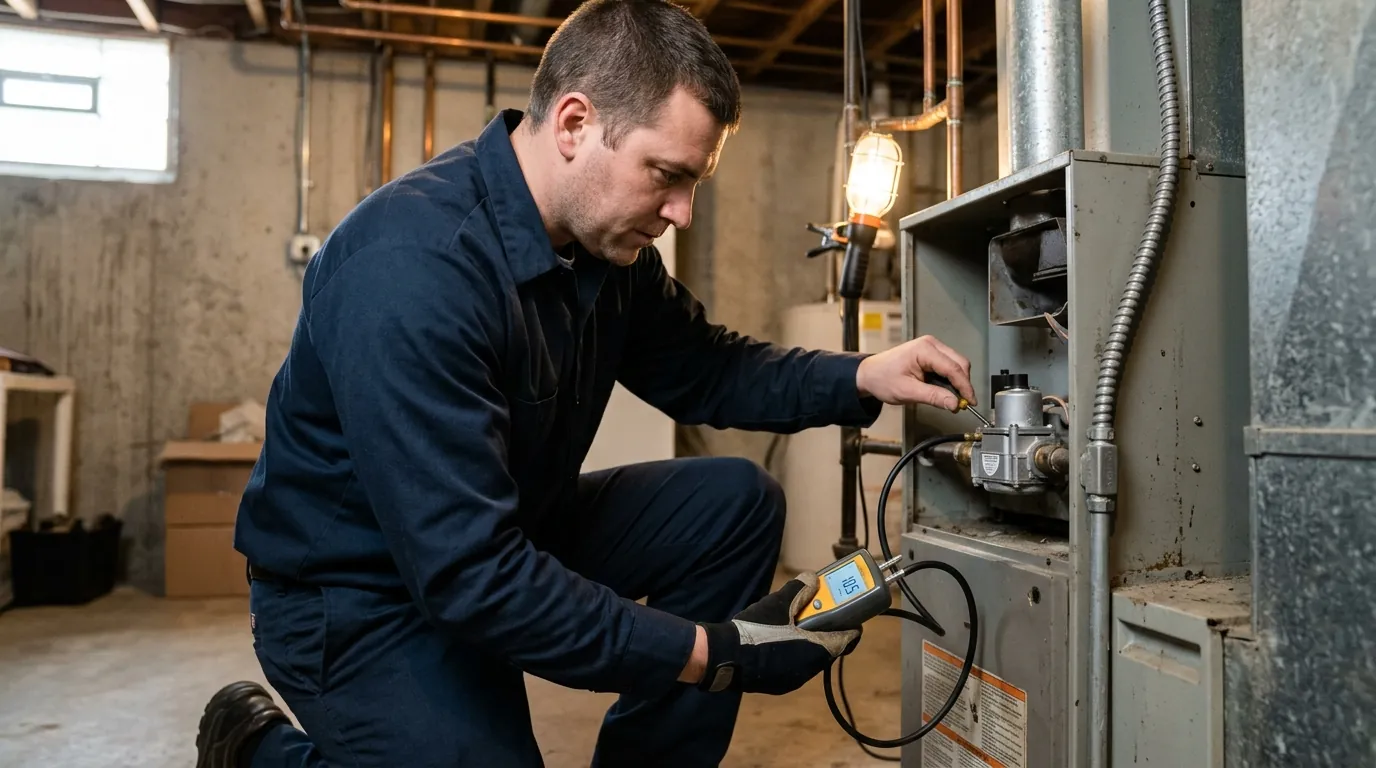
Propane furnaces fail in the same ways natural gas furnaces do: cracked ignitors, dirty flame sensors, pressure switch faults and blower motors. The difference is in testing the gas side. We measure inlet and manifold pressure against the LP rating on the furnace, check the flame for the yellow tips and lifting that point to a wrong orifice or pressure, and test for carbon monoxide in the flue. Most repairs use the same parts we carry for natural gas furnaces.
Natural gas to propane conversion
Converting a furnace from natural gas to propane, or the reverse when a gas main arrives, means installing the manufacturer's conversion kit: new burner orifices, a gas valve spring or regulator change, and sometimes a pressure switch. We install the kit, set manifold pressure to the rating plate, verify the flame and temperature rise, run a combustion analysis, and attach the conversion label the manufacturer requires. Improvised conversions with drilled orifices are one of the most dangerous things we find.
Propane regulator and supply issues
The regulator at the tank and the second-stage regulator at the house drop tank pressure to what appliances can use. When a regulator freezes in a cold snap, fails, or has its vent blocked by ice, the furnace starves and shuts off, often on the coldest night. We check tank level, regulator operation and line pressure at the furnace. Tank refills and tank equipment belong to your propane supplier, and we coordinate with them when the problem is on their side.
How Minneapolis homes shape this job
A furnace conversion or replacement falls under the Minneapolis HVAC permit process, with fees from $84.20 to $216.60 depending on the job. Propane furnaces also qualify for the same utility programs as natural gas units in many cases: Xcel Energy and CenterPoint rebates of about $200 to $400 apply to qualifying 95 percent and higher furnaces, so it is worth checking before choosing a replacement.
Brands we service and install
The furnaces we repair and replace most are Carrier, Lennox, Trane, Bryant and Goodman, with Amana and Rheem close behind.
Questions we get on the phone
Propane furnace service questions from Minneapolis homeowners
Most gas furnaces can, with the manufacturer's LP conversion kit installed correctly.
Often a frozen regulator or low tank. We check the supply before the furnace.
Your propane supplier owns and fills most tanks. We coordinate with them on supply problems.
Yes, when a gas main reaches the property.
Yes, with the same LP pressure and combustion checks.
Cost factors
What moves the price
Published 2026 Minneapolis service-call rates run about $115 to $210. Propane work adds a few cost drivers of its own.
- The failed part. Ignitors and sensors cost less than gas valves or inducer motors.
- Conversion kits. LP conversion kits are specific to the furnace model.
- Pressure testing. Inlet and manifold pressures are always checked on propane.
- Supply problems. Regulator replacement or line repair may involve your propane supplier.
- Travel. Homes farther out may carry a travel charge, discussed before booking.
- After-hours timing. Night and weekend no-heat calls may cost more.
- Replacement. A new propane furnace is priced like a natural gas one, plus the LP setup.
More from this category
Related work we handle
Furnace Installation
Two-Stage and Variable-Speed Furnaces and more.
Furnace Installation in MinneapolisFrom our guides: What to check first when the heat goes out.
Propane heat not working?
Call any hour. Tell us the tank level and what the furnace is doing.