Answering 24/7
Whole-house humidifiers for Minneapolis winters
Cold air holds almost no moisture, so a Minnesota house heated through January ends up drier than a desert. A humidifier on the furnace puts moisture back into the air every time the blower runs, and a properly set control keeps it off the windows.
- 24/7 calls answered
- Minneapolis service office
- Outdoor sensor frost-free setting
- On the furnace whole-house coverage
Quick answer
A whole-home humidifier in Minneapolis typically costs $400 to $1,200 installed, according to Angi's 2026 data, and mounts on the furnace so every room gets moisture when the blower runs. With January lows averaging near 9 degrees, the control must lower humidity as it gets colder or windows frost over.
Air Quality & Ducts
Why Minneapolis houses dry out
When 9 degree outdoor air leaks into a house and warms to 70, its relative humidity drops to a small fraction of what it was outside. By February indoor humidity in many homes sits in the teens. That is when hardwood floors gap, doors shrink, static shocks start, and everyone wakes up with a dry throat.
A portable humidifier treats one room and needs filling every day. A furnace-mounted unit treats the whole house from the water line, and its control can adjust for the weather so the house stays comfortable without sweating the windows.
Compare
Which humidifier fits
| Type | Output | Best for |
|---|---|---|
| Bypass | Moderate, needs furnace heat | Most average-size homes |
| Fan-powered | Higher, no bypass duct | Larger homes or tight plenums |
| Steam | Highest and steady | Large homes, heat pumps, leaky houses |
Cost factors
What moves the price
Angi's 2026 Minneapolis figures put whole-home humidifiers at $400 to $1,200. Here is what moves the number.
- Type. Bypass units cost least; fan-powered cost more; steam units cost the most.
- Plenum space. Tight plenums may need sheet metal changes to mount the unit.
- Water line. Distance to a cold water line and a drain affects labor.
- Electrical. Steam humidifiers need a dedicated circuit.
- Control. An automatic outdoor-compensated control costs more than a manual dial.
- Thermostat integration. Wiring to a smart thermostat adds a little labor.
- Water hardness. Hard water shortens pad and canister life and may justify a filter.
Bypass vs fan-powered humidifiers
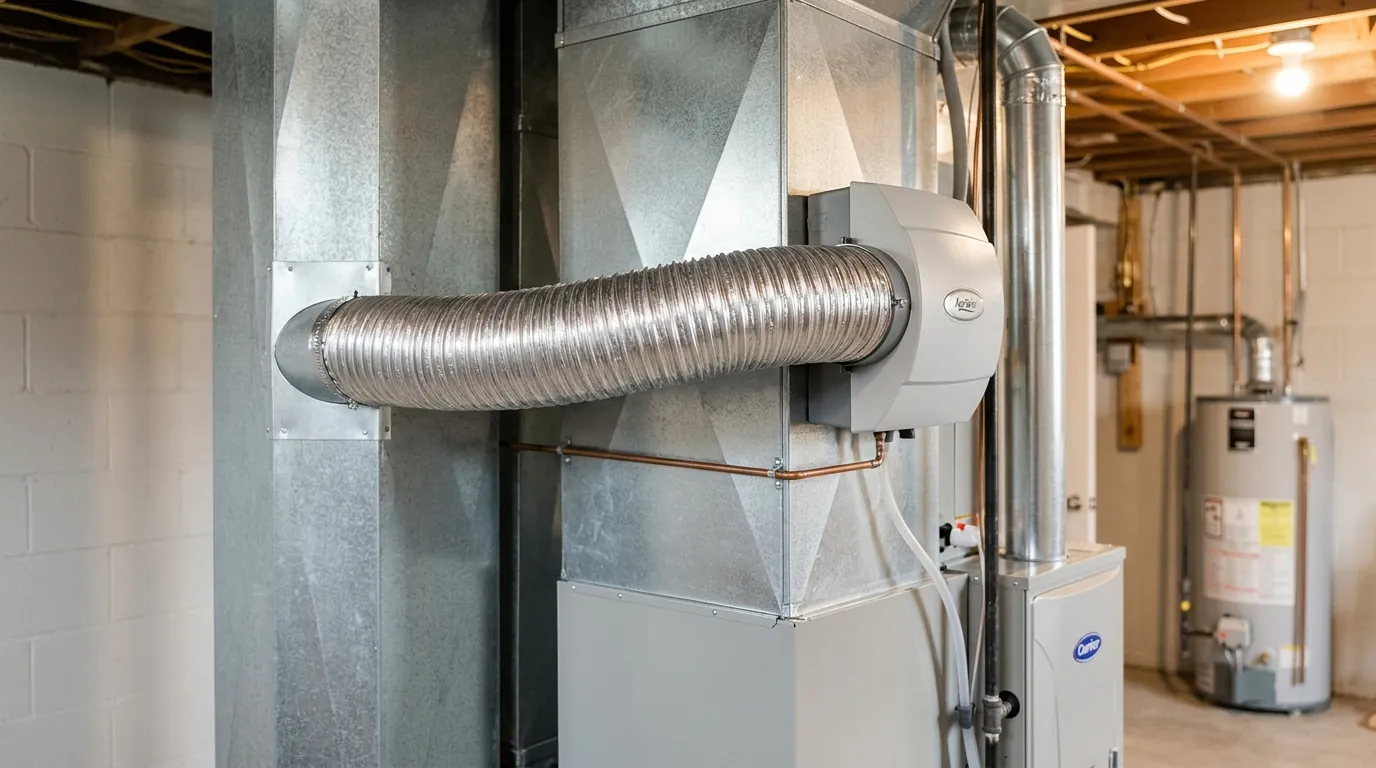
A bypass humidifier uses a small duct from the supply side back to the return, pulling warm air through a water panel. It has no motor and is the most common type, but it needs room for that bypass duct and uses some water that goes to drain. A fan-powered model mounts on the supply plenum and has its own fan to push air through the pad, so it needs no bypass duct and puts out more moisture. We choose between them based on house size, plenum space and how dry the house gets.
Steam humidifiers for larger homes
Steam humidifiers boil water in a canister and inject the steam into the ductwork. They do not depend on warm furnace air, so they deliver consistent output even when the furnace is running short cycles or when a heat pump is supplying cooler air. That makes them the right choice for large or leaky homes and for heat pump systems. They need a dedicated electrical circuit and a canister that is replaced periodically depending on water hardness, and they cost more to buy and run.
Humidistat setup for sub-zero weeks
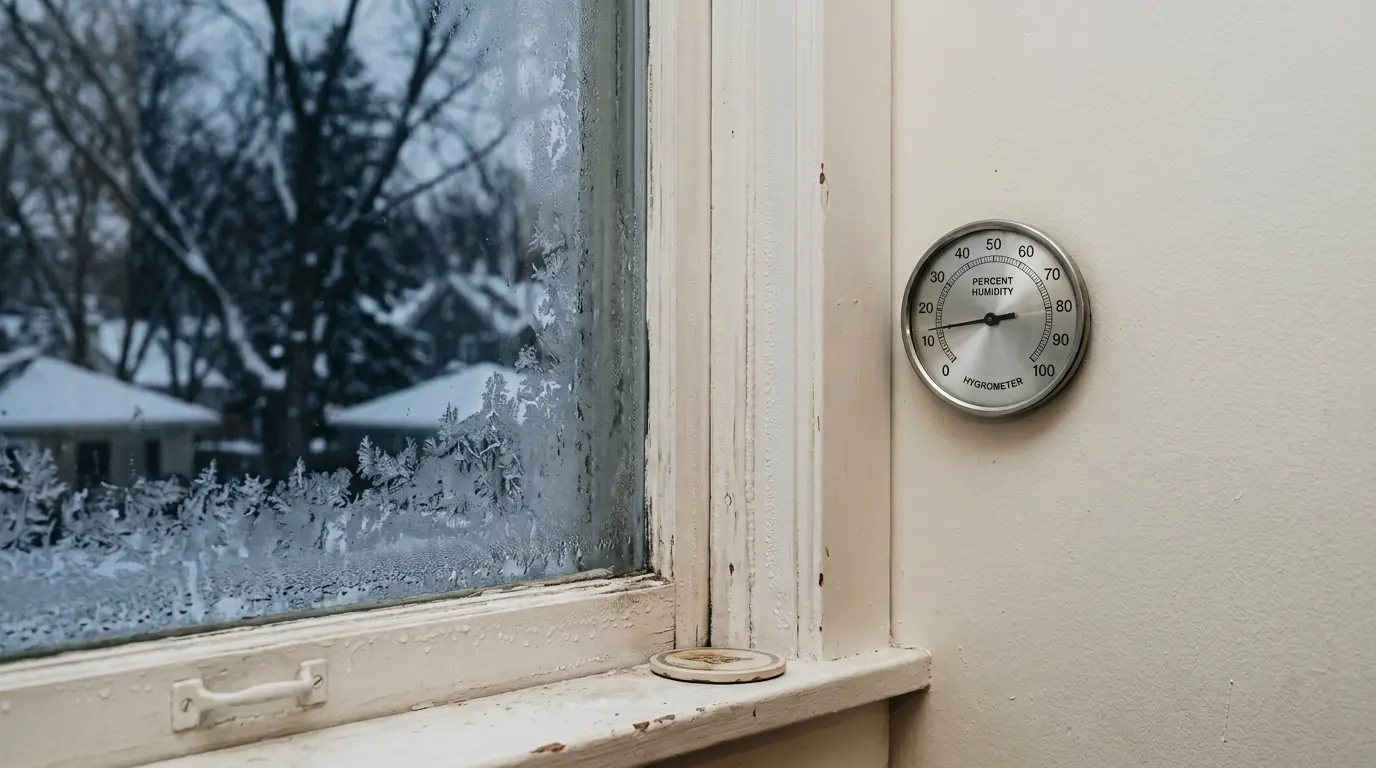
The same humidity that feels good at 30 degrees outside will frost the inside of windows at 20 below, because glass gets much colder. An automatic control with an outdoor temperature sensor lowers the target humidity as it gets colder, which is the difference between a comfortable house and water running down the window frames. We install that sensor, set the control, and show you where to adjust it. Many smart thermostats can manage the humidifier directly, and we wire them that way when they can.
What we see on calls around Minneapolis
Angi's 2026 Minneapolis data puts a whole-home humidifier at $400 to $1,200 installed, and lists it as the standard fix for dry winter air here. With January lows averaging close to 9 degrees, the setting that is right in November is too high by the coldest week. That is why every humidifier we install in the city gets an outdoor-compensated control rather than a fixed dial.
What is included
What a humidifier install includes
- Humidifier sized to the house
- Mounting on the supply or return plenum
- Bypass duct where the model needs it
- Saddle or tee on a cold water line
- Drain line to a floor drain or pump
- Low-voltage wiring to the furnace
- Automatic control with outdoor sensor
- Test run and target setting
- Pad or canister replacement schedule explained
Step by step
How a humidifier goes in
- 1
Check the furnace and house
Plenum space, water, drain and house size reviewed.
- 2
Choose the type
Bypass, fan-powered or steam picked for the house.
- 3
Mount and connect
Unit mounted, water line, drain and wiring installed.
- 4
Install the control
Outdoor sensor or thermostat control set up.
- 5
Test and set
Humidifier run with the furnace and target humidity set.
Brands we service and install
Air quality equipment usually mounts on Carrier, Lennox, Trane or Goodman furnaces, with Honeywell controls.
Questions we get on the phone
Whole-home humidifier installation questions from Minneapolis homeowners
Around 30 to 40 percent when it is mild, lower when it is well below zero. An automatic control handles that.
The setting is too high for the outdoor temperature. An outdoor-compensated control fixes it.
Usually once a season for bypass and fan units; more often with hard water.
A steam humidifier works best with heat pumps, because it does not rely on hot supply air.
Only if humidity runs too high. A correct setting keeps it in a safe range.
More from this category
Related work we handle
From our guides: Setting a humidifier through a Minneapolis winter.
End the dry-air winter
Call and we will check your furnace and recommend the humidifier that fits your house.