By Eloise Rasmussen, Heating and Cooling Guides Editor. Updated September 2026.
Quick answer
In a Minneapolis winter, set a whole-house humidifier lower as it gets colder outside: roughly 35 percent above 20 degrees, 30 percent near 10, 25 percent near zero, and 20 percent or less below zero. January lows average near 9 degrees here, so a fixed setting that feels right in November will frost the windows by January.
Why houses here dry out
Cold air holds very little moisture. When outdoor air at 9 degrees, the average January low at MSP, leaks into a house and warms to 70, its relative humidity falls to a small fraction of what it was outside. Through a heating season that runs roughly October to April, indoor humidity in many Minneapolis homes drifts into the teens.
That is where the familiar winter complaints come from: static shocks, dry skin and sinuses, gaps in hardwood floors and cracked trim. A whole-house humidifier on the furnace adds moisture every time the blower runs, which a portable unit in one room cannot match.
The window problem
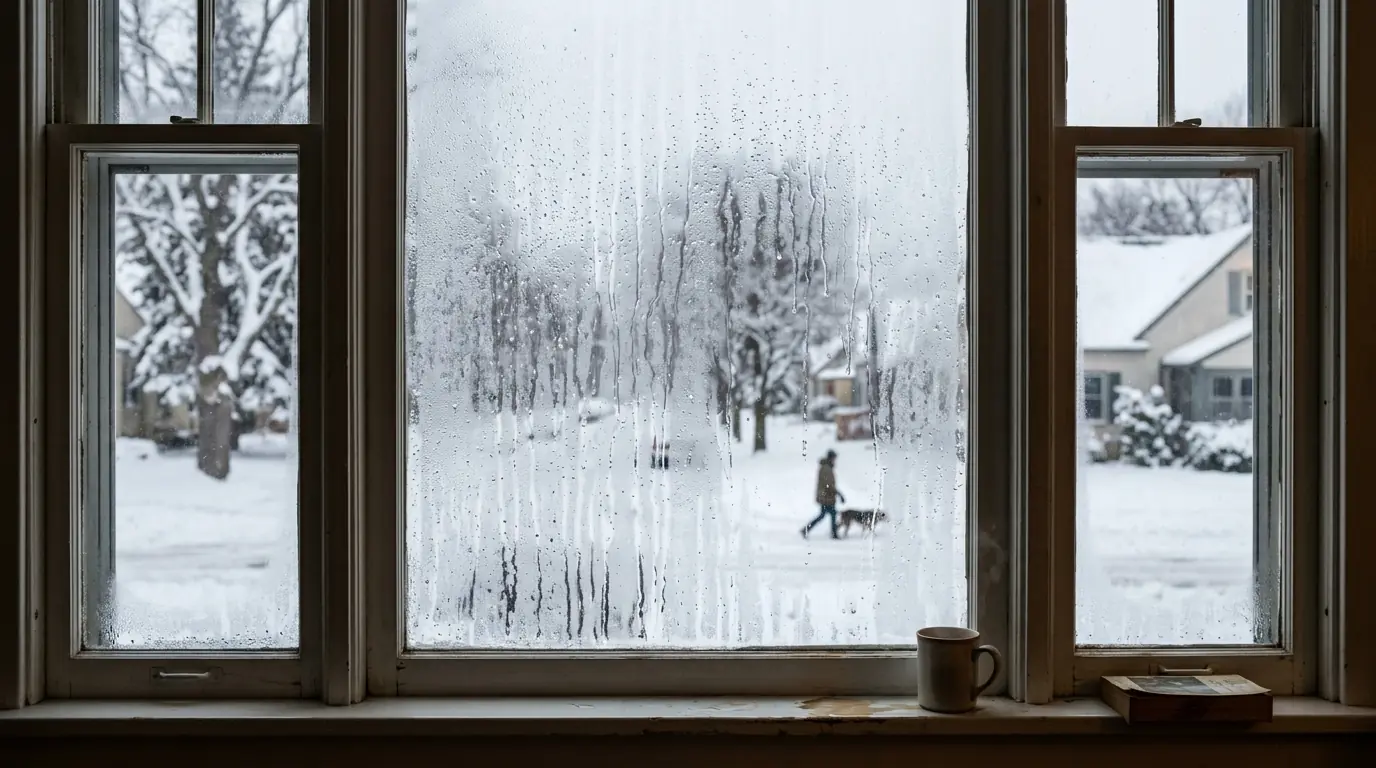
The limit on indoor humidity is not comfort, it is glass. Windows are the coldest surface in the house, and when warm moist air touches them it condenses, then frosts. Water running onto sills and frames causes mold and rot, and it shows up first on older windows and in corners.
The colder it gets outside, the colder the glass gets, and the lower indoor humidity has to be to keep it dry. That is the whole reason a single fixed setting does not work through a Minnesota winter.
A simple setting table
Humidifier manufacturers publish tables along these lines, and they work well as a starting point in Minneapolis: about 35 percent when it is 20 degrees or warmer outside, about 30 percent near 10 degrees, about 25 percent near zero, about 20 percent at 10 below, and 15 percent or lower at 20 below.
If you see condensation forming on the inside of windows, turn it down another step. Houses with older single-pane or leaky windows may need to run lower than the table; tight houses with new windows may tolerate a little more.
Let a control do the adjusting
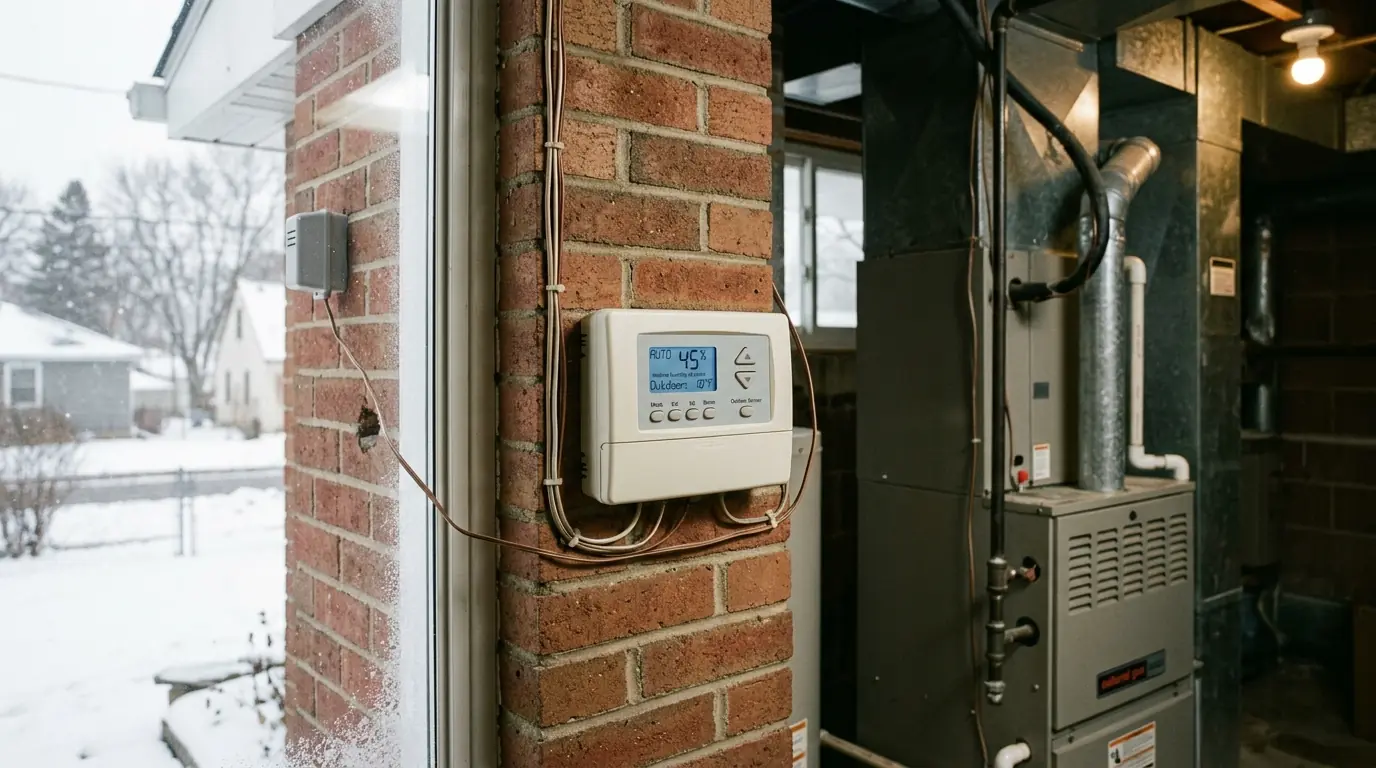
Adjusting a dial every cold front is tedious, and most people forget until the windows are dripping. An automatic control with an outdoor temperature sensor lowers the target on its own as it gets colder, and many smart thermostats can control the humidifier directly. It is one of the most useful upgrades on a humidifier, and it costs little compared with the humidifier itself.
Angi's 2026 Minneapolis data puts a whole-home humidifier at $400 to $1,200 installed. If you are adding one, ask for an automatic control as part of the job; our humidifier installation page explains the types.
How to tell if the setting is wrong
An inexpensive digital hygrometer tells you what the house is actually running at, which is more reliable than guessing from comfort. Put one in a main living area away from the kitchen and bathrooms and check it through a cold week.
Signs the air is too dry include static shocks, dry skin and throat in the morning, and gaps opening in hardwood floors or trim. Signs it is too humid include condensation or frost in window corners, musty smells, and damp spots on exterior walls or closet corners. If you see both at once, which happens in drafty houses, set for the windows first; wet glass and frames do more lasting damage than dry air.
Seasonal upkeep
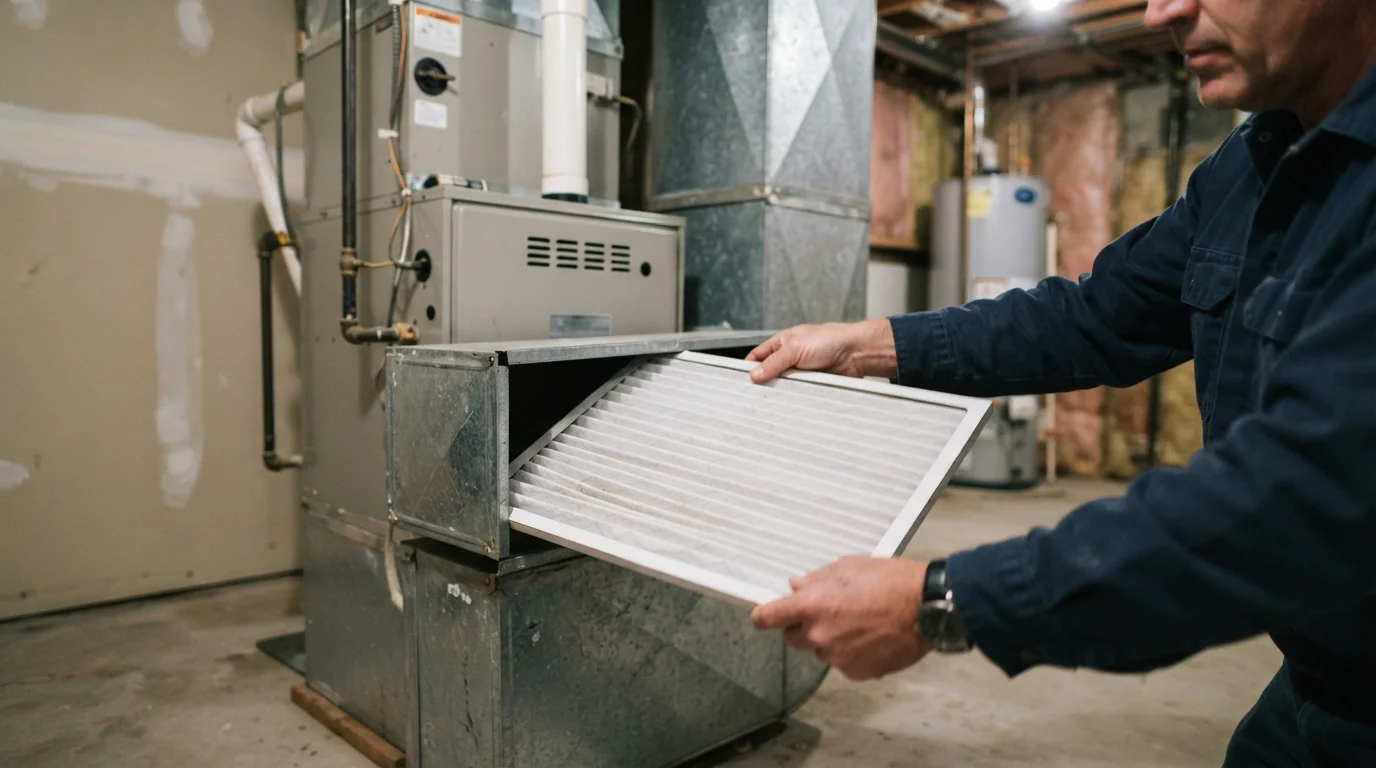
In the fall, replace the water panel or pad, open the water valve and set the damper on a bypass unit to its winter position. In spring, close the water valve and set the damper for summer so the humidifier does not add moisture while the air conditioner is trying to remove it. Hard water shortens pad life; if the pad is crusted with minerals by midwinter, change it again.
Heat pump homes are a special case. A heat pump's cooler supply air evaporates less water through a standard pad, so a steam humidifier is often the better choice there.
Questions we get on the phone
Questions readers ask
About 20 percent or lower below zero, rising toward 30 to 35 percent in milder weather.
Indoor humidity that is too high for the outdoor temperature. Turn it down or add an automatic control.
At least once a season, more often with hard water.
No. Close the water valve and set the damper to summer.
Steam humidifiers work best with heat pumps.
Yes. That is why the setting must drop as it gets colder.