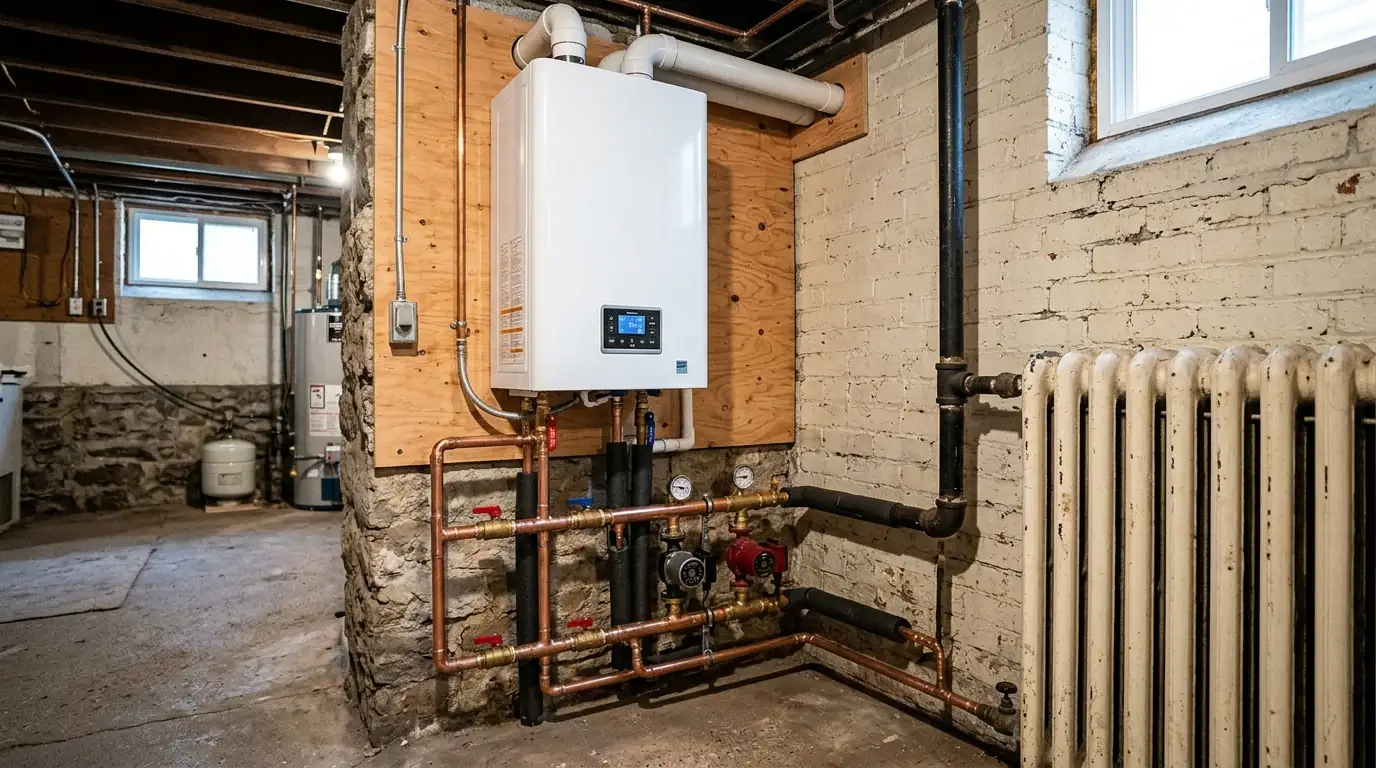
Gas and power-vent
Water heater repair across Minneapolis
A cold shower is usually one failed part: a thermocouple, a gas valve, a clogged burner, a dead power-vent fan. We find it, fix it when fixing makes sense, and tell you straight when the tank itself is done.
- 24/7 calls answered
- Minneapolis service office
- Pilot and burner common fixes
- Tank leak honest replace call
Quick answer
Water heater repair in Minneapolis usually starts with a service call in the $115 to $210 range published for 2026, and most no-hot-water calls trace to a thermocouple, flame sensor, gas valve or power-vent fault. A leak from the tank itself cannot be repaired; the heater needs replacing.
Step by step
How a repair visit runs
- 1
Call and describe it
Tell us whether there is no hot water, a pilot problem or water on the floor.
- 2
Safety check first
Gas smell, draft and relief valve are checked before anything else.
- 3
Find the failed part
We test the ignition, flame proving, gas valve and venting.
- 4
Repair or quote replacement
Common parts are replaced on the spot; a leaking tank gets a replacement price.
- 5
Test hot water
We confirm temperature at a tap and draft at the hood before leaving.
Warning signs
Signs it is time to call
- No hot water or water only lukewarm
- Pilot light that will not stay lit
- Water pooling around the base of the tank
- Rumbling or popping noises from the tank
- Rusty or discolored hot water
- Smell of exhaust or scorching near the vent hood
Boilers & Water Heaters
Most no-hot-water calls are one part
Gas water heaters are simple machines. A pilot or igniter lights the burner, a thermocouple or flame sensor proves the flame, a gas valve controls it, and the flue carries exhaust away. When hot water stops, one of those pieces has usually quit, and the part rides on our truck.
The exception is the tank. Once the steel tank rusts through and leaks from the body, no repair holds. We will not sell you a part to patch a heater that is leaking from the tank.
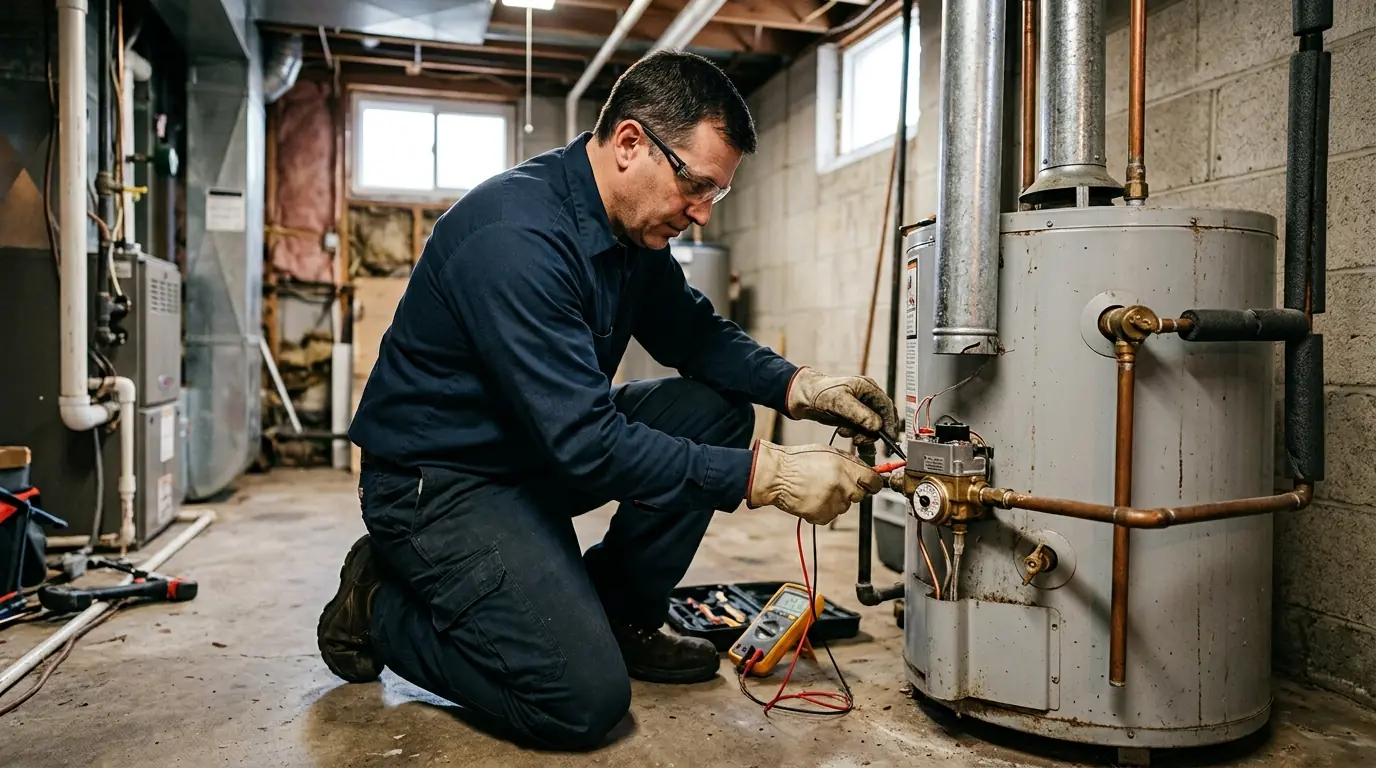
No hot water
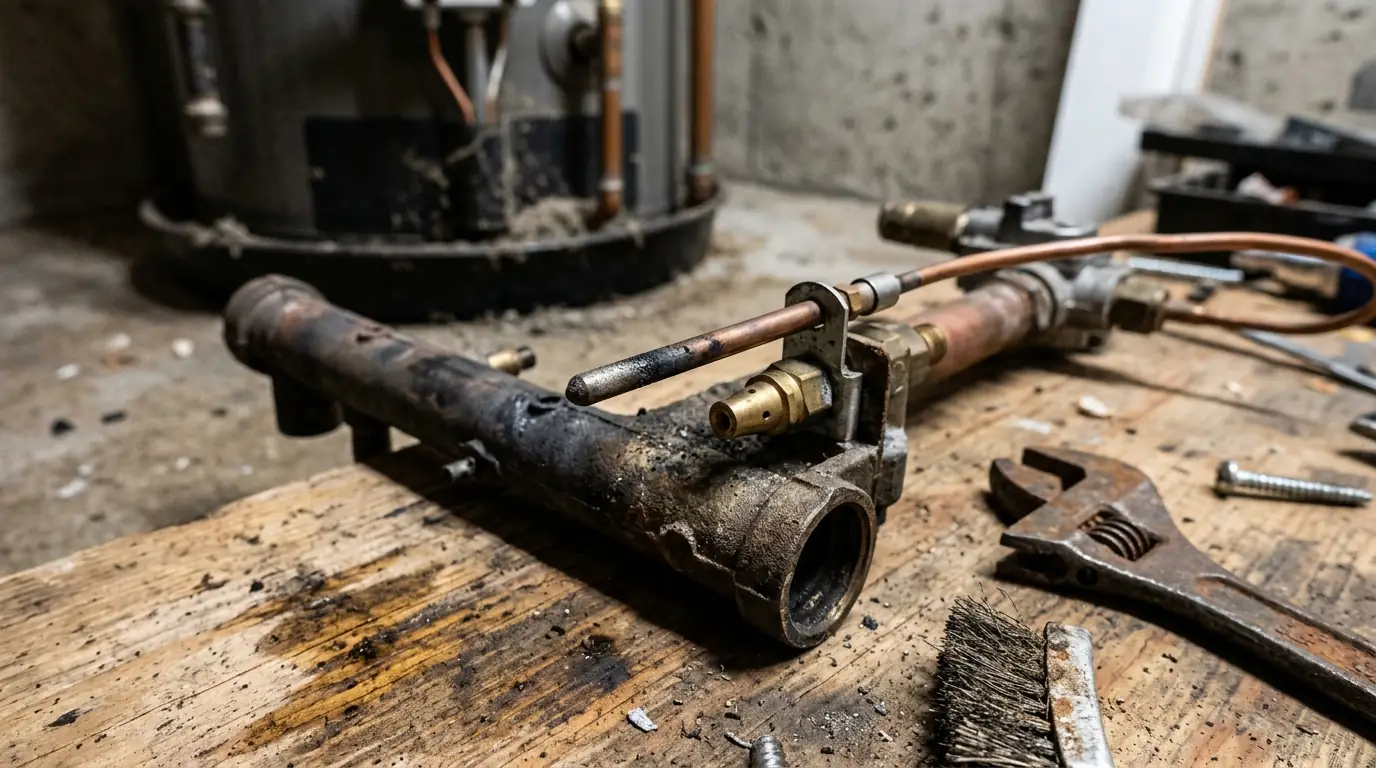
With no hot water at all, we start at the flame. If the pilot is out, we find out why before relighting: a worn thermocouple, a dirty pilot orifice, or a draft problem blowing it out. On electronic-ignition and power-vent units we read the control board's fault code, check the igniter and flame sensor, and test the pressure switch and inducer fan. Electric heaters get element and thermostat tests. Most of these repairs are done on the first visit.
Pilot light keeps going out
A pilot that lights and then dies is almost always a weak thermocouple or a dirty pilot tube, but in Minneapolis there is a second common cause: poor draft. If the furnace was changed to a high-efficiency unit venting through PVC, the water heater may be left alone in a big cold chimney that does not draft well, especially in winter. Spilling exhaust can starve the pilot and is a safety issue. We test draft at the hood before and after the repair.
Leaking tank or valve
Water around the heater does not always mean the tank is gone. A dripping relief valve can point to high pressure from a missing or failed expansion tank, a drain valve can weep, and fittings on top can leak from corrosion. Those are repairable. A leak from the tank body or a rusted bottom is not, and the heater needs to be replaced. We find the source before recommending anything, and if replacement is needed we can usually do it the same day.
Local conditions that change the fix
Because Minnesota code pushes most furnace replacements to PVC-vented condensing units, a lot of the water heaters we repair around Minneapolis and Edina now share nothing with the furnace and vent alone into an oversized chimney. In a January cold spell those flues draft poorly, and pilots go out or exhaust spills at the hood. Calls from our Cahill Rd office out toward Carver along Highway 212 follow the same pattern, so a draft test is part of every repair visit.
Brands we service and install
On boilers and water heaters we see Weil-McLain, Navien, Bosch and Rheem most often.
Questions we get on the phone
Water heater repair questions from Minneapolis homeowners
For a thermocouple or igniter on a heater under ten years old, usually yes. For a gas valve on a twelve year old tank, replacement often makes more sense. We give you both numbers.
Often poor draft in a chimney the heater now uses alone. A weak thermocouple is the other common cause.
It is doing its job by releasing pressure. The cause, often high pressure or a failed expansion tank, needs to be fixed.
No. A leak from the tank body means replacement. Leaks from valves and fittings are often repairable.
Yes, calls are answered 24/7. A heater leaking onto the floor gets priority.
Cost factors
What moves the price
Published Minneapolis service-call rates run about $115 to $210 in 2026. The repair itself depends on what failed.
- The failed part. A thermocouple costs far less than a gas control valve or a power-vent blower.
- Heater type. Power-vent and electronic-ignition units have more components than atmospheric heaters.
- Draft or venting fixes. A poorly drafting chimney may need a liner or a vent change.
- Expansion tank. A dripping relief valve may mean an expansion tank needs replacing or adding.
- Access. Heaters in tight closets or crawl spaces take longer.
- After-hours timing. Night and weekend visits may cost more.
- Repair versus replace. On an old heater, a major part may not be worth it; we give both prices.
More from this category
Related work we handle
Tankless Water Heater Installation
Gas Line and Venting Upgrades and more.
When you need tankless water heater installationNo hot water right now?
Call any hour. Tell us the heater's age and what it is doing, and a technician will bring the likely part.