Answering 24/7
Radiator repair and relocation in Minneapolis
Cast iron radiators outlast the boilers that feed them, but their valves, vents and connections wear. We fix leaks and seized valves, get cold radiators heating, and move or remove radiators when a remodel calls for it.
- 24/7 calls answered
- Minneapolis service office
- Valves and vents replaced
- Move or remove for remodels
Quick answer
Radiator repair in Minneapolis covers leaking and seized valves, failed steam air vents, leaking unions and cold radiators, plus moving or removing radiators during remodels. Much of the Twin Cities housing stock dates from the early 1900s to the 1960s, and many of those radiators are original.
Boilers & Water Heaters
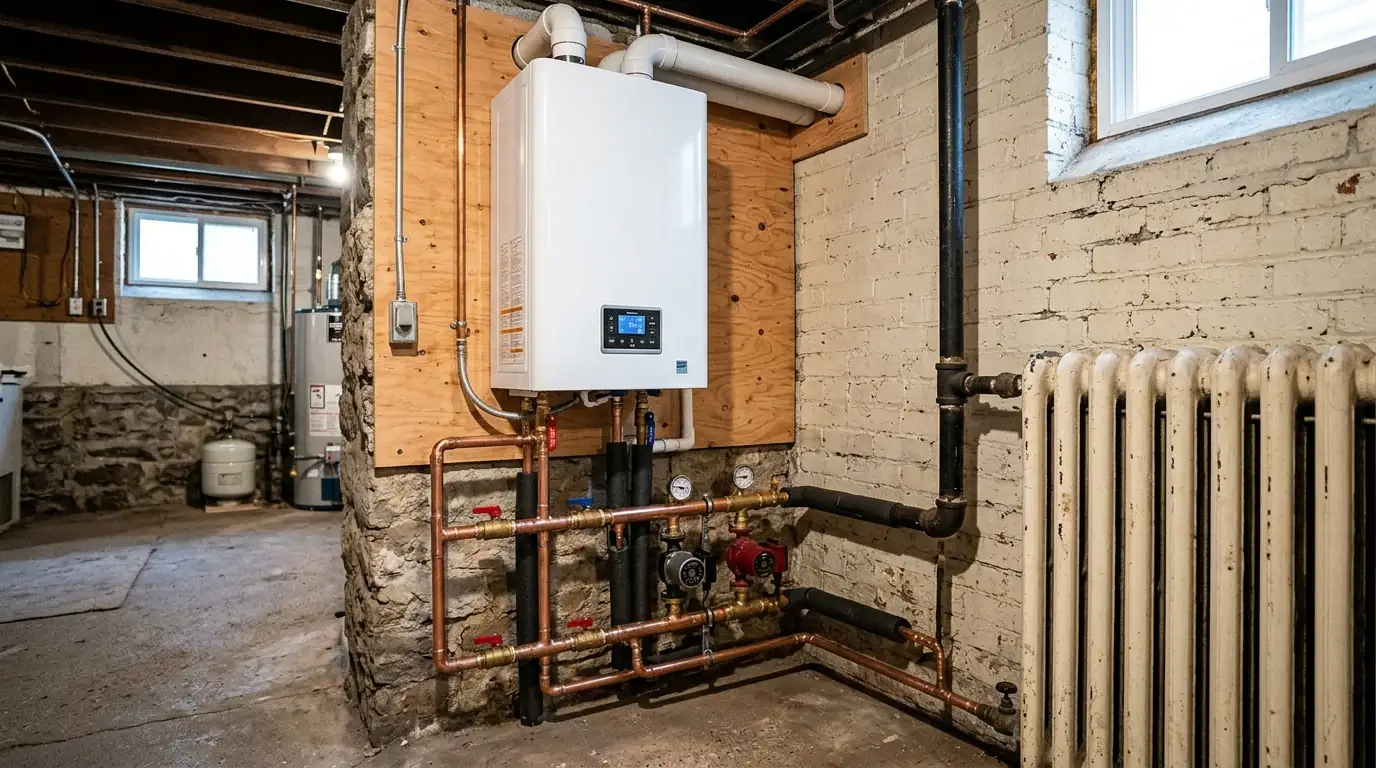
The radiator is not the boiler
When one radiator misbehaves, the problem is usually at that radiator, not the boiler: a valve packing that weeps, a union that leaks, a steam vent that sticks shut, or a radiator that has lost its pitch. These are small repairs, and they are the ones this page covers.
When the whole house is cold or the boiler will not fire, that is a boiler repair. When one room or one radiator is the problem, start here.
Cost factors
What moves the price
Radiator work is priced by the repair and whether the system has to be drained.
- Steam or hot water. Different valves, vents and procedures.
- Draining. Isolating a zone costs less than draining the whole system.
- Valve type. Standard, steam and thermostatic valves differ in cost.
- Moving a radiator. Heavy lifting, new piping and pitch setting.
- Section leaks. May mean replacing the radiator.
- Floor and wall repair. Patching after relocation is often by others.
- Refill and bleed. Restoring the system and removing air is part of the job.
Radiator valve replacement
Radiator valves leak at the stem packing, seize in one position after years unused, or crack. On hot water systems we isolate or drain the zone, replace the valve and union, refill and bleed the air. On steam systems the supply valve must be fully open or fully closed, and a leaking or half-closed valve causes water hammer and spitting vents; we replace it with the correct steam valve. Thermostatic radiator valves can be added at the same time to control individual rooms.
Moving or removing a radiator
Remodels often need a radiator moved to a new wall, shortened, or taken out altogether. Cast iron radiators are heavy and their piping is threaded, so moving one means draining the system or zone, disconnecting and capping or rerouting the supply and return, and setting the radiator at its new location with the correct pitch. Removing one lowers the room's heat, so we check whether the room still heats or needs baseboard or a smaller radiator to replace it.
Leaking radiator repair
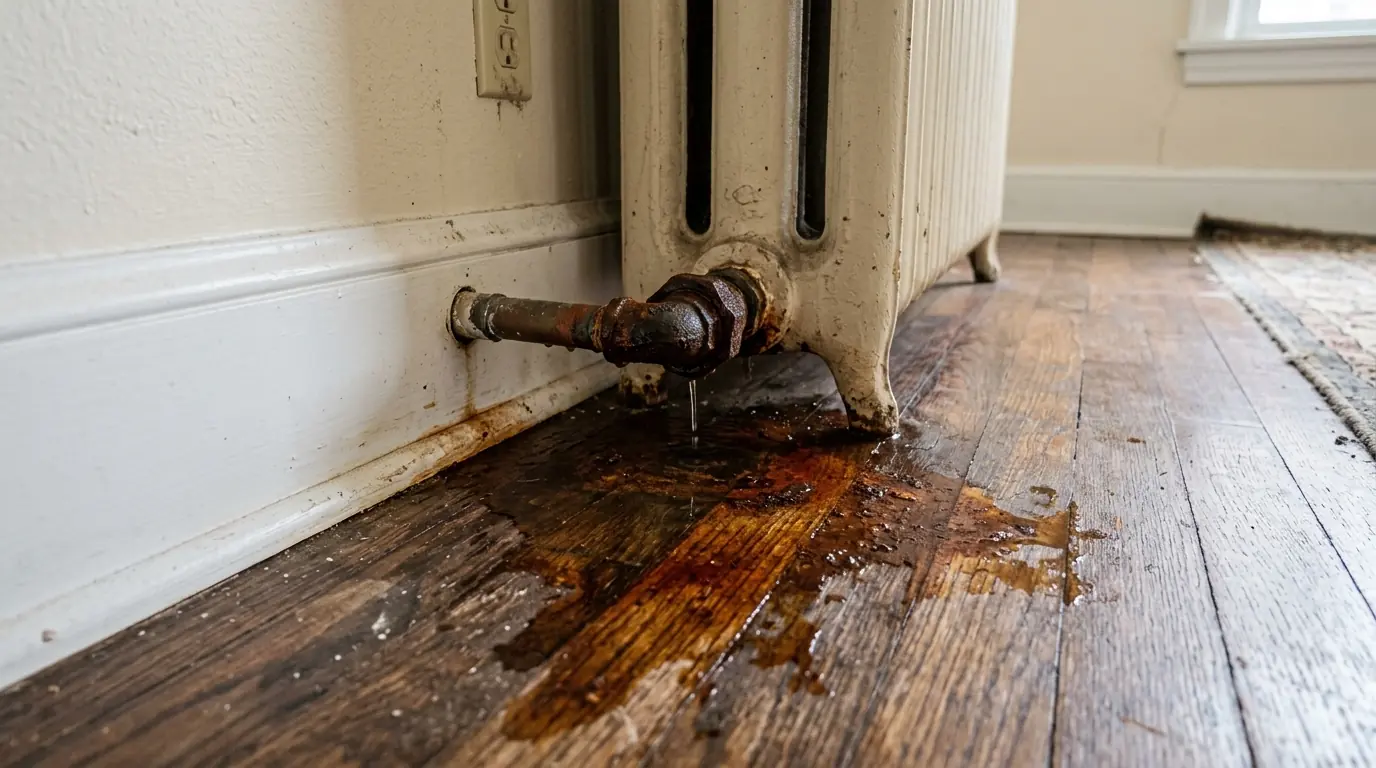
Leaks show up as rust stains on the floor, a damp spot under a union, or water around a vent. Most come from a union connection or valve, which are repairable. A leak between sections or from a cracked section is harder; some can be re-gasketed, others mean replacing the radiator with a salvage or new unit of similar output. We find the exact source first and give you the options, because a leak at the union costs far less than it looks.
What we see on calls around Minneapolis
A lot of the Twin Cities housing stock was built between 1900 and the 1960s, and many of those houses still heat with the cast iron radiators they were built with. Those radiators can outlast several boilers, but their valves, unions and steam vents are often decades old too. That is why so many of the radiator calls we take in Minneapolis are a single worn valve or vent rather than anything wrong with the radiator itself.
Step by step
How a radiator repair runs
- 1
Find the source
Leak, valve or vent problem identified.
- 2
Isolate or drain
Zone isolated or system drained as needed.
- 3
Repair or move
Valve, union or vent replaced, or radiator moved.
- 4
Refill and bleed
System refilled and air removed.
- 5
Test
Radiator heated and connections checked for leaks.
Timing
How long it takes
A valve or vent replacement is usually done in a few hours, including refilling and bleeding. Moving a radiator takes most of a day because of the lifting and new piping. Heat is off only in the affected zone where the system allows isolation.
Questions we get on the phone
Radiator repair and relocation questions from Minneapolis homeowners
On hot water, usually trapped air or a closed valve; on steam, usually a stuck air vent.
Most leaks are at unions or valves and are repairable. Leaks between sections are harder.
Yes, including rerouting the piping and resetting the pitch.
Yes, but check that the room still heats; we can size a replacement.
Yes, for room-by-room control on suitable systems.
More from this category
Related work we handle
Hot Water Baseboard Heating
Adding Baseboard to a Boiler System and more.
Details on replacing old baseboard unitsFrom our guides: Boiler warning signs to catch before winter.
Fix the radiator, not the whole system
Call and tell us which radiator is misbehaving.