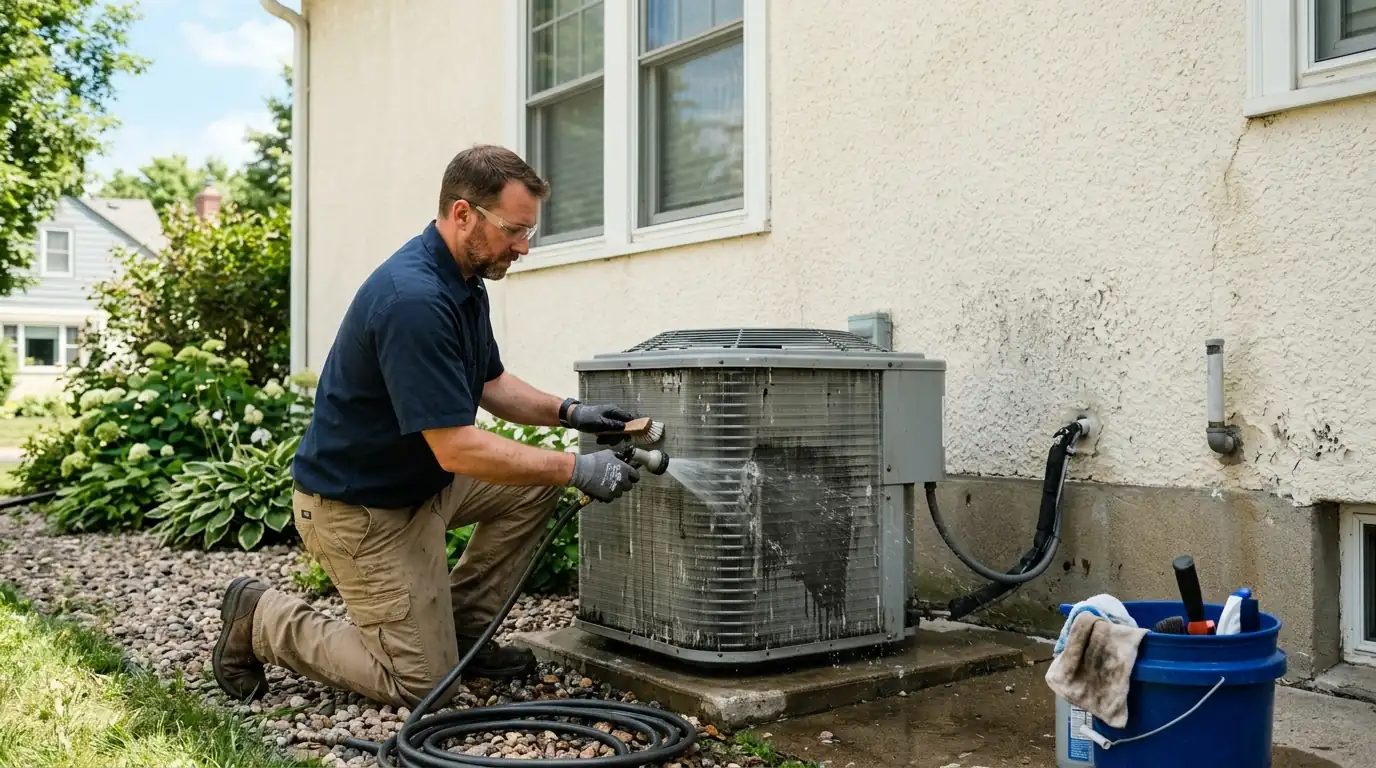
Coil matched to condenser
Central air conditioning installation in Minneapolis
A Minnesota air conditioner runs hard for a few months and sits the rest of the year, so the right system is sized to the summer load and bought at the efficiency tier that pays back here, not in Phoenix.
- 24/7 calls answered
- Minneapolis service office
- 3 ton typical home size
- R-454B current refrigerant
Quick answer
Central AC replacement in Minneapolis typically costs $3,221 to $5,886 according to Angi's 2026 data, while broader Twin Cities ranges run $4,200 to $11,500 depending on SEER2 tier and ductwork. A median 1,867 square foot home here usually needs about a 3 ton unit, confirmed by a load calculation.
Cooling
Buying cooling for a short, hot summer
Minnesota runs its air conditioners heavily for four to five months, then barely at all. That changes the math. A very high SEER2 unit that pays for itself in a southern climate can take much longer to earn back its premium here, so for most homes a mid-tier system with the right size and a properly matched indoor coil is the smart buy.
The other change is refrigerant. R-410A is being phased out, and new systems use R-454B or R-32. That matters when deciding whether to keep recharging an aging R-410A unit or replace it, and it means the indoor coil has to be replaced along with the outdoor unit.
Cost factors
What moves the price
Treat the ranges above as planning figures, not quotes. Here is what moves yours.
- SEER2 tier. 14 to 15 SEER2 sits at the low end; 16 to 17 qualifies for Xcel rebates; 18 and up costs noticeably more.
- System size. Most homes here need 2 to 4 tons; larger capacity costs more.
- Indoor coil. The coil is replaced with the condenser and is part of the price.
- Line set. Reusing an old line set is sometimes possible; a new one typically adds $150 to $400.
- Electrical. A new or upsized circuit and disconnect add cost on first-time installs.
- Ductwork. Undersized returns or supplies to upstairs rooms may need correction.
- Permit. Minneapolis HVAC permits run $84.20 to $216.60 depending on the job.
SEER2 tier and sizing
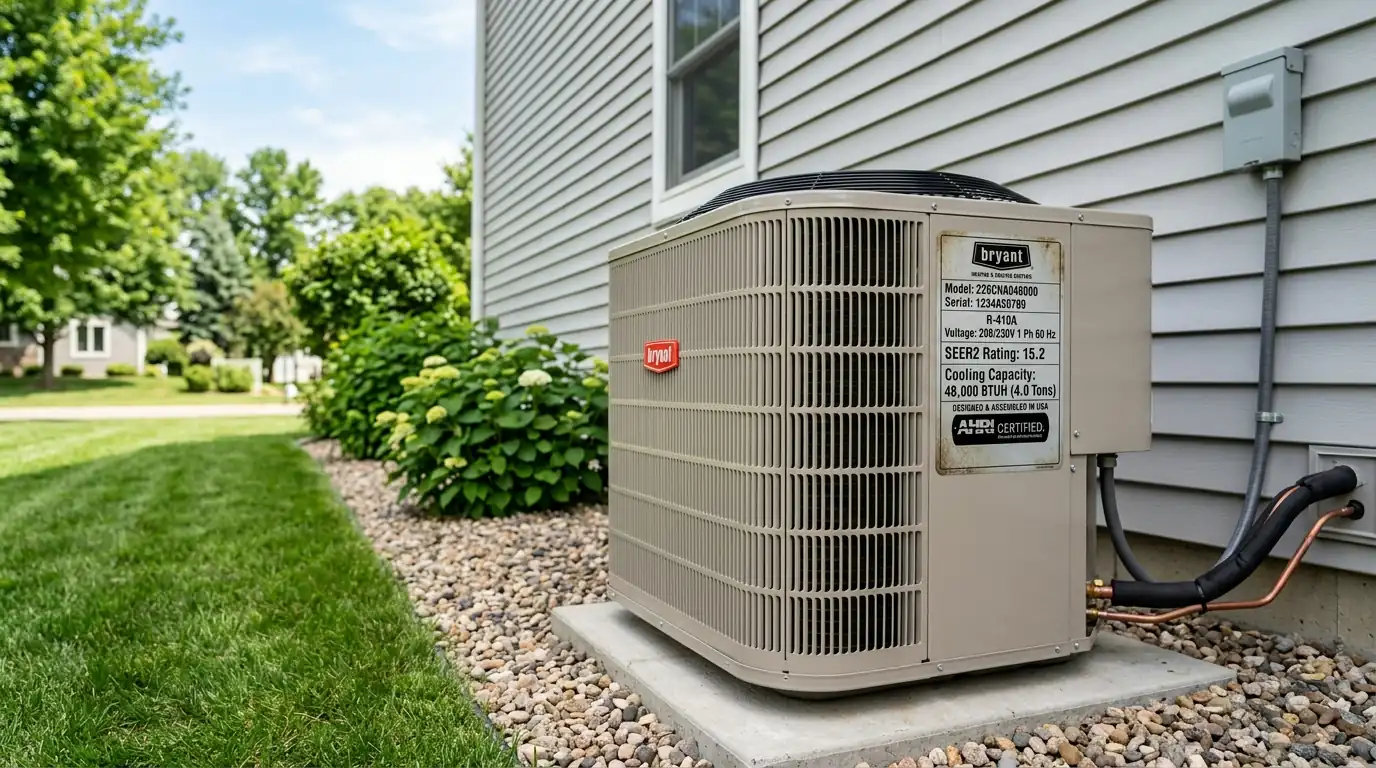
The federal minimum for new central AC in the northern region is 14.3 SEER2, and most Twin Cities installs land at 16 to 17 SEER2, where Xcel Energy rebates start to apply. Above that, the premium buys quieter, variable-speed operation more than big savings in this climate. Sizing matters more than tier. We run a load calculation instead of reading the old tonnage off the nameplate, because an oversized unit cools the air before it dries it, leaving the house cold and clammy in August.
Replacing the indoor coil
The evaporator coil sits on top of the furnace and has to be matched to the new outdoor unit for the system to reach its rated efficiency. With the move from R-410A to R-454B, the old coil is not compatible with a new condenser anyway. Replacing the coil means opening the plenum above the furnace, setting the new coil, brazing new line connections, and running a new condensate drain. We pressure test and evacuate the system before charging it, so moisture and air stay out of the refrigerant circuit.
Adding central AC to a furnace home
A lot of older Minneapolis homes have a forced-air furnace but never had central air. Adding it means setting a coil on the furnace, running a refrigerant line set and a condensate drain, adding an outdoor condenser on a pad, and a dedicated electrical circuit. The question to settle first is the ductwork: ducts sized only for heat can be too small to move cooling air quietly to the upstairs rooms. We check duct size and return capacity before quoting, and suggest a ductless unit for a hot top floor when the ducts will not carry it.
How Minneapolis homes shape this job
The median Minneapolis home is about 1,867 square feet, which usually works out to roughly a 3 ton air conditioner, but the load calculation often moves that half a ton either way depending on shading, windows and insulation. With R-410A being phased out in favor of R-454B, we also look at whether a failing older system is worth one more recharge, or whether the refrigerant cost tips it toward replacement this season.
What is included
What a central AC install includes
- Load calculation and duct capacity check
- New outdoor condenser on a level pad
- Matched indoor evaporator coil
- Line set replaced or flushed and reused
- Pressure test and deep vacuum before charging
- New condensate drain and float switch
- Electrical disconnect and whip
- Permit and inspection
- Old equipment and refrigerant recovered and removed
Step by step
How an AC installation runs
- 1
Load calculation and duct check
We size the system from the house and confirm the ducts can move the air.
- 2
Written options
You get prices on the recommended SEER2 tier and one alternative.
- 3
Remove and set
Old condenser and coil out, new coil on the furnace, new condenser on the pad.
- 4
Braze, test and charge
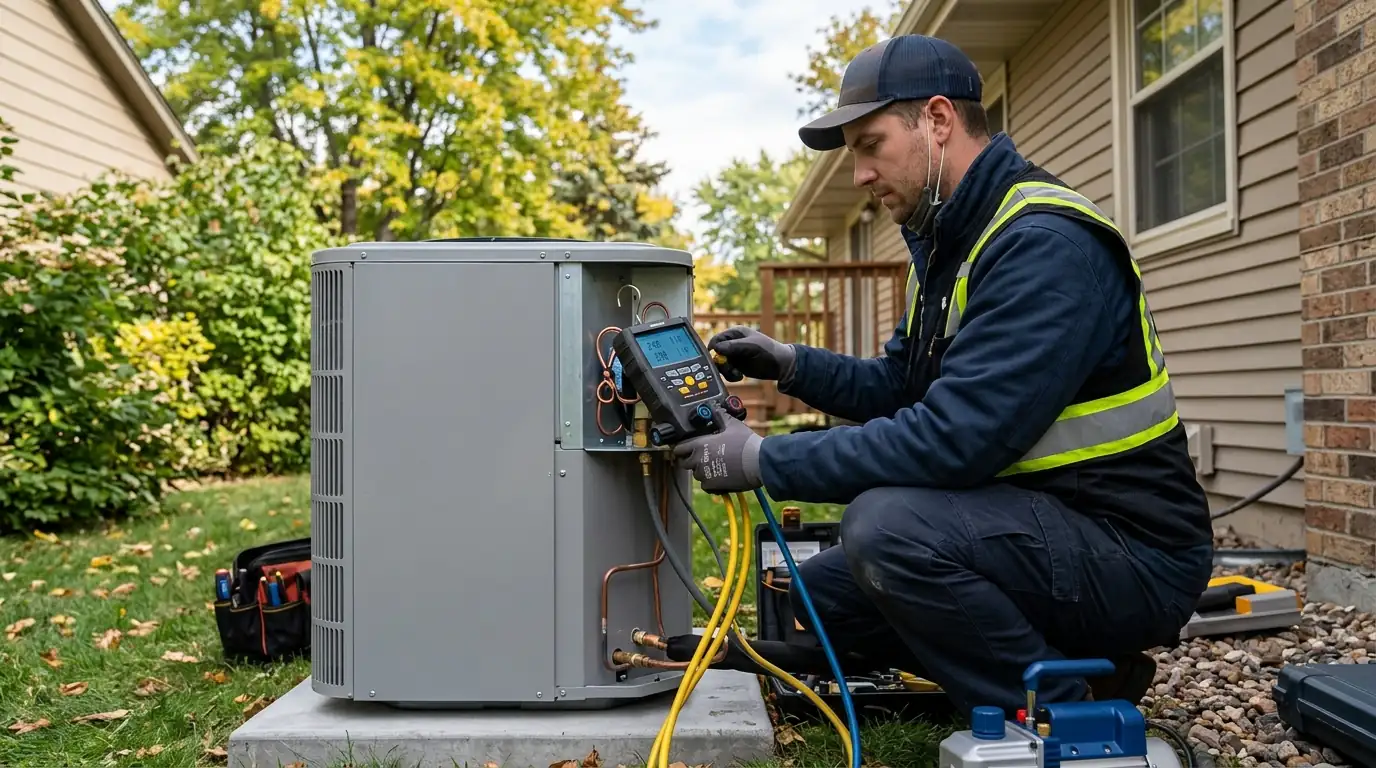
Line set connected, pressure tested, evacuated and charged by weight.
- 5
Commission and inspect
Airflow, temperature split and pressures checked, permit inspection scheduled.
Brands we service and install
Most of the air conditioners we service are Carrier, Lennox, Trane and Goodman, plus Daikin and Rheem condensers.
Compare
Why AC installation is not a weekend project
| Homeowner | Our technician | |
|---|---|---|
| Handling refrigerant | Regulated by the EPA | Recovered and charged with proper equipment |
| Brazing line connections | Needs torch and nitrogen purge | Brazed under nitrogen, pressure tested |
| Sizing the unit | Usually copied off the old nameplate | Load calculation for your house |
| Permit and inspection | Often skipped, hurts resale | Pulled and inspected |
Questions we get on the phone
AC installation questions from Minneapolis homeowners
For most homes, 16 to 17 SEER2. It qualifies for Xcel Energy rebates, and the short cooling season makes higher tiers slow to pay back.
Yes, in almost every case. The coil must match the new outdoor unit, and older R-410A coils are not compatible with new R-454B systems.
You can while refrigerant remains available, but costs are rising with the phase-out. If the system is old and leaking, replacement usually makes more sense.
A boiler home has no ducts for air, so the usual answer is a ductless mini-split or a small-duct high-velocity system. We cover that on our ductless page.
A like-for-like replacement is usually one day. A first-time install with a new circuit and line set may take a day and a half.
More from this category
Related work we handle
Ductless Mini-Split Installation
Single-Zone Room Systems and more.
Ductless Mini-Split Installation in MinneapolisFrom our guides: What central air replacement costs here.
Replace your AC before the next heat wave
Call to set up a load calculation and a written price, and get the new system in before July fills the schedule.