Answering 24/7
Heat and Energy recovery ventilators in Minneapolis
A tight house holds heat well and holds everything else too: cooking smells, moisture, and whatever the new carpet is giving off. An HRV or ERV swaps stale indoor air for fresh outdoor air, warming the incoming air with the outgoing air on the way through.
- 24/7 calls answered
- Minneapolis service office
- Balanced supply and exhaust
- Core and filters serviced yearly
Quick answer
An HRV or ERV in a Minneapolis home exchanges stale indoor air for fresh outdoor air while recovering most of the heat through a core, so ventilation does not waste the heating that runs from October through April. Newer tight homes usually need one; older leaky homes often do not.
Air Quality & Ducts
Who needs mechanical ventilation
Older houses breathe through their gaps, and plenty of them leak enough air that they need no ventilation equipment at all. A new house built to current energy code, or an older house that has been heavily air-sealed and insulated, does not leak enough to keep indoor air fresh or dry.
Signs of a house that needs fresh air are hard to miss: heavy condensation on windows in winter, lingering smells, stuffy bedrooms in the morning. An HRV or ERV fixes that with a controlled, balanced exchange rather than an open window.
Compare
HRV or ERV
| HRV | ERV | |
|---|---|---|
| Transfers heat | Yes | Yes |
| Transfers moisture | No, removes it | Yes, keeps some in |
| Best when | House runs too humid in winter | House runs too dry in winter |
| Drain needed | Yes | Usually not |
Cost factors
What moves the price
Ventilation projects are priced by the unit and how its ducts reach the house.
- HRV or ERV. ERVs cost somewhat more because the core also moves moisture.
- Unit capacity. Larger homes need higher airflow units.
- Dedicated ducts or furnace tie-in. Dedicated supply ducts to rooms cost more than tying into the return.
- Wall hoods. Two exterior penetrations with proper spacing are required.
- Controls. Wall controls, timers and humidity-based controls vary.
- Condensate drain. HRVs need a drain line.
- Balancing. Airflow measurement and balancing are part of a correct install.
Fresh air for a tight new home
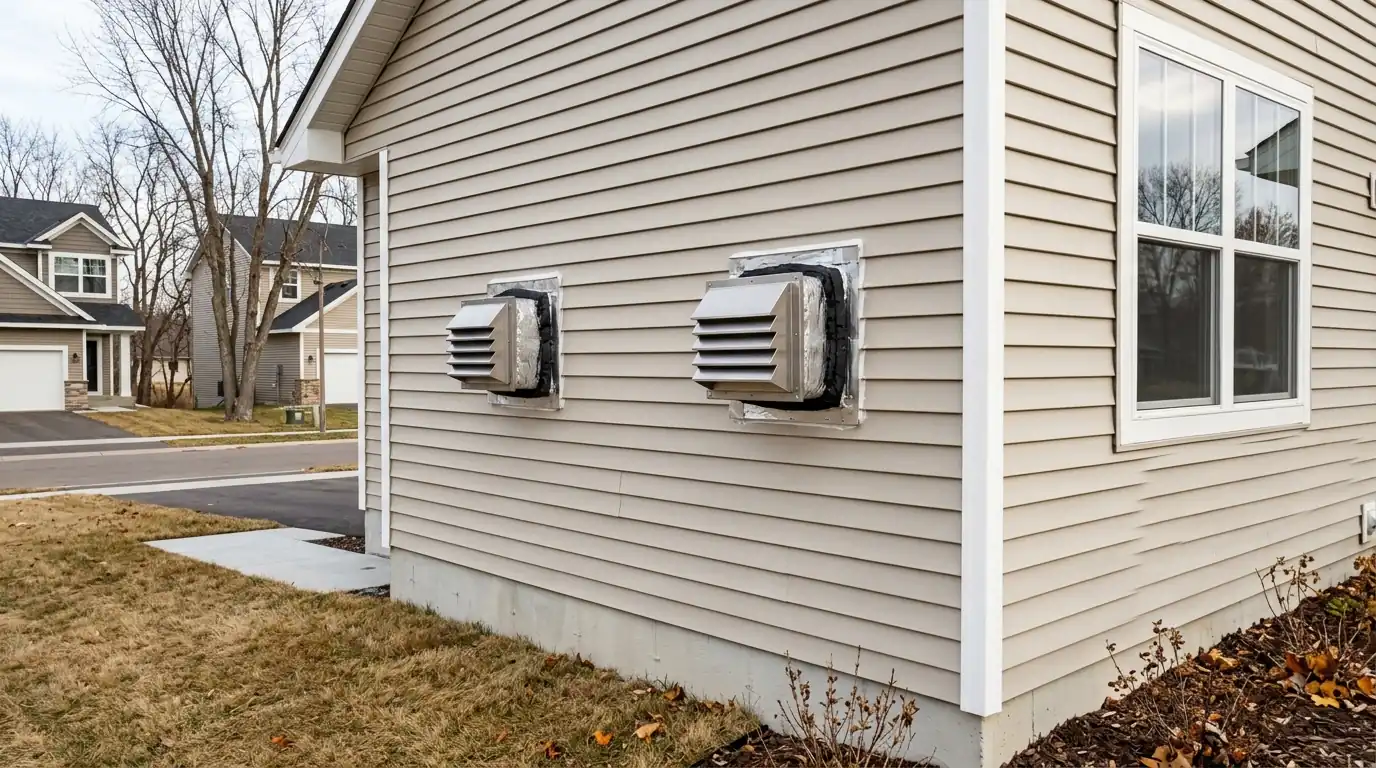
New homes and major remodels are built tight enough that code usually calls for mechanical ventilation. We size the unit from the house's floor area and bedroom count, run insulated fresh-air and exhaust ducts to wall hoods spaced apart so exhaust is not pulled back in, and connect the supply either to the furnace return or to its own ducts delivering air to bedrooms and living areas. Exhaust is typically pulled from bathrooms and the kitchen area, where moisture and odors start.
Balancing an existing HRV
Many HRVs were installed and never balanced, so they push more air one way than the other. An unbalanced unit pressurizes or depressurizes the house, which can pull exhaust down a water heater flue or drive moist air into walls. We measure airflow on both the supply and exhaust sides, adjust the dampers until they match, and check the controls, defrost setting and wall control. It is often the only thing an older, noisy or ineffective HRV actually needs, and it takes far less time than replacing one.
Core cleaning and filter service
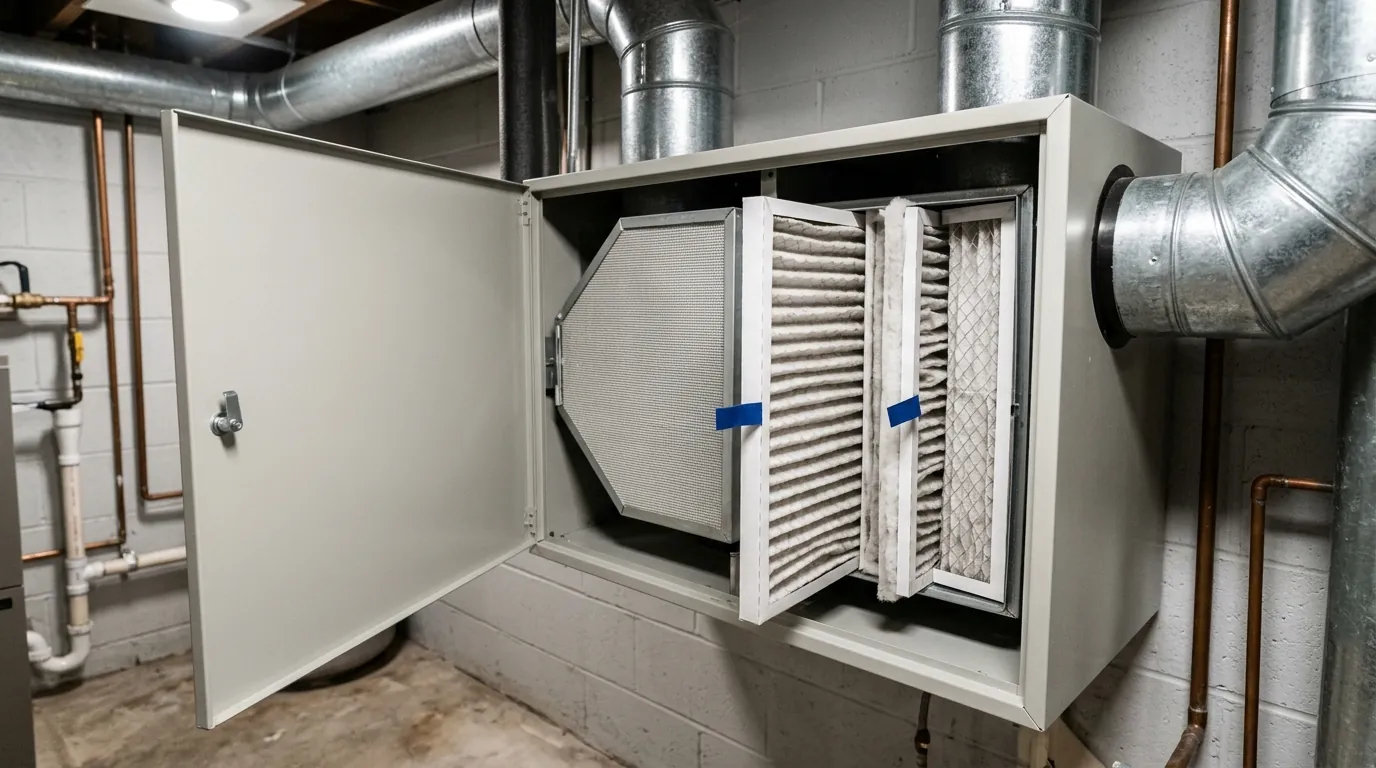
The core is where the heat transfer happens, and the filters in front of it keep it clean. When filters clog, airflow drops and the unit stops doing its job without anyone noticing. A service visit washes or replaces the filters, cleans the core per the manufacturer's method, clears the condensate drain on HRVs, checks the defrost cycle, and inspects the outdoor hoods for lint, leaves and snow. We recommend it yearly, and filters more often in homes with pets.
How Minneapolis homes shape this job
Ventilation in Minneapolis has to recover heat rather than simply exhaust it, because the heating season runs roughly October through April. Running a bath fan or cracking a window for fresh air in January throws heated air away for seven months of the year. On a tight Minneapolis home, an HRV recovers most of that heat from the outgoing air and hands it to the incoming air.
What is included
What a ventilation install includes
- Ventilation rate calculated for the house
- HRV or ERV matched to humidity needs
- Insulated fresh-air and exhaust ducts
- Exterior hoods spaced to prevent recirculation
- Supply tied to the return or to room ducts
- Exhaust from baths and kitchen area
- Condensate drain where required
- Wall control and defrost setup
- Airflow balanced on both sides
Step by step
How a ventilation install runs
- 1
Size the ventilation
Floor area and bedrooms set the airflow the house needs.
- 2
Pick HRV or ERV
Chosen by humidity profile and how the house is used.
- 3
Plan duct runs and hoods
Supply, exhaust and exterior hood locations laid out.
- 4
Install and connect
Unit mounted, ducts, hoods, drain and controls installed.
- 5
Balance and test
Supply and exhaust measured and balanced, defrost checked.
Brands we service and install
Air quality equipment usually mounts on Carrier, Lennox, Trane or Goodman furnaces, with Honeywell controls.
Questions we get on the phone
HRV and ERV installation questions from Minneapolis homeowners
If it is new or heavily air-sealed and shows window condensation or stale air, likely yes. Many older homes leak enough not to need one.
Properly installed and balanced, no. It recovers most of the heat from outgoing air.
HRVs suit houses that run humid in winter; ERVs suit houses that run dry. We look at your house before choosing.
Filters every few months and the core cleaned yearly.
Yes. Balancing and correcting the controls often fixes a noisy or ineffective unit.
More from this category
Related work we handle
Whole-Home Humidifier Installation
Bypass vs Fan-Powered Humidifiers and more.
About bypass vs fan-powered humidifiersFrom our guides: Setting a humidifier through a Minneapolis winter.
Bring in fresh air without the heat loss
Call and we will check whether your house needs ventilation and size the right unit.