Answering 24/7
Electric furnace repair in Minneapolis
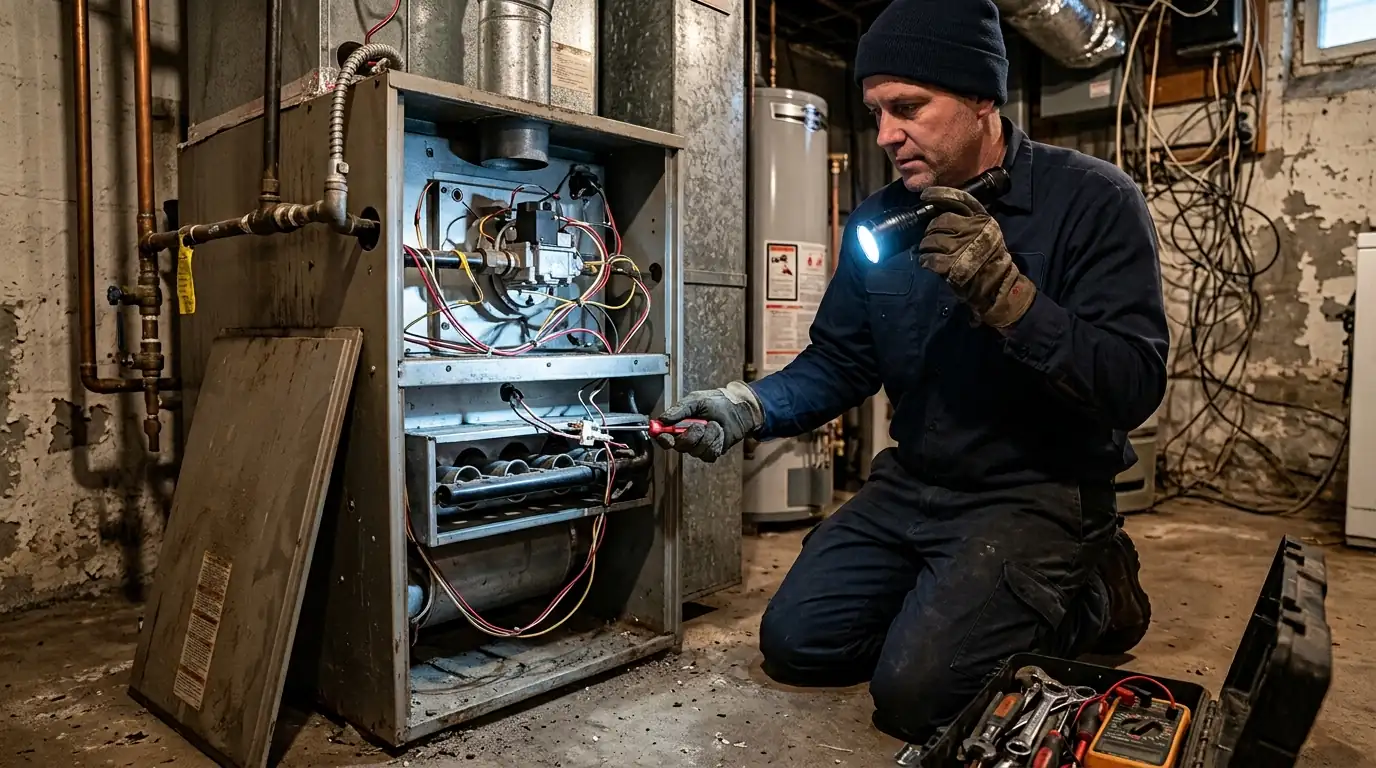
An electric furnace has no burner or flame, just heating elements, relays and a blower. When it blows cool air or trips breakers, the cause is almost always electrical, and our technicians test each element and control before replacing anything.
- 24/7 calls answered
- Minneapolis service office
- Element test every heating stage
- Same visit most repairs
Quick answer
An electric furnace in a Minneapolis home or condo heats with resistance elements switched on in stages by sequencers or relays. When it blows lukewarm air, short-cycles or trips breakers, the usual causes are a burned-out element, a failed sequencer, an open limit switch or a weak blower, and each can be tested and replaced in one visit.
Step by step
How an electric furnace repair runs
- 1
Hear the symptom
Lukewarm air, short cycling or a tripping breaker.
- 2
Test every stage
Current measured on each element with full heat called.
- 3
Check controls and air
Sequencers, limits, blower, capacitor and filter tested.
- 4
Repair
Failed part replaced and connections tightened.
- 5
Run a full cycle
Each stage, the blower and the limits verified.
Warning signs
Signs it is time to call
- Air from the registers is warm but never hot, and the furnace runs much longer.
- The breaker trips as soon as the heat comes on.
- A burning smell that keeps coming back after the first cold day.
- The furnace heats for a few minutes, shuts off, then starts again.
- The blower runs but no heat comes on at all.
- Discolored wire or a buzzing sound from the furnace panel.
Heating
No flame, so the problem is almost always electrical
An electric furnace brings several heating elements on one after another so the house circuit is not hit all at once. Each element has its own sequencer or relay and its own high-limit safety switch. Lose one element and the air comes out lukewarm; lose a sequencer and whole stages stay cold; lose the blower and the limits trip to protect the cabinet.
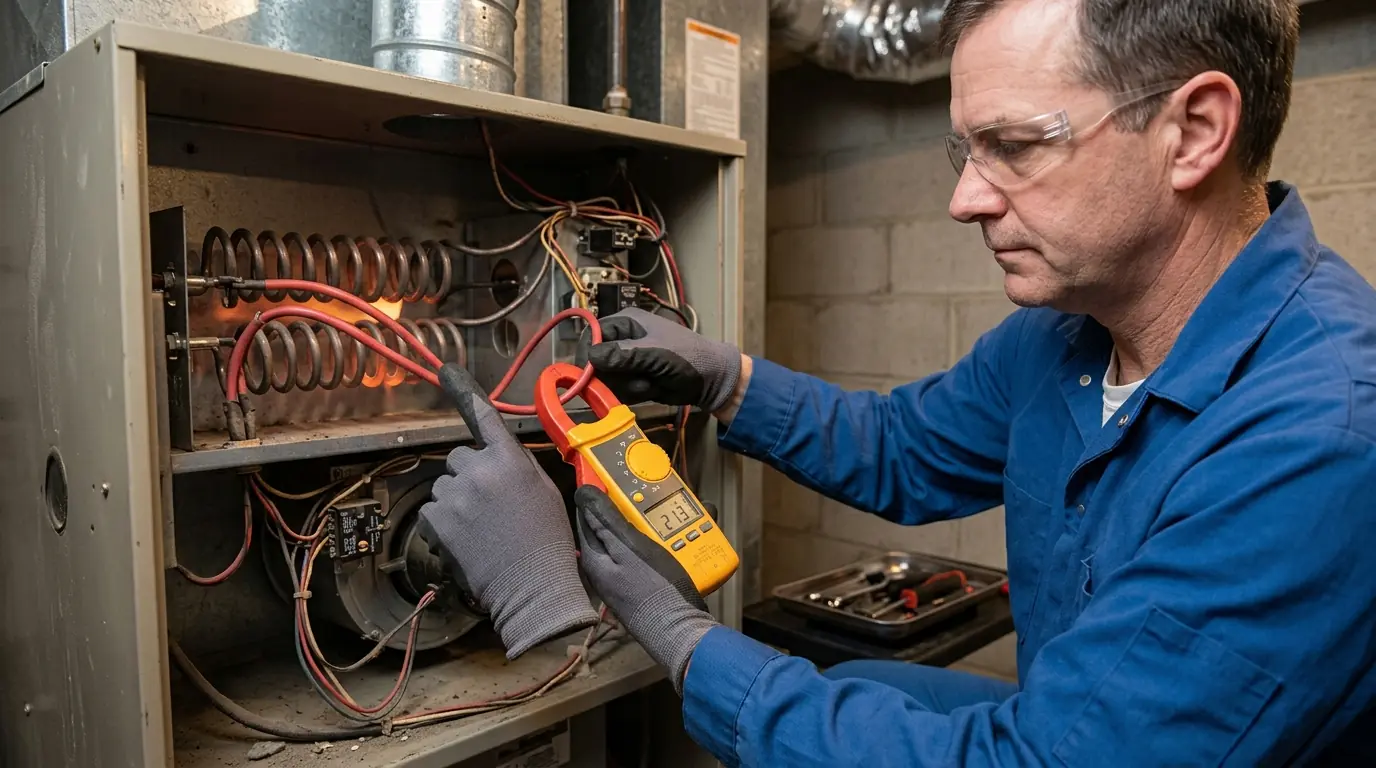
That is why we test instead of guessing. We measure the current each element draws, confirm every sequencer closes in order, check the limits and the blower motor and capacitor, and look at the wiring and breaker for heat damage. Electric furnaces carry high current, and a loose lug that has been arcing is something we always look for.
Timing
How long you are without heat
Most electric furnace repairs finish in one visit of one to two hours, because elements, sequencers, limits and capacitors for common models are stocked on the truck.
Proprietary element racks for older or less common furnaces can take a day or two to arrive, and we can usually restore partial heat on the working stages in the meantime.
Heating element and sequencer replacement
Most electric furnaces have three to five elements. When one opens, the air feels warm but never hot, and the furnace runs longer. We measure current on each element with the furnace calling for full heat, find the one that is not drawing, and replace the element or its sequencer. On older units we check the element rack for sagging coils that can short against the cabinet, which is a fire risk as well as a heating problem. Replacement elements are matched to the original wattage so the circuit and breaker stay correctly sized.
Breaker trips and wiring faults
A furnace that trips its breaker the moment heat comes on usually has a shorted element, a failed relay or a heat-damaged lug. We open the panel side of the circuit as well as the furnace, look for discolored wire and loose terminals, and confirm the breaker and wire size match the furnace nameplate. We never just reset and leave a furnace that keeps tripping; the cause gets found first. If the breaker itself is weak or the wire is undersized for the furnace, we show you the readings and explain what an electrician needs to correct before the furnace goes back in service.
Blower and limit switch repairs
If the elements work but the furnace shuts off before the house warms, the high-limit is tripping because air is not moving fast enough across the elements. A weak blower motor, a dead capacitor, a clogged filter or closed registers all do it. We test the blower and capacitor, check static pressure and the filter, and replace a limit only when it has actually failed rather than when it is doing its job. A filter slot that lets air bypass the filter also gets fixed, since dust on the elements and blower wheel brings the same problem back within a season.
How Minneapolis homes shape this job
Electric furnaces are common in Minneapolis apartments and condos, and about 53 percent of the city's housing units are renter-occupied. With the coldest annual mean temperature of any major U.S. metro, an electric furnace here runs long hours all winter, so elements and sequencers wear out sooner than they would farther south. A yearly check before the cold sets in catches most of them early.
What is included
What an electric furnace service call covers
- Current tested on every element
- Each sequencer or relay checked
- High-limit switches tested
- Blower motor and capacitor tested
- Filter and static pressure checked
- Wiring and lugs inspected for heat damage
- Breaker and wire size matched to the nameplate
- Thermostat call verified
- Written findings before work
Questions we get on the phone
Electric furnace repair questions from Minneapolis homeowners
One or more heating elements or their sequencers have usually failed, so only part of the heat comes on.
No. A breaker that trips repeatedly is protecting against a fault that needs to be found first.
Yes. A yearly check of elements, connections and the blower catches loose lugs and weak parts before winter.
Often worth considering. A cold-climate heat pump can carry much of the load and keep the electric elements as backup.
Yes. We work in tight closet installs and coordinate with building staff when needed.
Cost factors
What moves the price
Electric furnace repairs are priced after testing. A sequencer, limit or capacitor is a modest repair; a full element rack or blower motor costs more. Here is what moves the number.
- Part that failed. Sequencers and limits cost less than element racks and motors.
- Number of elements. Larger furnaces have more elements and stages to test.
- Wiring damage. Heat-damaged lugs or wire add parts and time.
- Blower condition. A motor or capacitor replacement adds to the visit.
- Age of the unit. Parts for older models can take time to source.
- Access. Closet installs in condos can be tight to work in.
- Repair or replace. A worn-out unit may be better replaced or paired with a heat pump.
More from this category
Related work we handle
Electric furnace not keeping up?
Call and tell us what it is doing. Most electric furnace repairs are finished on the first visit.