Answering 24/7
Spring air conditioner tune-ups in Minneapolis
An AC that sat through a Minnesota winter wakes up with weak capacitors, a coil full of cottonwood and a drain line full of last year's algae. A spring tune-up fixes those in May, not in the first July heat wave.
- 24/7 calls answered
- Minneapolis service office
- Coil and drain cleaned
- Written report after the visit
Quick answer
A spring AC tune-up in Minneapolis cleans the outdoor coil, tests the capacitor and contactor, checks refrigerant pressures and temperature split, and flushes the condensate drain. With June averaging a 56 degree dew point at MSP, a clear drain and a clean indoor coil are what keep the house dry as well as cool.
Cooling
Why spring service matters here
Air conditioners in Minneapolis sit idle for most of the year. Over that time the outdoor coil collects leaves and cottonwood, capacitors lose capacity in the cold, and the condensate drain dries out and then clogs when the first humid week arrives.
The tune-up is a set list of checks done before you need cooling. Anything worn gets priced before we touch it, and you get a written report of what we found.
What is included
What the AC tune-up covers
- Outdoor coil rinsed and fins straightened
- Capacitor and contactor tested
- Condenser fan motor checked
- Electrical connections tightened
- Refrigerant pressures and temperatures measured
- Indoor coil inspected
- Condensate drain and trap flushed
- Float switch tested
- Thermostat operation checked
Spring tune-up
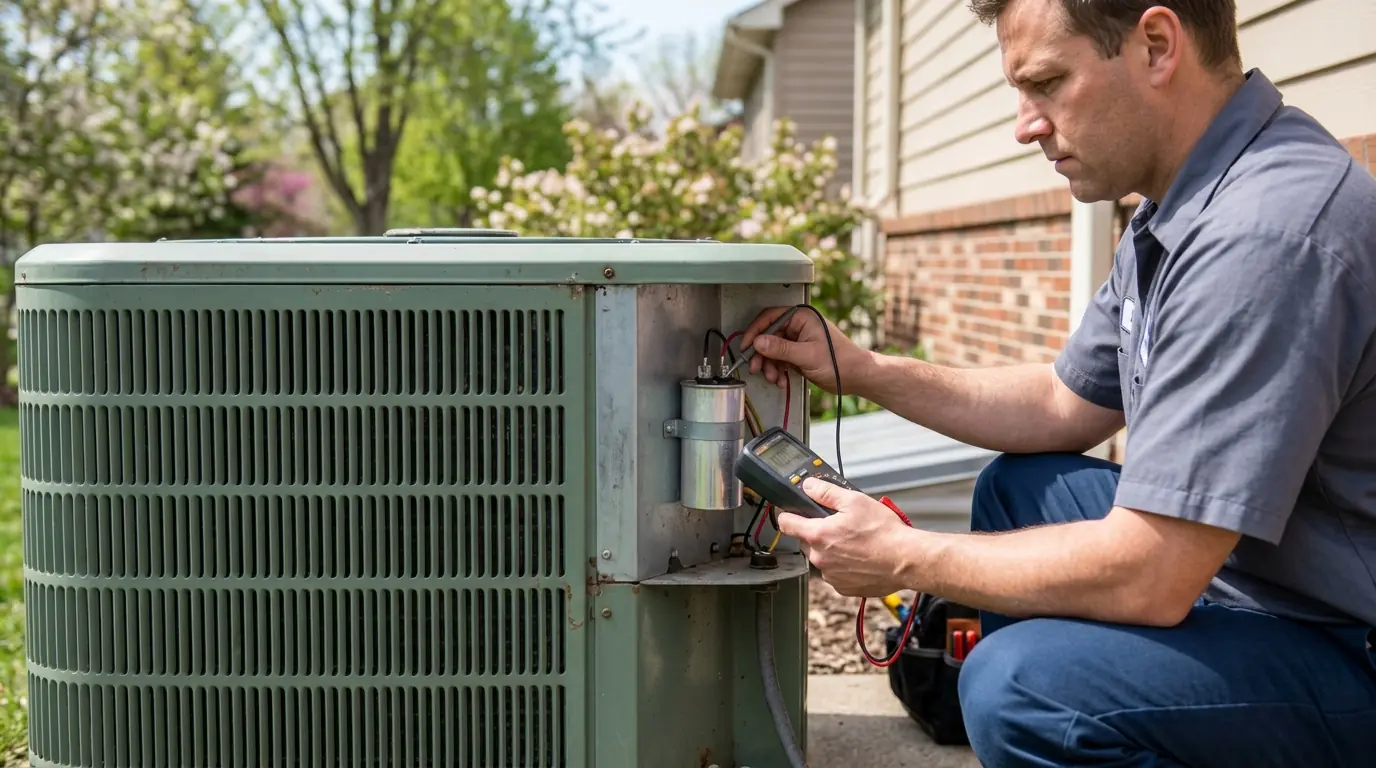
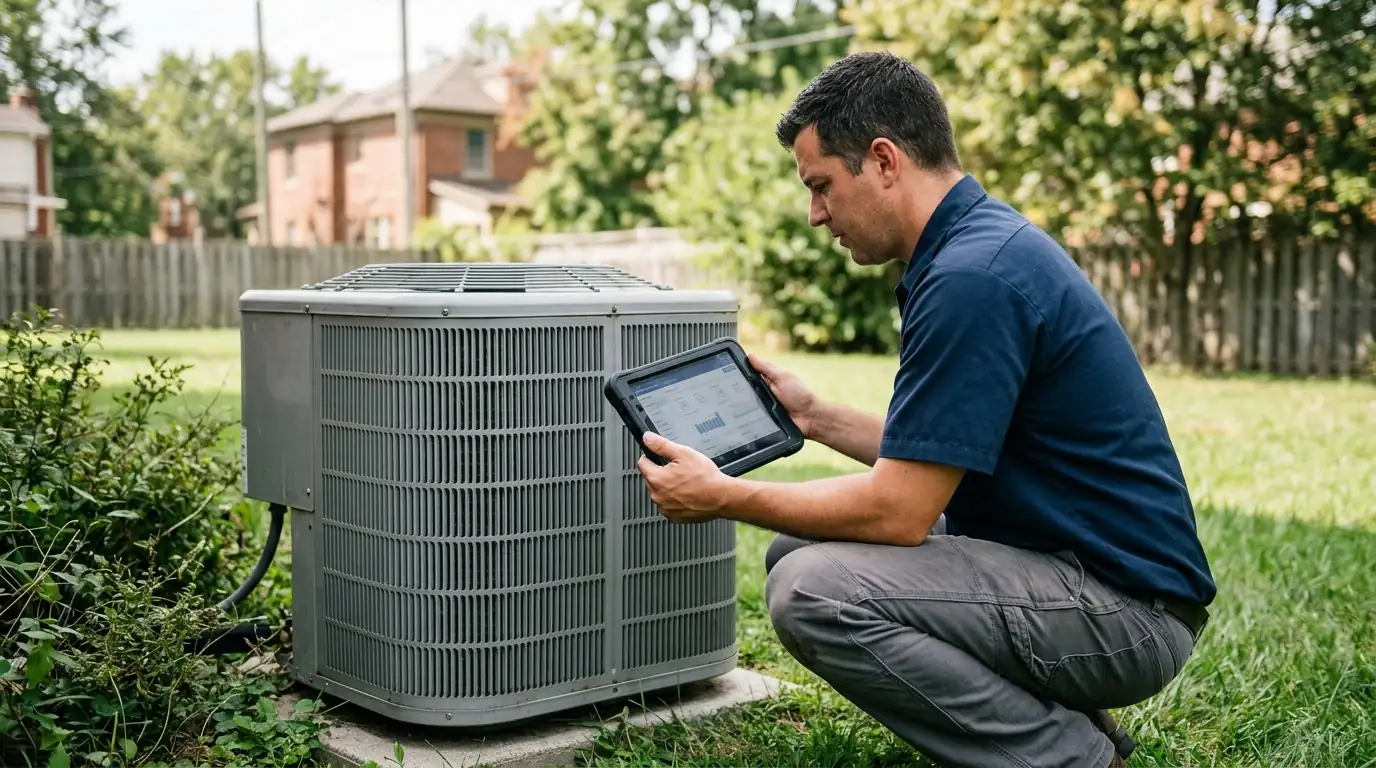
The tune-up starts at the outdoor unit: we clear debris, check the fan motor and blade, test the run capacitor and contactor, and tighten electrical connections. Inside, we check the blower, the filter and the thermostat. Then we run the system and measure refrigerant pressures, superheat or subcooling, and the temperature drop across the indoor coil. Those readings tell us whether the charge is right and whether the system is moving enough air before the hot weather puts it under load.
Coil cleaning and refrigerant check
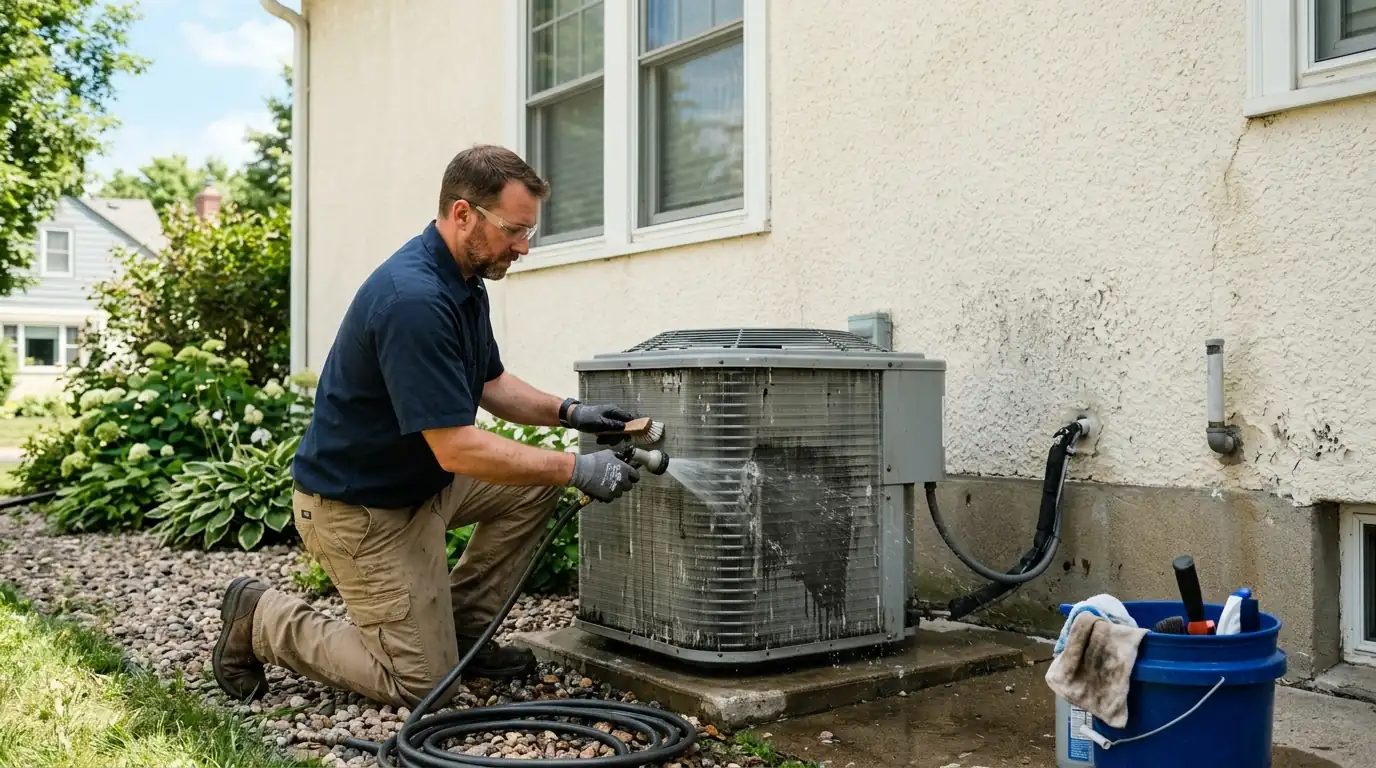
The outdoor coil rejects the heat taken from your house, and a coil matted with cottonwood fluff or grass clippings cannot do it. We rinse it from the inside out with low pressure so the fins are not flattened, and straighten bent fins where needed. The indoor coil gets inspected and cleaned where it can be reached. Refrigerant is checked by pressures and temperatures, not by guessing; if the charge is low, we tell you there is a leak and recommend finding it rather than simply topping it up.
Condensate drain flush
Your AC pulls a lot of water out of humid summer air, and it drains through a trap and line near the furnace. Algae and sludge grow in that line, and when it clogs the water backs up into the drain pan and can overflow onto the basement floor or trip a float switch that shuts the AC off. We flush the line, clean the trap, check the pan, and test the float switch if there is one, so the drain is ready before the first humid week.
What we see on calls around Minneapolis
At MSP, June brings highs near 79 degrees with an average dew point around 56, and July highs climb toward 84. That is humid enough that a Minneapolis air conditioner spends much of its effort pulling water out of the air, not just cooling it. A clean indoor coil and a clear drain are what make the house feel dry; a dirty coil or a clogged drain leave it cool and clammy.
Step by step
How a spring tune-up runs
- 1
Outdoor unit
Debris cleared, coil rinsed, electrical parts tested.
- 2
Indoor side
Blower, filter, coil and thermostat checked.
- 3
Drain
Condensate line and trap flushed, float switch tested.
- 4
Run and measure
Pressures, temperatures and temperature split recorded.
- 5
Report
Written findings and any recommended repairs.
Cost factors
What moves the price
A tune-up is a set visit; repairs found during it are priced separately for your approval.
- System type. Heat pumps and multi-stage systems take a little longer.
- Coil condition. Heavily matted outdoor coils take longer to clean.
- Access. Rooftop or tight-yard units take more time.
- Drain condition. Badly clogged lines may need extra work.
- Worn parts. Capacitors or contactors replaced only with your OK.
- Refrigerant. Low charge points to a leak, quoted separately.
- Timing. Spring appointments are easiest to schedule.
Compare
What you can do between tune-ups
| Homeowner | Our technician | |
|---|---|---|
| Clear leaves and cottonwood around the unit | Easy, power off first | Coil cleaned from inside out |
| Change the filter | Every 1 to 3 months | Airflow measured at the tune-up |
| Keep 2 feet clear around the condenser | Trim plants back | Airflow checked |
| Refrigerant and electrical | Not a DIY job | Tested every visit |
Questions we get on the phone
AC maintenance questions from Minneapolis homeowners
In spring, before the first hot or humid stretch.
It is the easiest way to avoid the common capacitor and drain failures that happen on the first hot day.
Only after we tell you it is low and why. A low charge means a leak.
Usually about an hour.
Yes, with added checks on the reversing valve and defrost controls.
More from this category
Related work we handle
From our guides: What central air replacement costs here.
Get the AC ready before July
Call to book a spring tune-up while appointments are easy to get.