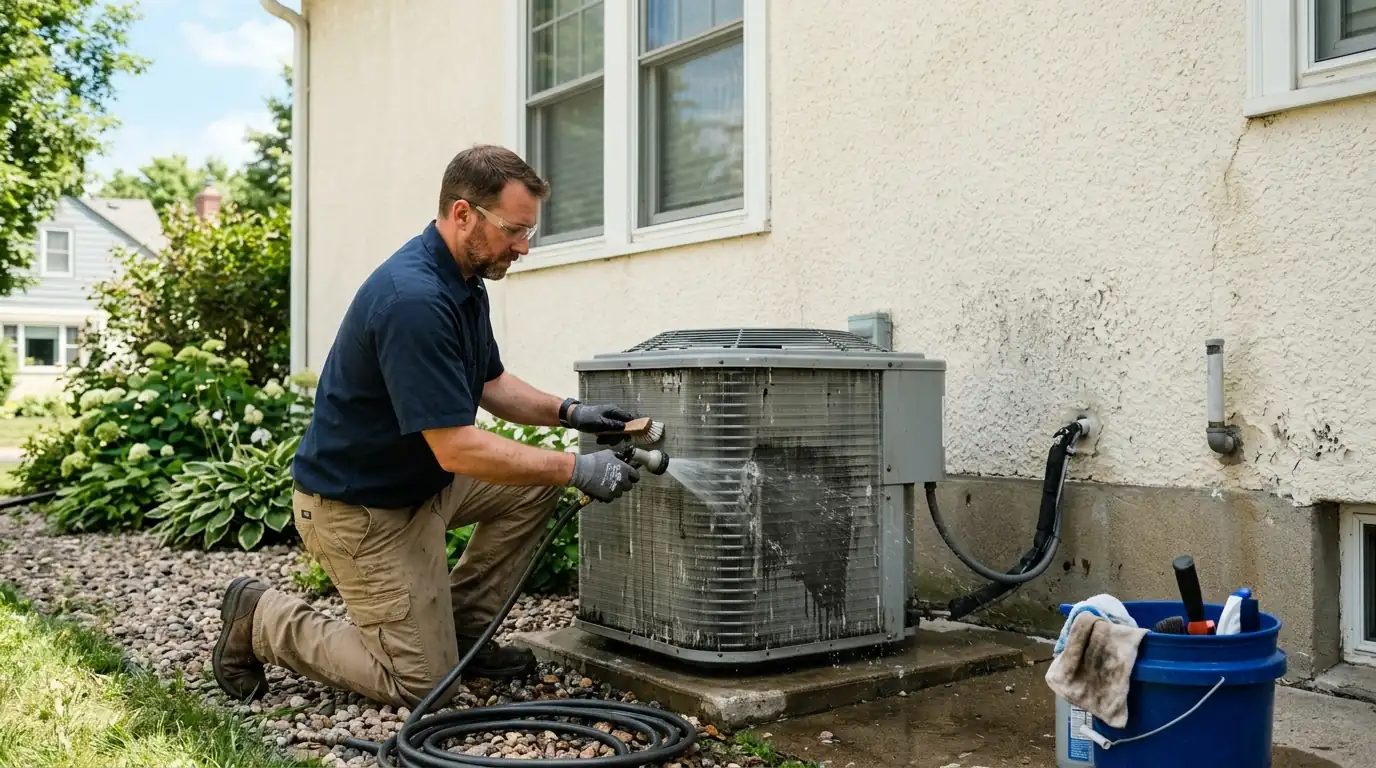
AC and heat pumps
Finding and fixing refrigerant leaks in Minneapolis
Refrigerant never gets used up. If your system needs a top-up every year, it is leaking, and adding more without finding the leak just pays for the same problem again. We find it first.
- 24/7 calls answered
- Minneapolis service office
- Leak search before recharge
- R-410A phase-out advice
Quick answer
Refrigerant leak repair in Minneapolis starts with finding the leak with an electronic detector, bubbles or a nitrogen pressure test, then repairing it before recharging. Common leak points are the indoor coil, flare fittings on mini-splits, and line sets; a line set replacement typically runs $150 to $400.
Step by step
How a leak repair runs
- 1
Confirm low charge
Pressures and temperatures measured to confirm a leak.
- 2
Find the leak
Electronic detection, bubbles, then a nitrogen test if needed.
- 3
Repair or replace
Fitting, line set or component fixed or replaced.
- 4
Vacuum
System evacuated to remove air and moisture.
- 5
Charge by weight and verify
Correct charge added and performance checked.
Warning signs
Signs it is time to call
- System needs refrigerant every season
- Ice on the small copper line or indoor coil
- Hissing near the indoor or outdoor unit
- AC running long cycles without cooling the house
- Oily residue at a fitting or coil
- Heat pump weak in both heating and cooling
Cooling
A recharge is not a repair
An air conditioner or heat pump is a sealed system. If the charge is low, refrigerant escaped somewhere. Topping it up restores cooling for a while, then the leak drains it again, often slowly enough that nobody notices until the next heat wave.
We locate the leak, repair or replace the leaking part, pull a vacuum to remove air and moisture, and charge the system by weight. On older R-410A systems we also give you the replacement option, because the refrigerant phase-out is changing the math.
Timing
How long it takes
A leak at an accessible fitting is often found and repaired in one visit. A hidden leak needing a nitrogen standing test, or a coil or line set replacement, usually takes a second visit. We will tell you which it is after the first search, and whether a repair makes sense on your system.
Leak search and pressure test
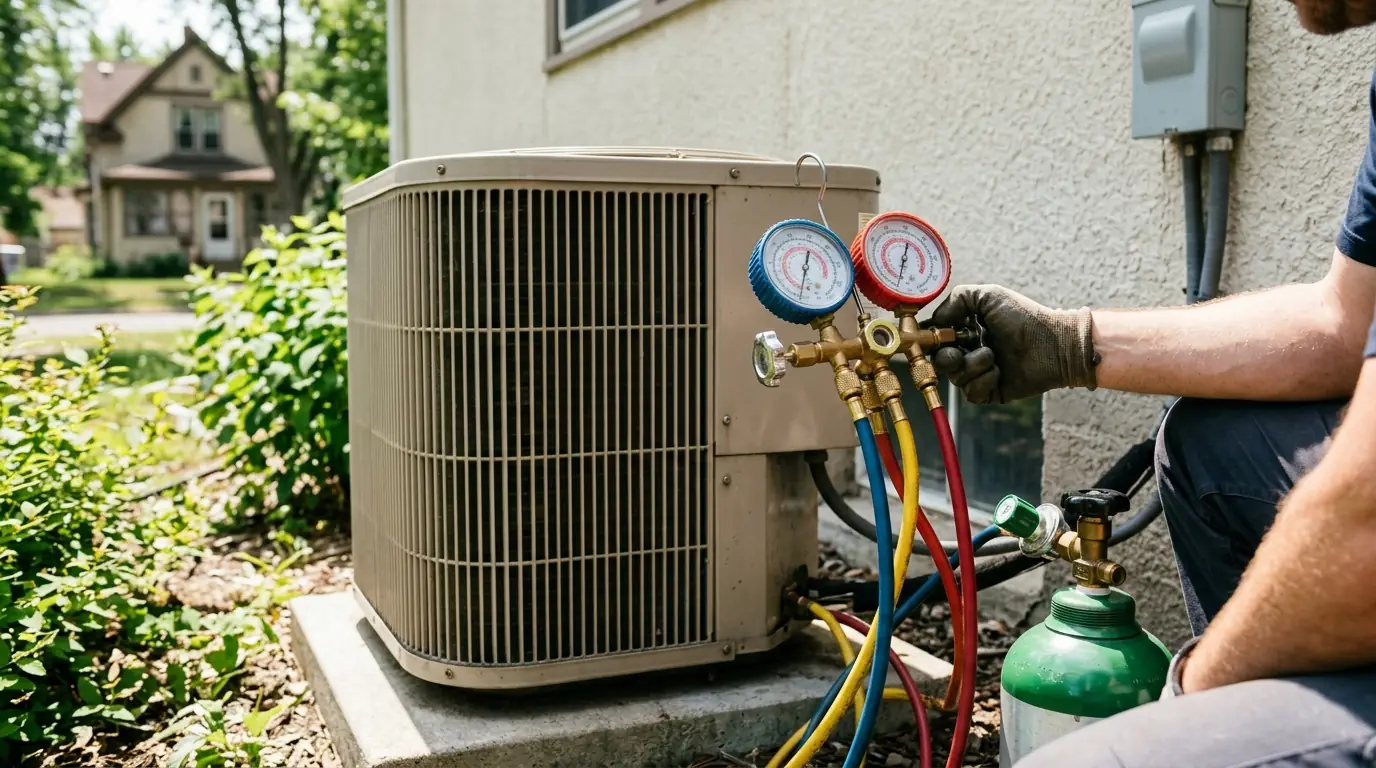
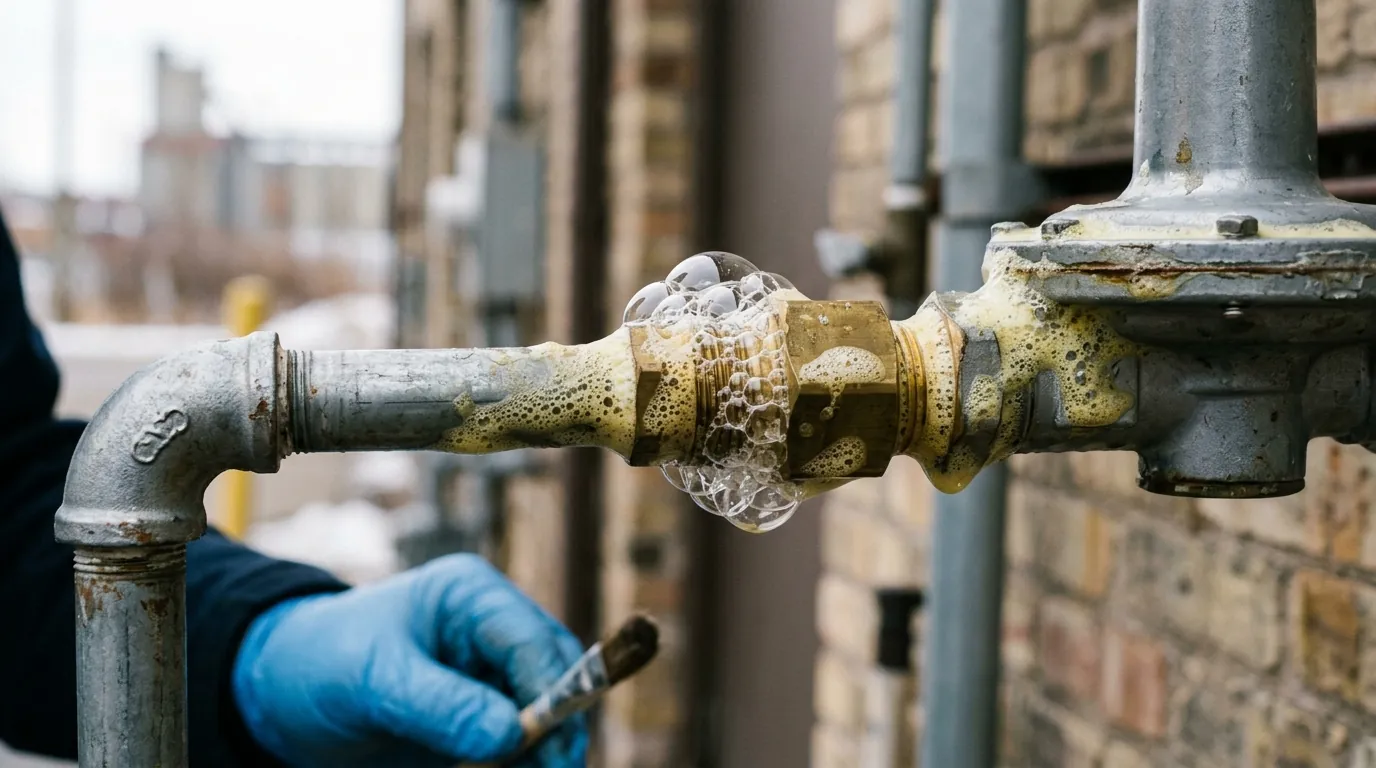
Leak searching starts with the likely places: brazed joints at the indoor coil, service valves, flare fittings, and the coil itself. An electronic detector finds most leaks, and soap solution pinpoints them. If the leak cannot be found with the system charged, we recover the refrigerant, pressurize the system with dry nitrogen and let it stand, then split the system into sections to narrow it down. It takes longer than a recharge, and it is the only way to stop paying for refrigerant every year.
Line set repair or replacement
The copper line set between the indoor and outdoor units can leak at kinks, where it rubs on a joist, or where it was nicked during a remodel. Buried or hidden sections are the hardest to test. When a line set is damaged or of unknown condition, replacing it is often more reliable than repairing a spot, and typically costs $150 to $400 for the material and labor on a standard run. New lines are brazed under nitrogen and pressure tested before charging.
R-410A phase-out and recharge limits
New air conditioners have moved from R-410A to R-454B or R-32 under EPA rules, and R-410A for servicing older systems is getting more expensive. That changes the decision on an older unit with a significant leak. If the leak is at a repairable fitting on a younger system, repair it and recharge. If the leak is in the coil of a system past 12 or 15 years, a new system may make more sense. We give you the repair and replacement numbers together.
Local conditions that change the fix
Minneapolis runs its air conditioners hard for four or five months and barely at all the rest of the year, so a slow leak often goes unnoticed through fall and winter and shows up as a warm house in the first July heat wave. With R-410A being phased out for R-454B, each of those annual top-ups on an older system costs more, which is why we push for finding the leak instead.
Questions we get on the phone
Refrigerant leak repair questions from Minneapolis homeowners
No. If it is low, there is a leak.
We can, but without finding the leak it will drain again. We recommend finding it first.
In a home leak it mostly affects performance. It should be recovered and handled with proper equipment, never vented.
Sometimes at a joint; a leak in the coil tubes usually means replacing the coil.
If it is older and has a major leak, often yes. We give you both prices.
Cost factors
What moves the price
Published 2026 Minneapolis service-call rates run about $115 to $210. Leak repair costs depend on where the leak is.
- Leak search time. An easy leak is found in minutes; a hidden one takes a nitrogen test.
- Leak location. A flare fitting is quick; an evaporator coil is a major repair.
- Line set. Replacement typically runs $150 to $400.
- Refrigerant type and amount. R-410A costs are rising with the phase-out.
- Evacuation and charge. Required after any opening of the system.
- System age. An older system may be better replaced than repaired.
- Time of the call. Heat-wave evenings and weekends may cost more.
More from this category
Related work we handle
From our guides: What central air replacement costs here.
Stop paying for refrigerant every summer
Call and we will find the leak before we add a pound of refrigerant.