Answering 24/7
Fall furnace tune-ups in Minneapolis
The first cold night of the year is when weak ignitors, dirty flame sensors and clogged condensate traps show up, all at once, across the city. A fall tune-up finds them in October instead.
- 24/7 calls answered
- Minneapolis service office
- CO test every tune-up
- Written report after the visit
Quick answer
A fall furnace tune-up in Minneapolis checks the ignitor, flame sensor, burners, heat exchanger, venting, condensate trap and blower, and tests carbon monoxide and gas pressure. On 95 percent furnaces the PVC vent terminations and condensate drain matter most, because snow, ice and algae are what shut them down in winter.
Heating
What a tune-up catches
A furnace that ran fine last March can still fail in November. Flame sensors coat over, ignitors crack, condensate traps grow algae over the summer, and outside vent terminations get covered by plants or new landscaping. None of those show symptoms until the furnace needs to run.
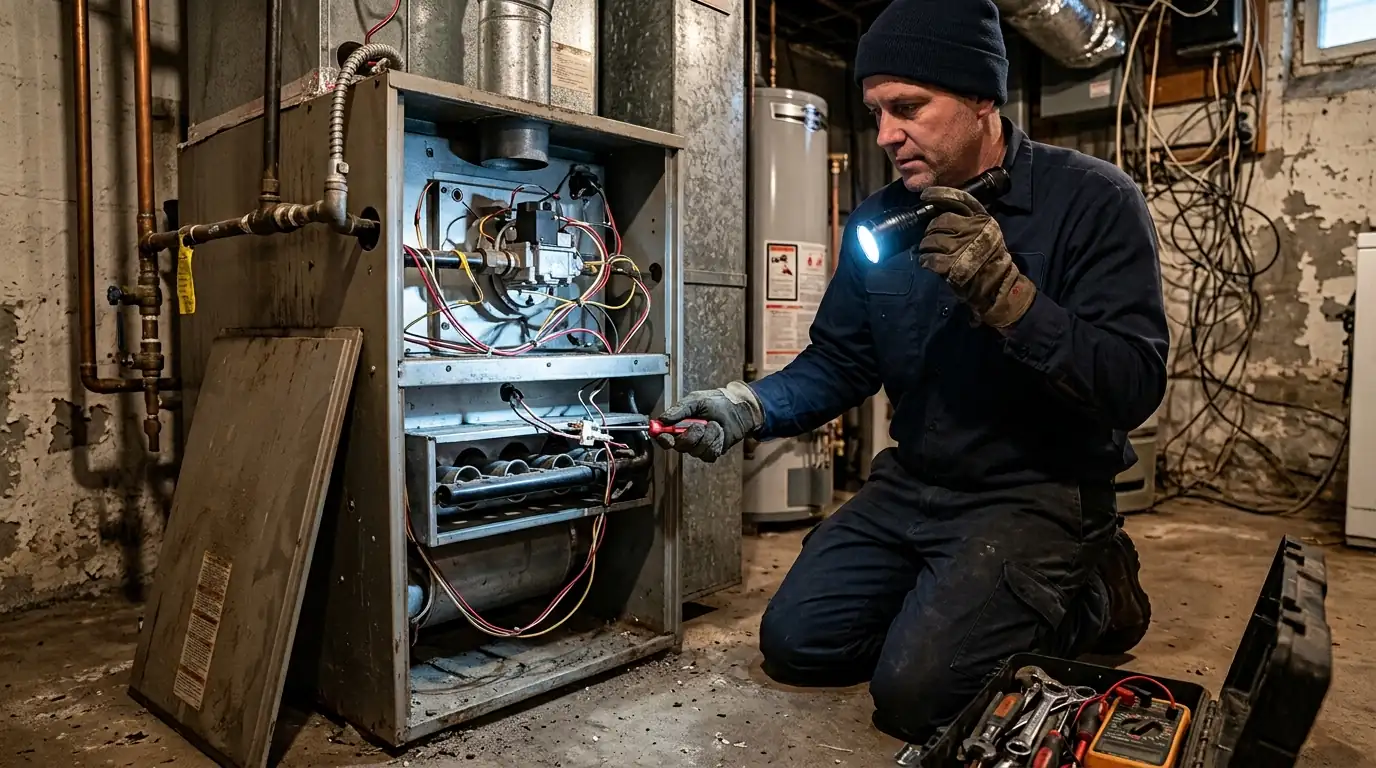
A tune-up works through the whole furnace in a set order, cleans what needs cleaning, and tests the safety components. You get a written report, with anything that needs repair priced separately.
What is included
What the tune-up covers
- Full heating cycle observed
- Flame sensor cleaned
- Ignitor inspected
- Burners cleaned and flame checked
- Heat exchanger inspected and CO tested
- Gas pressure and temperature rise measured
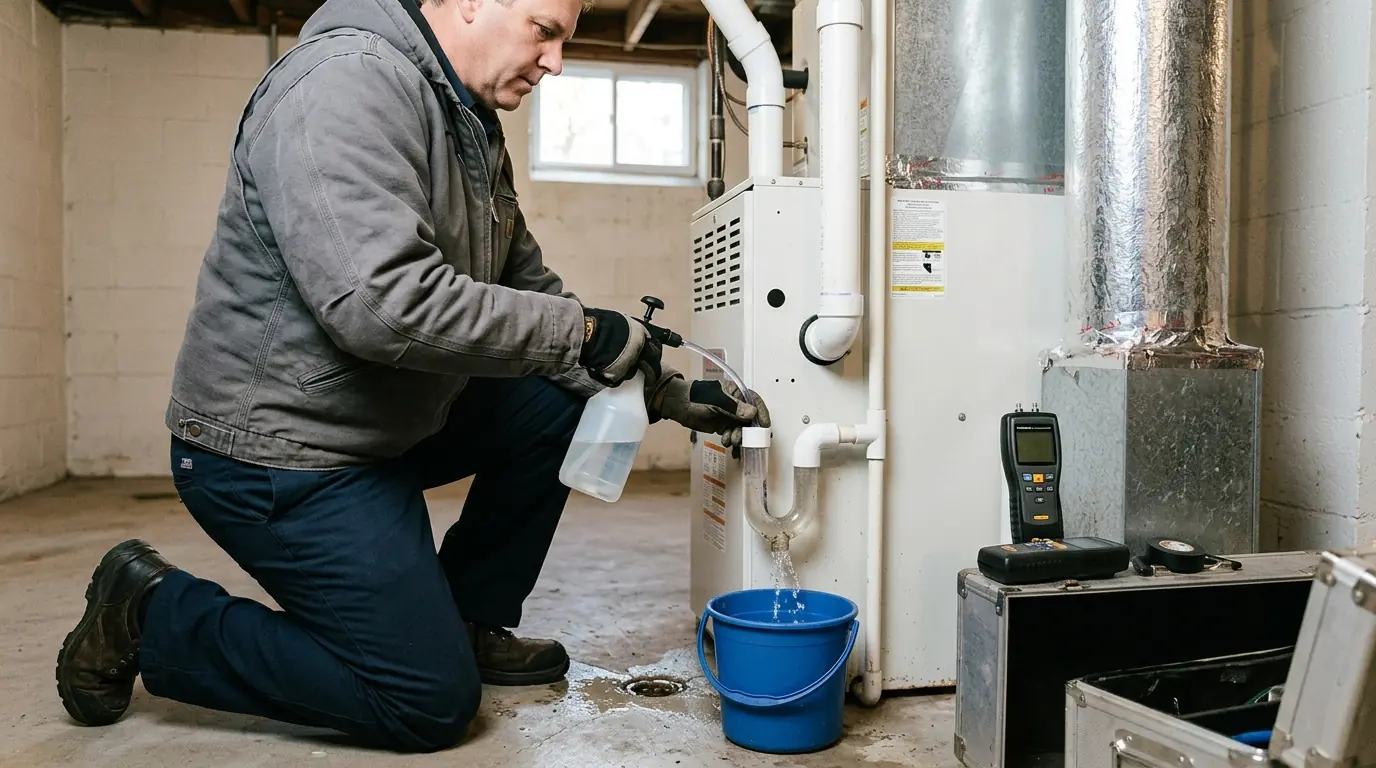
- Condensate trap and drain cleared
- PVC vent and intake terminations inspected
- Filter replaced and blower checked
Fall tune-up
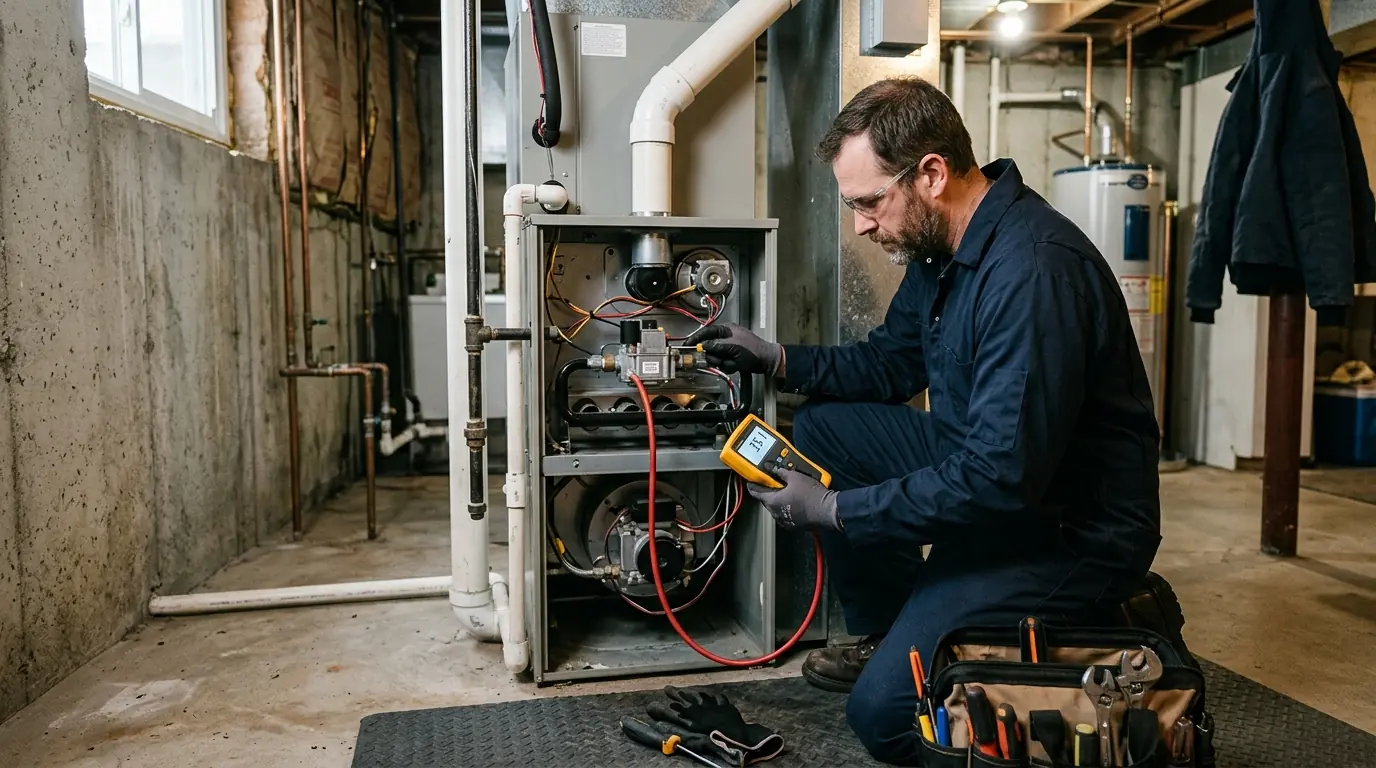
The tune-up starts with a full heating cycle, watching the sequence: inducer, pressure switch, ignition, flame and blower. We clean the flame sensor, inspect the ignitor, clean the burners, and check gas pressure and temperature rise against the furnace's rating. On high-efficiency furnaces we clear the condensate trap and drain and inspect the PVC vent and intake terminations. We tighten electrical connections, test capacitors, and check the thermostat's operation before running a final full cycle and writing up what we found.
Heat exchanger and CO check
The heat exchanger is the one part whose failure is a safety issue rather than an inconvenience. We inspect it visually and with a camera where the design allows, watch the flame for signs of rollout or disturbance when the blower starts, and run a combustion analysis in the flue. We also test for carbon monoxide at the supply registers. If we find a crack or a high CO reading, we show you and, when it is unsafe, shut the furnace down and explain why.
Filter and blower cleaning
A dirty filter is the most common cause of short cycling and overheating. We replace or check the filter, then look at the blower wheel, which collects dust on every blade over the years. A dirty wheel moves less air, makes the motor run hotter and cuts both heating and cooling performance. We clean the wheel when it needs it, check the motor's amperage and capacitor, and measure temperature rise so we know the furnace is moving the right amount of air.
Local conditions that change the fix
A large share of the furnaces we tune up in Minneapolis now vent through PVC out a side wall and drain condensate through a trap, because Minnesota code steers most replacements to 95 percent condensing units. Those are exactly the parts that fail in winter: vent terminations drifted over with snow, and traps that grew algae all summer. That is why the fall visit spends as much time on the vent and drain as on the burner.
Step by step
How a tune-up visit runs
- 1
Run a full cycle
Watch ignition, flame and blower operation.
- 2
Clean and inspect
Flame sensor, burners, ignitor, trap and blower.
- 3
Test safety
Heat exchanger, CO, pressure switch and limits.
- 4
Measure performance
Gas pressure and temperature rise checked.
- 5
Report
Written findings and any recommended repairs.
Cost factors
What moves the price
A tune-up is a set visit; repairs found during it are priced separately for your approval.
- Furnace type. High-efficiency furnaces have traps and venting to service.
- Filter. Standard or media filters replaced at your choice.
- Blower cleaning. Heavy buildup takes extra time.
- Access. Attic or tight closet furnaces take longer.
- Parts found worn. Ignitors, sensors or capacitors replaced only with your OK.
- Humidifier service. Pad change can be added to the visit.
- Timing. Early fall appointments are easiest to schedule.
Compare
What you can do between tune-ups
| Homeowner | Our technician | |
|---|---|---|
| Change the filter | Every 1 to 3 months for one-inch filters | Media filters on a longer schedule |
| Keep vents clear of snow | Check after every storm | Terminations inspected yearly |
| Test CO alarms | Monthly | CO measured at the furnace |
| Burners, sensors, heat exchanger | Not a DIY job | Cleaned and tested yearly |
Questions we get on the phone
Furnace maintenance questions from Minneapolis homeowners
Once a year, ideally in early fall.
Yes. Condensate traps and flame sensors need attention even on new units, and many warranties expect annual service.
Usually about an hour, longer if the blower needs cleaning.
No. We show you what we found and price repairs before doing them.
Yes, and we can replace the pad on the same visit.
More from this category
Related work we handle
Furnace Installation
Two-Stage and Variable-Speed Furnaces and more.
Details on 80% to 96% afue venting changeWhole-Home Humidifier Installation
Bypass vs Fan-Powered Humidifiers and more.
Our whole-home humidifier installation workFrom our guides: Getting a furnace ready for a Minnesota winter.
Beat the first cold snap
Call to book a fall tune-up before the schedule fills.