By Eloise Rasmussen, Heating and Cooling Guides Editor. Updated September 2026.
Quick answer
To get a Minneapolis furnace ready for winter, replace the filter, clear the PVC vent pipes outside, pour water into the condensate trap on a high-efficiency furnace, test CO alarms, and run the heat before the first cold night. A fall tune-up should clean the flame sensor, check the ignitor, test the heat exchanger and measure gas pressure.
Why October matters here
Minnesota's heating season runs roughly October through April, and a Minneapolis furnace does most of its year's work in a few very cold months. Winters here regularly reach 15 below, which is why a failed furnace is an emergency rather than an inconvenience.
The parts that fail in January mostly start failing in October: flame sensors coated with a summer of dust, ignitors that crack on the first hard cycles, condensate traps that grew algae while the AC ran. Finding those in the fall means the fix is scheduled, not an overnight call.
What you can do yourself
Start with the filter. A one-inch filter usually needs changing every one to three months in heating season; a deep media filter lasts six months to a year. A clogged filter overheats the heat exchanger and is behind a lot of short-cycling complaints.
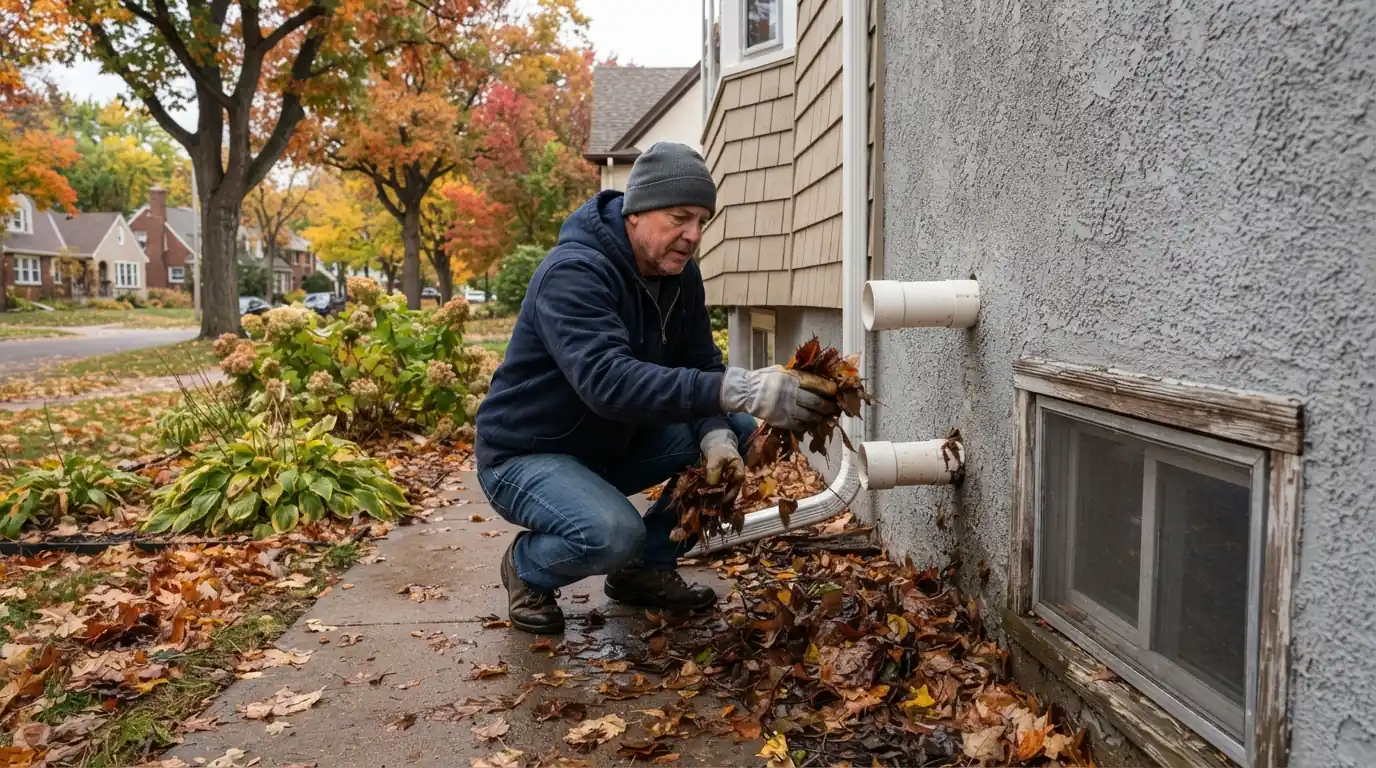
Walk outside and find the two white PVC pipes on the side of the house if you have a high-efficiency furnace. Clear leaves, plants and anything stored nearby, and plan to check them after every heavy snow. Blocked vents shut furnaces down on a pressure switch fault.
Test your carbon monoxide alarms and replace batteries. There should be one near the furnace and one near sleeping areas. Then turn the thermostat to heat and run the furnace on a mild day, before you need it, so a problem shows up while you have time.
The condensate trap on a high-efficiency furnace
A 95 percent furnace makes water as it runs, which drains through a trap and a small line to a floor drain or pump. Minnesota code has steered most replacements to these furnaces, so most Minneapolis homes now have one. Over the summer the trap can dry out or grow a sludge of algae, and a plugged trap backs water into the inducer and shuts the furnace down.
If you can see the trap, pouring a little water into it in the fall keeps it primed. If it looks sludgy or the drain line is discolored, that is a job for the tune-up.
What a fall tune-up should cover
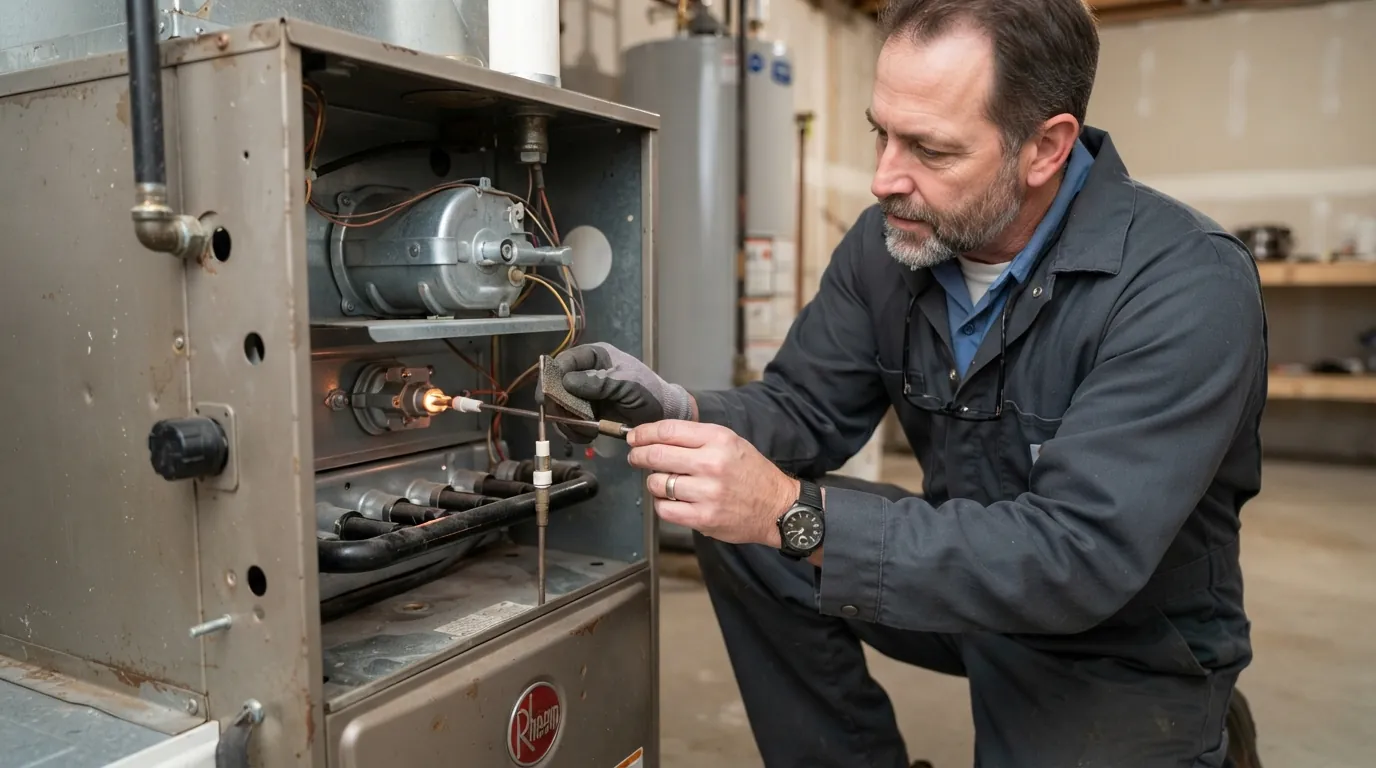
A proper tune-up runs the furnace through a full cycle and watches each step: inducer, pressure switch, ignition, flame and blower. It cleans the flame sensor, inspects the ignitor, cleans the burners, and measures gas pressure and temperature rise. It clears the condensate trap and drain, checks the vent terminations, and inspects the heat exchanger with a combustion analysis and a CO test.
You should get a written list of what was found and any repair priced separately. Our fall furnace tune-up follows that list on every visit.
If your heat is a boiler or a heat pump
Boiler homes have their own fall list. On a hot water system, note the pressure gauge cold, which should sit around 12 to 15 psi, and bleed any radiator that stays cold at the top once the heat is on. On a steam system, check the sight glass is about half full and listen for banging on the first cycles. A dripping relief valve or a gauge that climbs toward 30 when the boiler fires means the expansion tank needs attention before winter, not during it.
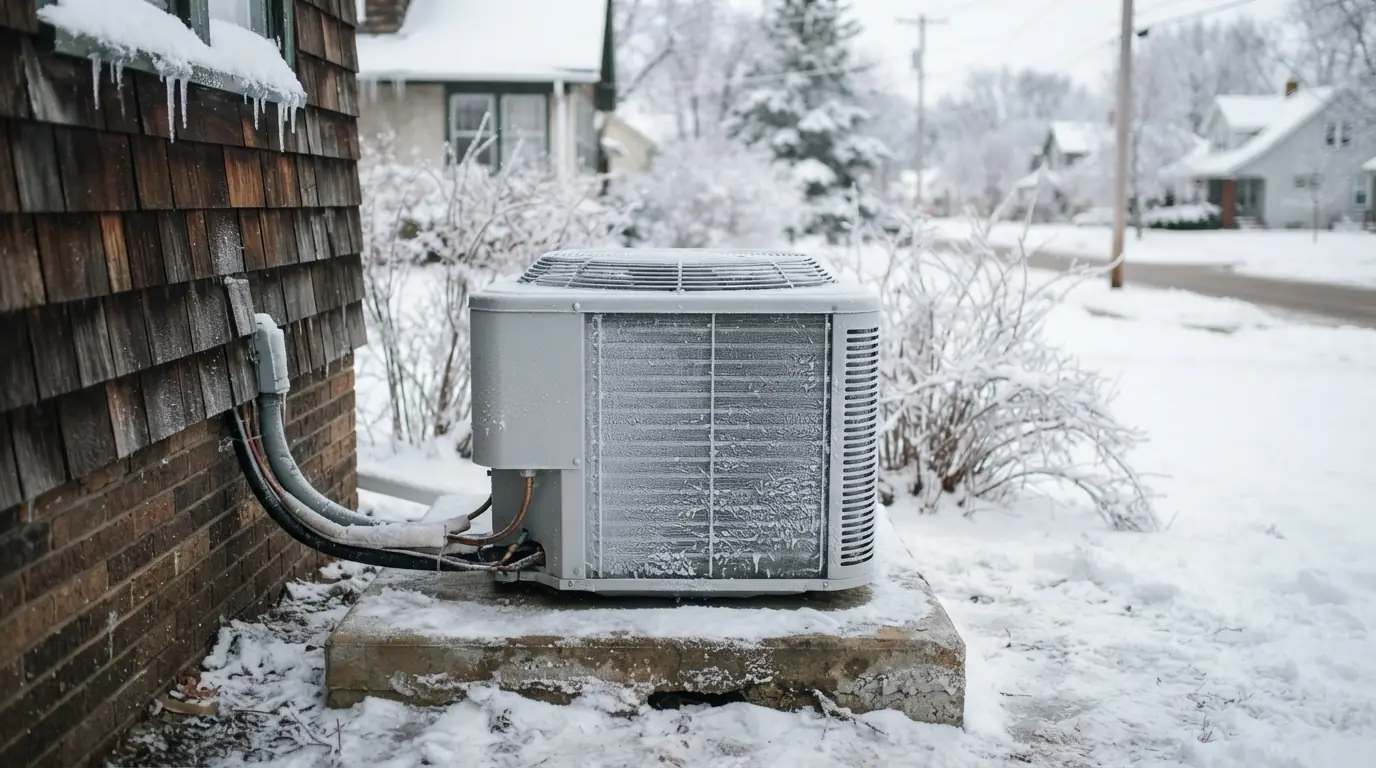
Heat pump homes should look outside. The outdoor unit needs clear space around it, a stand or bracket that keeps it above typical snow depth, and nothing dripping onto it from the roof edge, because meltwater refreezes on the coil. Inside, check that the thermostat's auxiliary heat and dual-fuel switchover settings match the equipment; the factory defaults often hand off to backup heat far too early.
The humidifier and the thermostat
If your furnace has a whole-house humidifier, replace the pad and turn the water back on in the fall. Set it low to start; the colder it gets outside, the lower indoor humidity needs to be to keep windows from frosting. Our winter humidity guide has a simple table.
Check the thermostat schedule too. If you have a heat pump or dual-fuel system, confirm the switchover and auxiliary heat settings; a setting left at the factory default can have the furnace or electric backup doing far more of the work than it should.
Questions we get on the phone
Questions readers ask
Early fall, before the first cold week, when appointments are easiest to get.
One-inch filters every one to three months in winter; media filters every six to twelve months.
Snow or ice may be blocking the PVC vent pipes. Clear them gently.
Yes, plus one near sleeping areas. Test them every fall.
Yes. Condensate traps and flame sensors need attention regardless of age.
Check the thermostat, switch, filter and vents, then call.