Heating and cooling
Ductless mini-split installation in Minneapolis
Ductless systems solve the rooms ducts cannot reach: a finished attic, a sunroom, an addition, or a whole house heated by radiators with no ducts at all. A small outdoor unit feeds one or more wall heads through a line set about the size of a garden hose.
- 24/7 calls answered
- Minneapolis service office
- 1 to 5 heads per system
- 3 inch wall opening
Quick answer
Ductless mini-split installation in Minneapolis typically costs $2,100 to $15,200 depending on the number of zones, according to Angi's 2026 data. It adds heating and cooling to rooms without ducts, most often in boiler-heated homes, finished attics and additions, through a 3 inch wall opening and an outdoor unit.
Heat Pumps & Ductless
Where ductless makes more sense than ducts
Adding ductwork to an older house means opening walls and ceilings, and a boiler-heated house has no ducts to start with. A mini-split needs only a small hole through the wall for the refrigerant lines, power and drain, and a spot outside for the condenser.
Each head has its own thermostat, so the room it serves runs on its own schedule. That makes ductless a precise fix for one problem room, and a practical way to add central cooling to a radiator house one or two zones at a time.
Cost factors
What moves the price
Angi's 2026 Minneapolis figures put duct-free systems at $2,100 to $15,200. Where yours lands depends mostly on the number of zones.
- Number of heads. Each indoor head adds equipment and a line set.
- Outdoor unit capacity. Multi-zone units cost more than single-zone condensers.
- Line set length. Longer runs between head and outdoor unit add material and labor.
- Head style. Wall heads cost less than ceiling cassettes or ducted slim units.
- Electrical. A dedicated circuit and disconnect are needed for the outdoor unit.
- Condensate routing. Heads on inside walls may need a condensate pump.
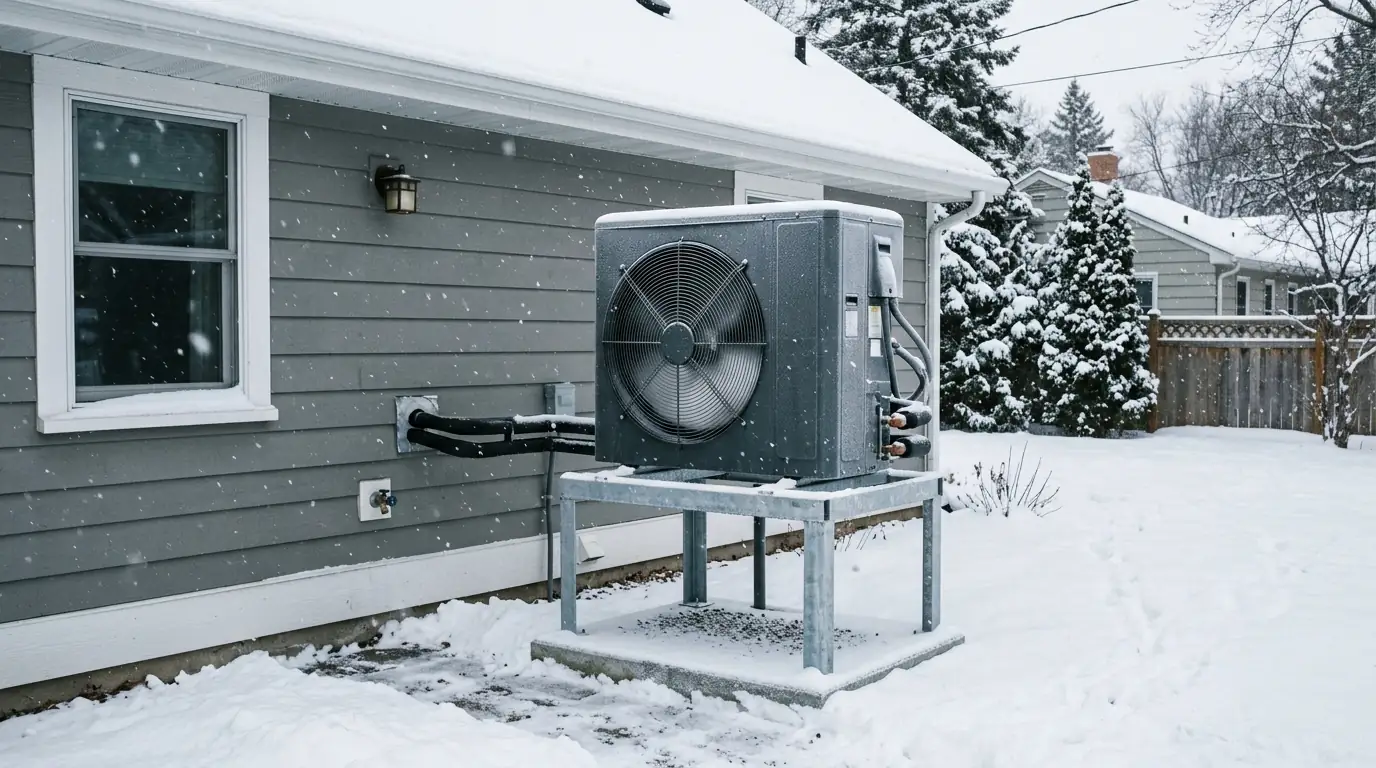
- Stands and brackets. Raising the outdoor unit above snow adds parts.
Single-zone room systems
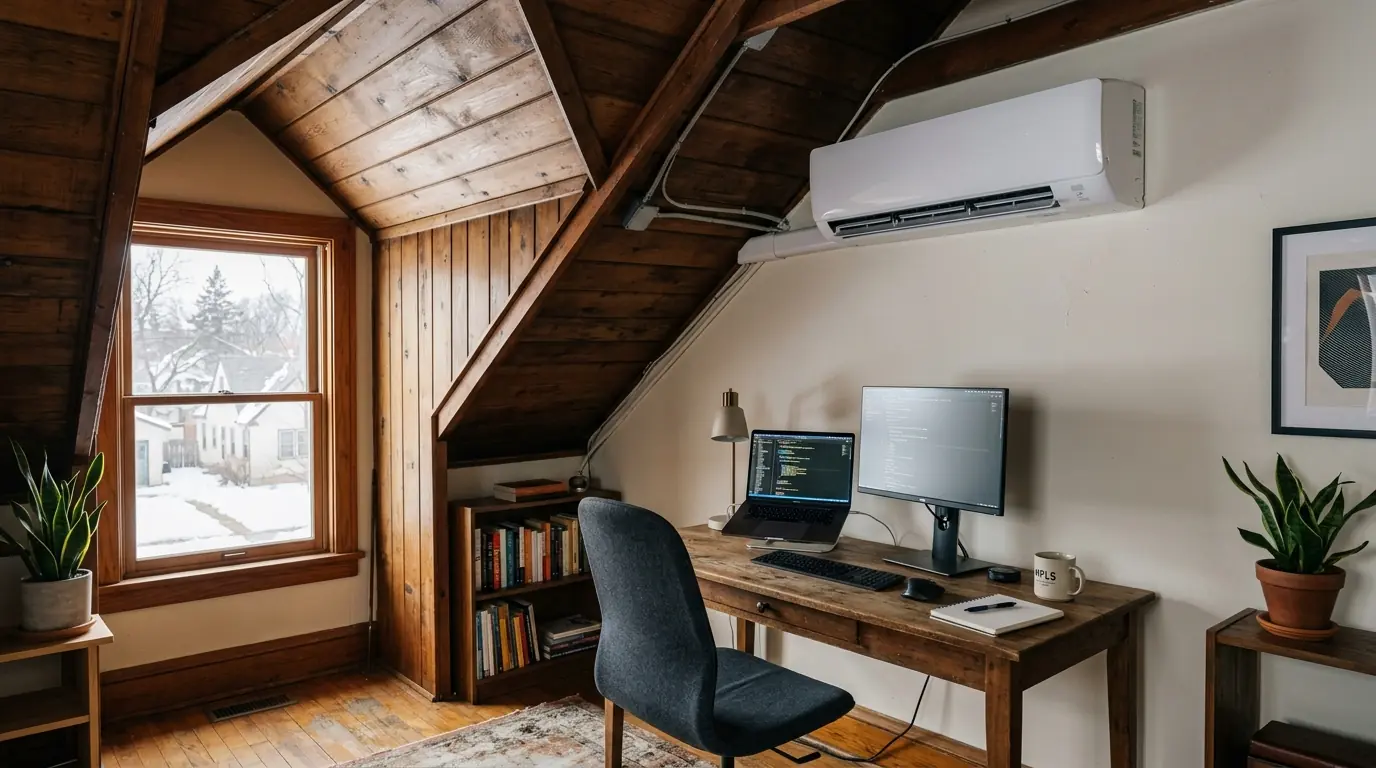
A single-zone system pairs one outdoor unit with one indoor head, and it is the right answer for a single problem room: the upstairs bedroom that bakes in July, a converted attic office, a three-season porch turned into living space, or a garage workshop. We size the head to that room's heat loss and gain, mount it high on an outside wall where the line set run is short, and set up the drain so it slopes to the outside rather than relying on a pump when possible.
Multi-zone whole-house setups
A multi-zone system runs several indoor heads from one larger outdoor unit, so bedrooms, a living room and a kitchen each get their own head and thermostat. It suits homes with no ducts at all. The tradeoff is that heads share one compressor, so sizing matters: too many oversized heads on one outdoor unit leads to short cycling and poor dehumidifying. We size each head to its room, balance the total against the outdoor unit, and plan the line set routes before we drill.
Cooling a boiler-heated home
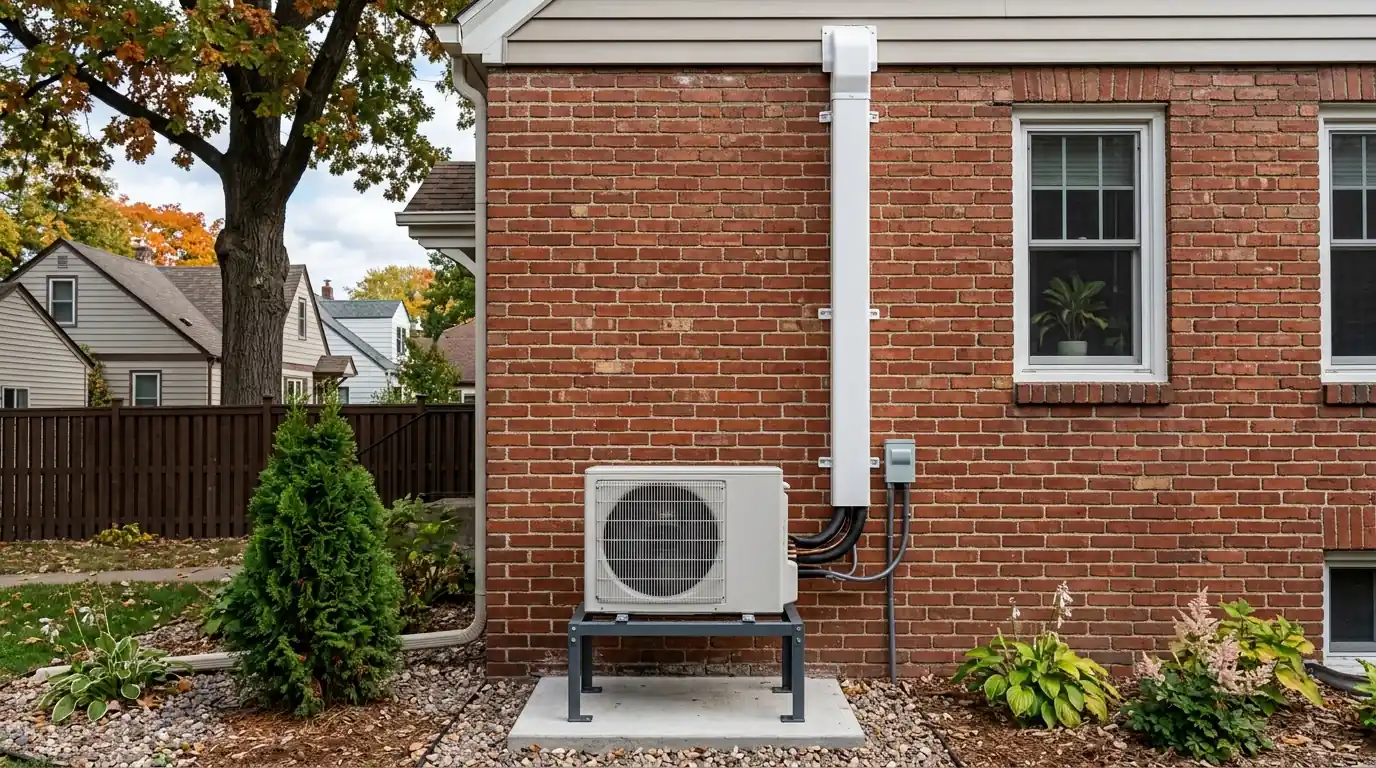
Plenty of Minneapolis houses have comfortable radiator heat and no air conditioning at all. Ductless heads are the least disruptive way to add cooling: a head in each main living area and bedroom, line sets run in covers on the outside wall, and the boiler left to do what it does well in winter. Because the heads are heat pumps, they can also take the edge off chilly spring and fall days without firing the boiler, and each room can be shut off when nobody is using it.
What we see on calls around Minneapolis
Boilers move heat through radiators and baseboard rather than ducts, which is exactly why ductless is so common in Minneapolis homes that still run on one. Angi's 2026 data puts duct-free systems here at $2,100 for a single room up to $15,200 for a multi-zone home. We usually leave the boiler for winter heat and let the heads handle cooling and the in-between seasons.
What is included
What a ductless install includes
- Room-by-room load for each head
- Wall mounting plate and sealed wall opening
- Line set in a protective cover
- Condensate drain sloped or pumped
- Outdoor unit on a stand or bracket above snow
- Dedicated circuit and disconnect
- Pressure test and deep vacuum
- Heating and cooling test on every head
- Remote and schedule setup
Step by step
How a ductless install runs
- 1
Room-by-room sizing
Each room's load sets the head size.
- 2
Plan head and line set locations
Head placement, line set route and outdoor unit spot agreed with you.
- 3
Mount and drill
Wall plates mounted, 3 inch openings drilled and sealed.
- 4
Run lines, drain and power
Line sets flared and connected, drain sloped, circuit installed.
- 5
Vacuum, charge and test
System evacuated, charged and run in heating and cooling.
Brands we service and install
Cold-climate work is mostly Mitsubishi Electric, Daikin and Bosch, alongside Carrier and Lennox ducted heat pumps.
Timing
How long installation takes
A single-zone system is usually installed in one day, including the electrical circuit. A three or four head multi-zone system typically takes two days. The house is livable throughout, and only the rooms getting heads see any work.
Questions we get on the phone
Ductless mini-split installation questions from Minneapolis homeowners
Cold-climate mini-splits keep heating well below zero at reduced capacity. In a boiler home they usually supplement the boiler rather than replace it.
Multi-zone units commonly run two to five heads, depending on the model and total capacity.
Wall heads are about three feet wide and sit high on the wall. Ceiling cassettes and slim ducted units are options where looks matter more.
Heads produce condensate in cooling mode. It drains outside by gravity or through a small pump.
Yes, though in a home with good ducts a central system is usually the simpler choice.
More from this category
Related work we handle
Heat Pump Installation
Cold-Climate Heat Pump Selection and more.
Heat Pump Installation in MinneapolisFix the room your ducts cannot reach
Call and we will size the heads and lay out the line sets before quoting.