Answering 24/7
Geothermal heating and cooling in Minneapolis
Ground-source heat pumps pull heat from the earth, which sits at a steady temperature below the frost line while the air above swings from 90 to 20 below. The equipment is simple. The loop in the ground is the hard part, and it decides whether geothermal makes sense on your lot.
- 24/7 calls answered
- Minneapolis service office
- Vertical or horizontal loop types
- Heat and cool one system
Quick answer
A geothermal heat pump in Minneapolis heats and cools through a buried loop that holds steady ground temperature while winter air drops to 15 below. Whether it fits depends on the lot: small city lots near 0.13 acres usually need vertical bores, while acreage can use cheaper horizontal trenches.
Heat Pumps & Ductless
Why geothermal works in a climate like this
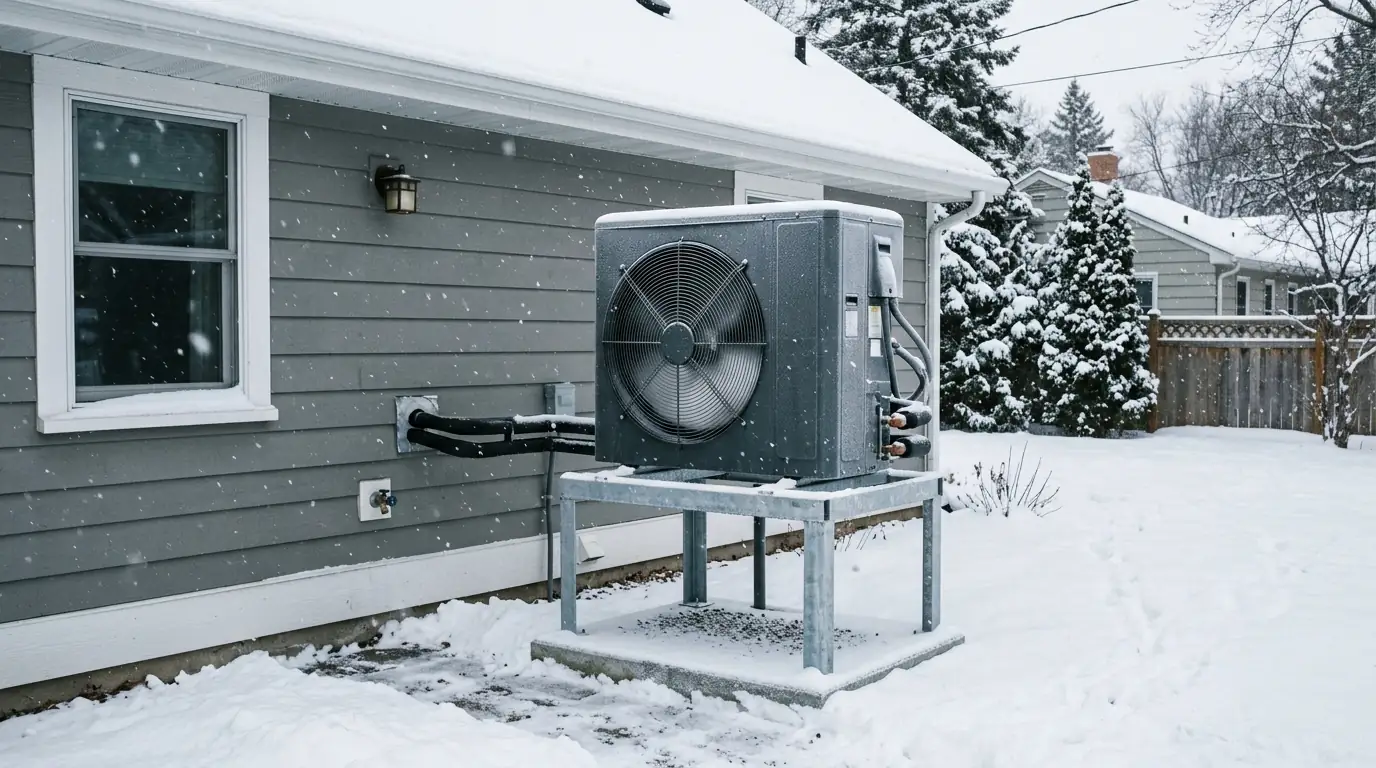
An air-source heat pump loses capacity as the outdoor air gets colder, which is exactly when a Minnesota house needs the most heat. A geothermal heat pump does not care about the outdoor air. It trades heat with fluid circulating through pipe buried in the ground, and the ground stays much warmer than January air.
The tradeoff is upfront cost and disruption. Drilling or trenching the loop is the biggest part of the job, and the lot has to allow a drill rig or an excavator. We tell you plainly when a cold-climate air-source heat pump with a gas furnace backup is the better value.
Compare
Geothermal or cold-climate air source
| Geothermal | Cold-climate air source | |
|---|---|---|
| Capacity on the coldest nights | Steady, set by the ground | Drops as outdoor air falls |
| Upfront cost | Highest, driven by the loop | Lower, no ground work |
| Lot requirements | Drill rig or trench access | Space for an outdoor unit |
| Lifespan | Loop lasts decades | Outdoor unit exposed to weather |
Cost factors
What moves the price
Geothermal is priced per lot after a site visit, and the loop drives most of the variation.
- Loop type. Vertical bores cost more than horizontal trenches because of drilling.
- Loop length. Longer loops for larger heating loads mean more drilling or trenching.
- Site access. Tight lots may need a smaller rig, hand work or restoration of landscaping.
- Heat pump size and staging. Two-stage and variable-speed units cost more and run more evenly.
- Ductwork condition. Geothermal delivers lower supply temperatures and may need duct improvements.
- Water heating option. A desuperheater to pre-heat domestic hot water adds parts.
- Rebates and credits. Utility programs change; we check what applies when we quote.
Vertical loop fields on small lots
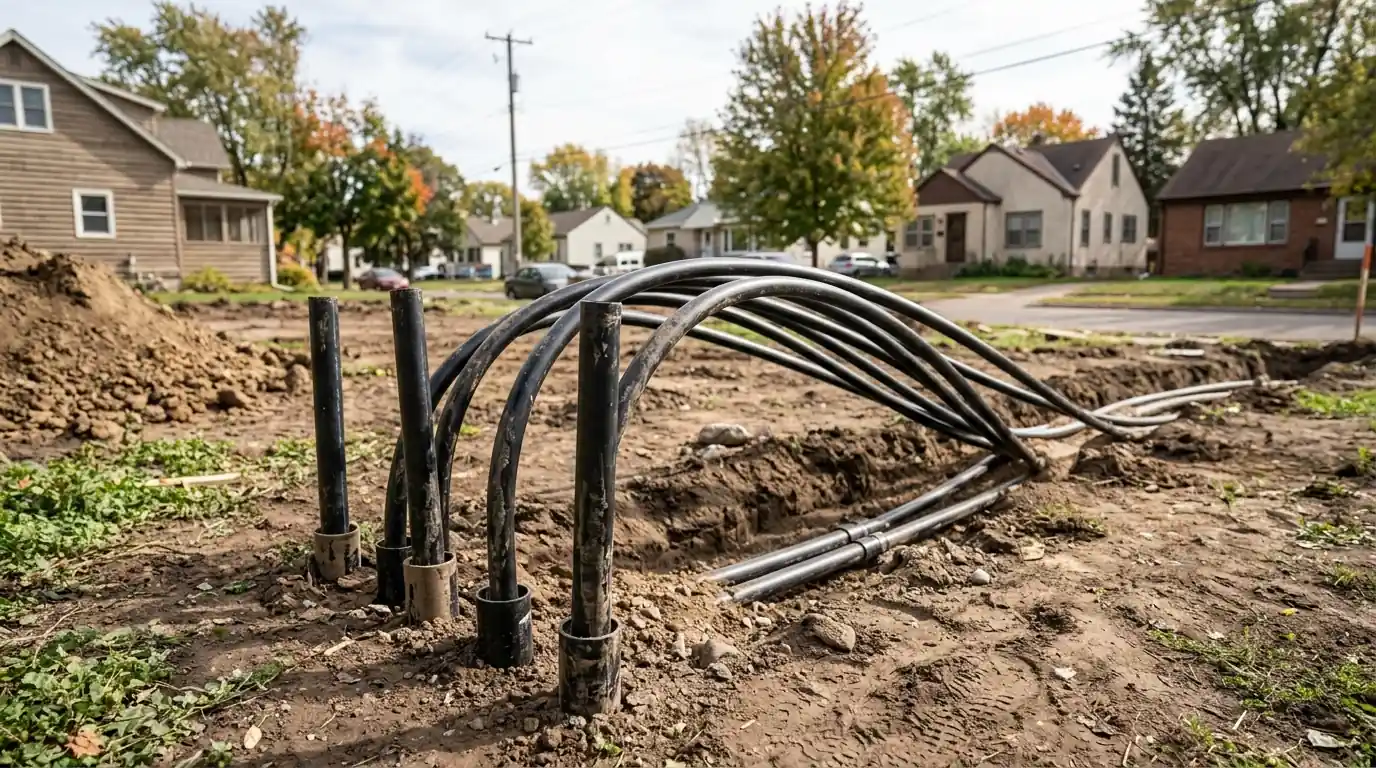
On a typical city lot there is not enough yard for long horizontal trenches, so the loop goes down instead of across. A drilling contractor bores several vertical holes, each a few hundred feet deep, and we connect the U-bend pipes to a header that runs into the house. The bores need rig access, clearance from property lines and utilities, and a place to manage drilling spoils. We coordinate the driller, pressure test the loop, and bring it into the basement through a sealed wall penetration.
Horizontal loops on acreage
Where there is room, horizontal loops are laid in long trenches below the frost line, or as coiled slinky pipe in a wide excavation. Excavation costs less than drilling, which is why larger suburban and rural lots are the natural fit for geothermal. The loop layout has to avoid septic fields, wells, trees and future building sites. We map the layout before the excavator arrives, pressure test the pipe before backfill, and mark the header location for anyone who digs later. After backfill the yard recovers within a season, and the loop is expected to outlast several heat pumps.
Replacing a geothermal compressor
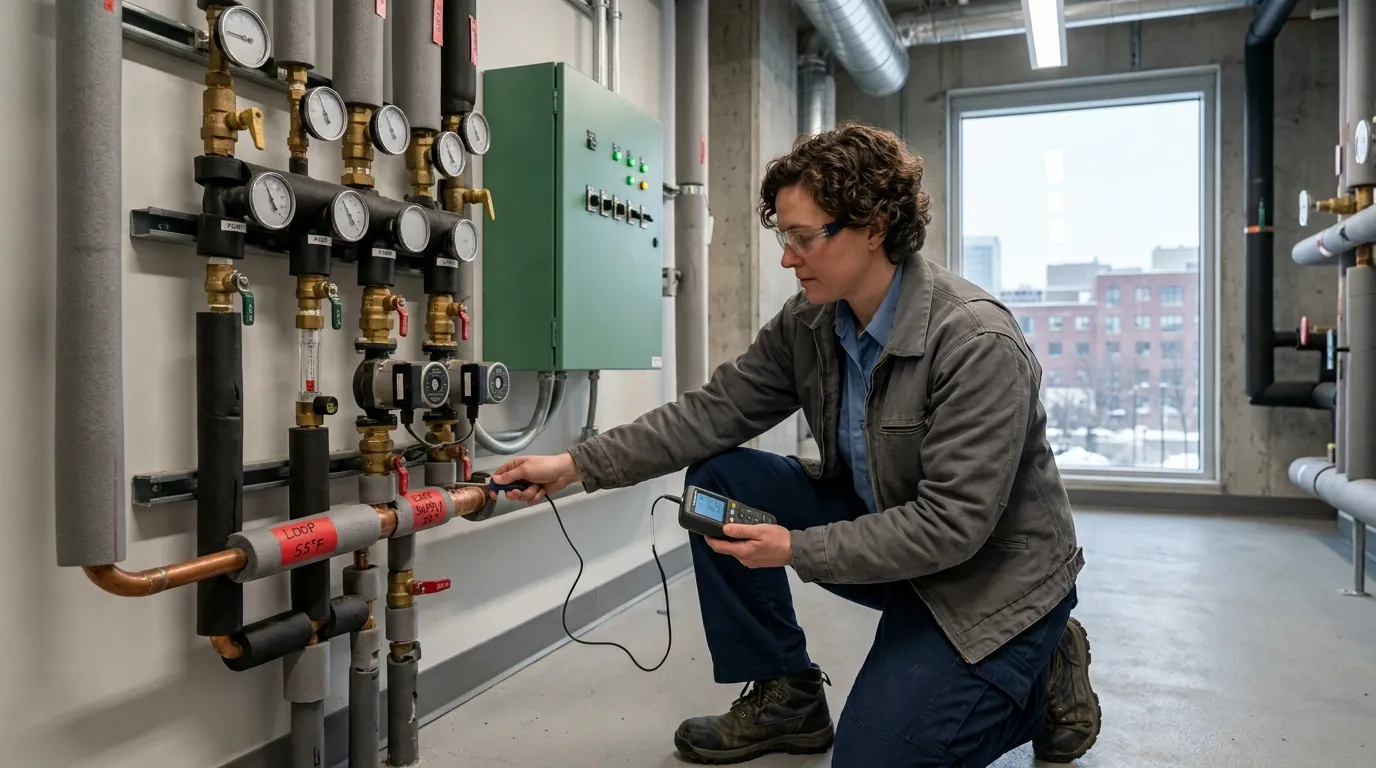
Existing geothermal systems installed fifteen or twenty years ago are reaching the age where the heat pump itself needs replacing, while the ground loop is still good. That makes the job far cheaper than the original install. We pressure test and flush the loop, check the antifreeze concentration, and replace the indoor heat pump or its compressor with equipment matched to the existing loop capacity. If the loop is leaking, we locate and repair the leak before any new equipment goes in.
How Minneapolis homes shape this job
The median Minneapolis single-family lot is only about 0.13 acres, which rules out horizontal trenches on most city properties and points geothermal toward vertical bores. That is where the economics get tested. Winters here regularly reach 15 below, so a ground loop that keeps delivering full heat on those nights is the reason owners consider it. On most city lots we price both a vertical geothermal system and a cold-climate air-source heat pump so the comparison is honest.
Step by step
How a geothermal project runs
- 1
Site and load review
We look at the lot, access and the house's heating load.
- 2
Loop design and quote
Vertical or horizontal loop sized to the load, with a written scope.
- 3
Drill or trench
Loop installed, pressure tested and brought into the house.
- 4
Set the heat pump
Indoor unit, flow center, ducts, controls and any water heater tie-in installed.
- 5
Start up and verify
Loop flow, temperatures and airflow checked through a full heating cycle.
Brands we service and install
Cold-climate work is mostly Mitsubishi Electric, Daikin and Bosch, alongside Carrier and Lennox ducted heat pumps.
Timing
How long the project takes
Drilling or trenching usually takes a few days depending on the number of bores and the soil. The indoor heat pump installation is typically one to two days after the loop is ready. For a compressor or heat pump replacement on an existing loop, the house is usually back on heat the same day.
Questions we get on the phone
Geothermal heat pump installation questions from Minneapolis homeowners
Most lots can take vertical bores if a drill rig can reach the yard. Horizontal loops need much more open ground. We check access and utilities on the site visit.
A correctly sized system handles the full load, though many include electric backup strips for emergencies.
Yes. We diagnose heat pumps, flow centers and loop problems, and replace aging heat pumps on sound loops.
Yes. The same heat pump reverses and moves heat from the house into the ground.
The buried loop is expected to last for decades, well beyond the life of the indoor heat pump.
More from this category
Related work we handle
Dual-Fuel System Installation
Heat Pump Paired With a Gas Furnace and more.
Our dual-fuel system installation workFrom our guides: Heat pump or gas furnace for a Minneapolis home.
See whether geothermal fits your lot
Call to set up a site visit. We will check access, run the load and price geothermal against an air-source option.