By Eloise Rasmussen, Heating and Cooling Guides Editor. Updated September 2026.
Quick answer
For most Minneapolis homes with gas service, a dual-fuel system pairing a cold-climate heat pump with a gas furnace is the strongest option in 2026. Cold-climate heat pumps rated to about 13 below carry most Twin Cities winter nights, and Xcel Energy offers up to $1,500 on qualifying units.
How a heat pump works when it is cold
A heat pump moves heat rather than making it. In winter it pulls heat out of the outdoor air, even far below freezing, and delivers it inside. It is the same machine as an air conditioner running in reverse, which is why one outdoor unit handles both seasons.
The catch is that output drops as the outdoor temperature falls, and a Minnesota house needs the most heat exactly then. Cold-climate models use variable-speed compressors designed to keep producing useful heat at temperatures older heat pumps could not handle. Models such as the Mitsubishi Hyper Heat, Bosch IDS and Carrier Greenspeed are rated to operate down to about 13 below, which covers most Twin Cities nights.
What each option costs to install
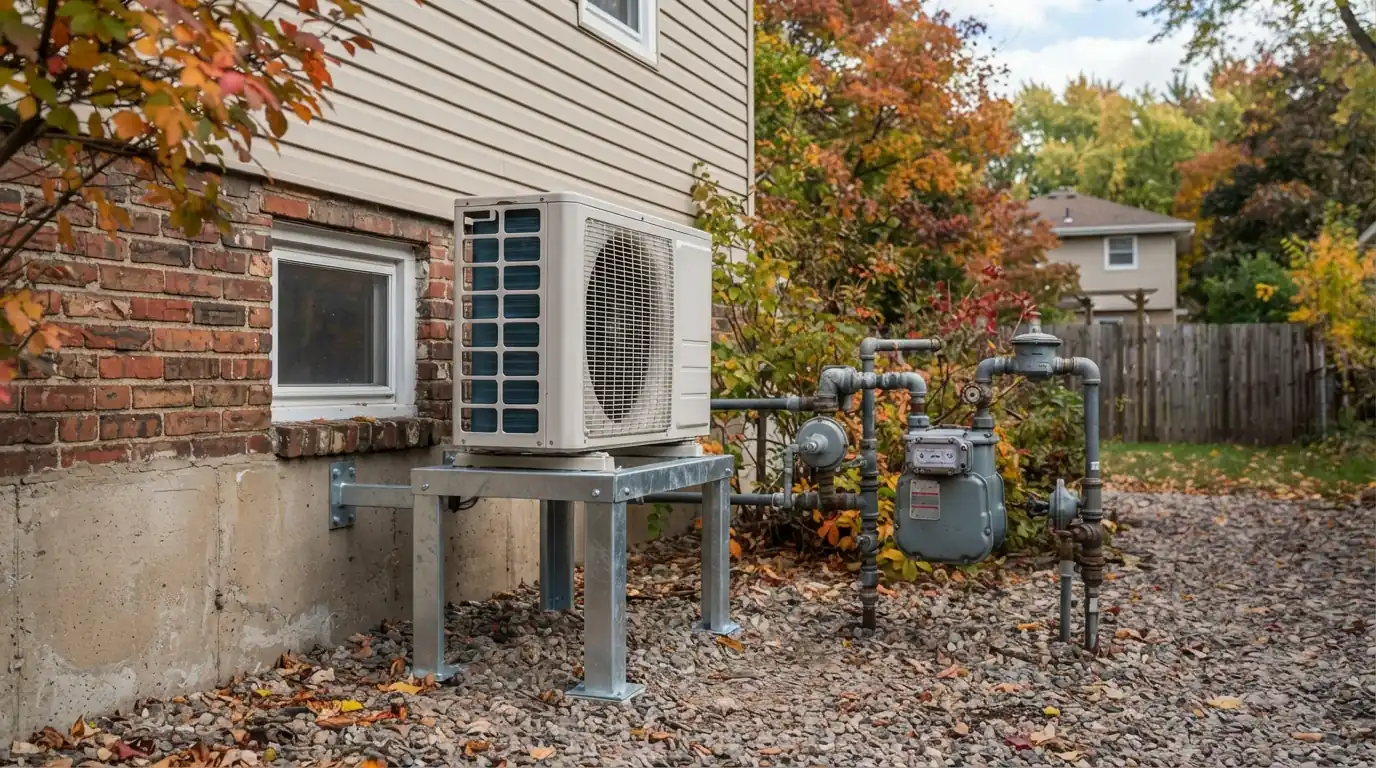
Installed costs differ a lot. Published 2026 Minneapolis figures put a full cold-climate heat pump system at $9,500 to $20,000, with utility rebates of $1,500 to $4,000 depending on the equipment and program. A high-efficiency gas furnace alone typically runs $3,800 to $9,500 in the Twin Cities.
That comparison is not quite fair, because the heat pump also replaces the air conditioner. If your AC is near the end of its life too, compare a heat pump system with a new furnace plus a new AC, not with a furnace alone. Our cold-climate heat pump page covers sizing and rebates in more detail.
Rebates and credits in 2026
Rebates have shifted the math. Xcel Energy offers up to $1,500 on qualifying cold-climate heat pumps, and other utility programs can add to that. The federal 25C tax credit expired at the end of 2025, so it no longer applies to equipment installed in 2026.
Furnaces still get rebates too: Xcel Energy and CenterPoint Energy offer roughly $200 to $400 on qualifying 95 percent and higher units. Rebate rules depend on the exact model, so confirm eligibility before choosing equipment, not after.
Why dual-fuel wins so often here
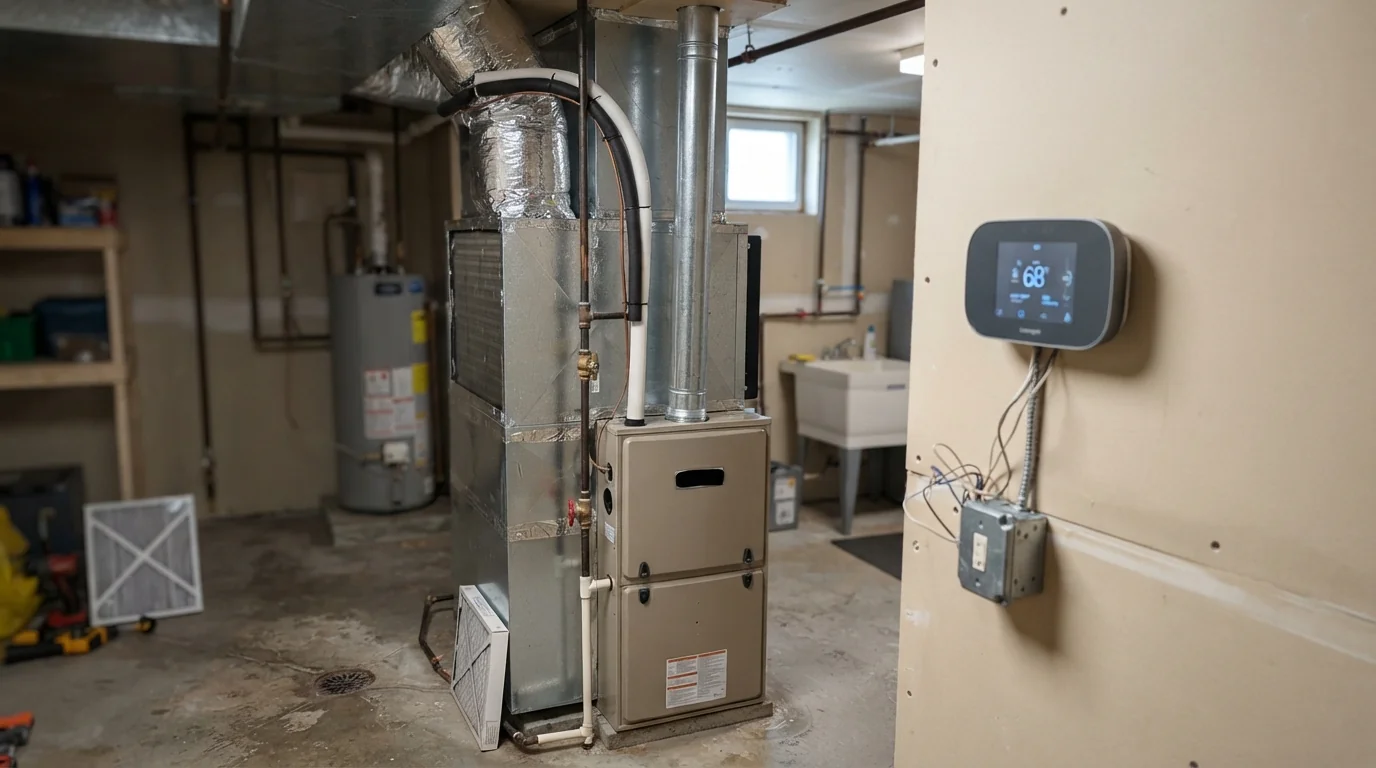
A dual-fuel system keeps a gas furnace and adds a heat pump in place of the air conditioner. The heat pump handles cooling and most of the heating season; below a switchover temperature, the furnace takes over. You avoid expensive electric strip heat on the coldest nights and still use the heat pump for most of the winter.
The newest 30-year climate normals show January lows at MSP more than 3 degrees warmer than the previous average, which means more of the season falls where a heat pump works well. The setting that matters most is the switchover temperature; set too high, the furnace ends up doing most of the work anyway. Our dual-fuel installations set it for the specific equipment and your utility rates.
What living with a heat pump feels like
Heat pumps heat differently from a gas furnace. A furnace sends air to the registers at 120 degrees or more in short bursts; a heat pump sends cooler air, often in the 90s, for longer stretches. The house holds a steadier temperature, but a hand held over the register feels less heat, and some people read that as the system not working. It usually is.
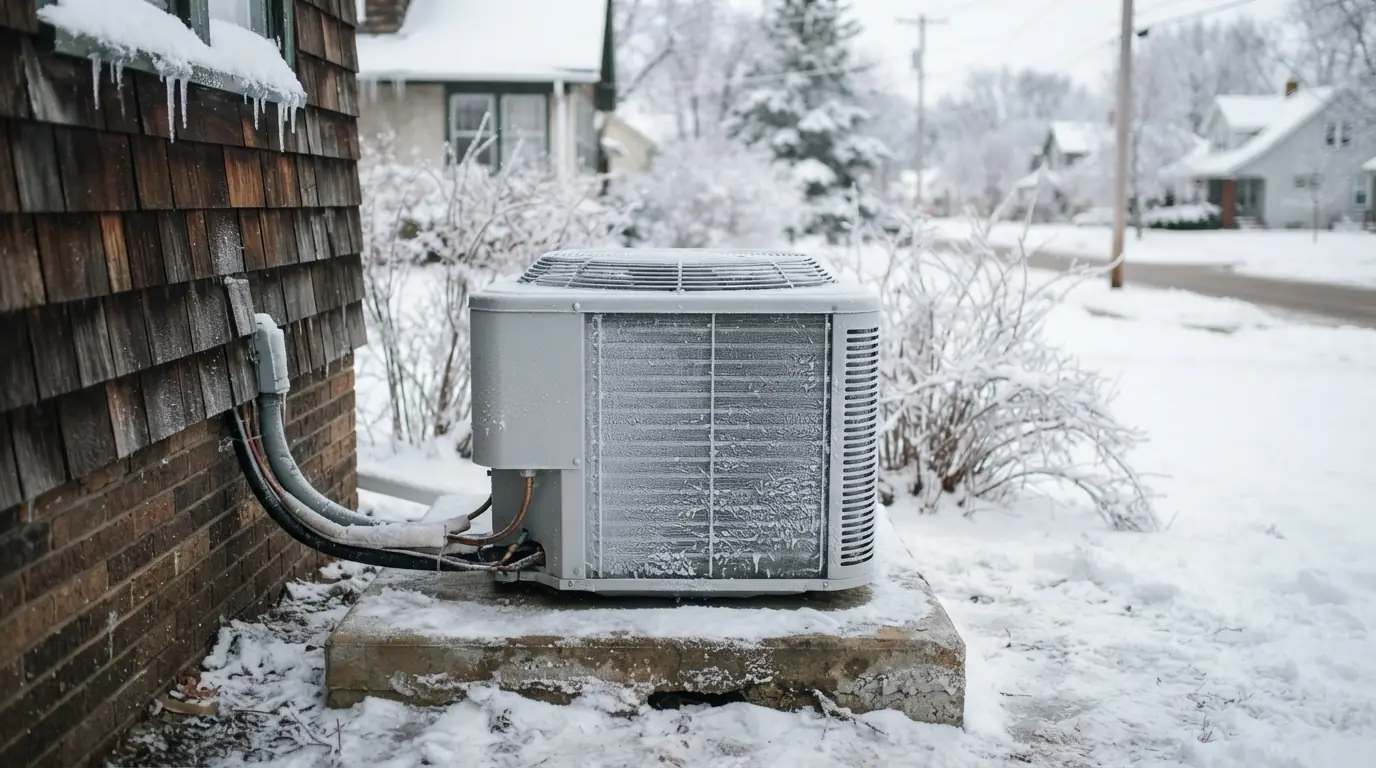
The outdoor unit needs a little thought in a Minneapolis winter. It should sit on a stand or wall bracket above the typical snow depth, away from roof drips that refreeze on the coil, and with room for defrost water to drain. During defrost it may briefly steam and go quiet; that is normal. A unit placed low in a drift or under a roof edge is the most common cause of winter heat pump complaints we see.
Sizing matters more than with a furnace. A heat pump sized to the summer cooling load will fall short in January, while one sized for January can be oversized for July. Variable-speed models narrow that gap, and a room-by-room load calculation is the only honest way to pick one.
When a gas furnace alone still makes sense
If your air conditioner is new, your furnace needs replacing and your budget is tight, a new high-efficiency furnace is a sensible choice, and you can add a heat pump later when the AC is due. A furnace also makes sense in homes with very undersized ducts, where a heat pump's cooler supply air would feel drafty without duct improvements.
Homes without gas service are the opposite case. There, a cold-climate heat pump with electric backup is usually the better choice than staying on propane or electric resistance heat.
Questions we get on the phone
Questions readers ask
A cold-climate unit can carry most of the season, but most homes here add a gas furnace or electric backup for the coldest nights.
It depends on gas and electric rates and on outdoor temperature. Dual-fuel lets each run where it is cheapest.
Xcel Energy offers up to $1,500 on qualifying cold-climate heat pumps. The federal 25C credit expired at the end of 2025.
Often, if the furnace is recent and compatible. The heat pump takes the place of the air conditioner.
Usually, though heat pumps deliver cooler air and may need better returns or duct sizing.
Typically around 15 years, similar to central air conditioners.