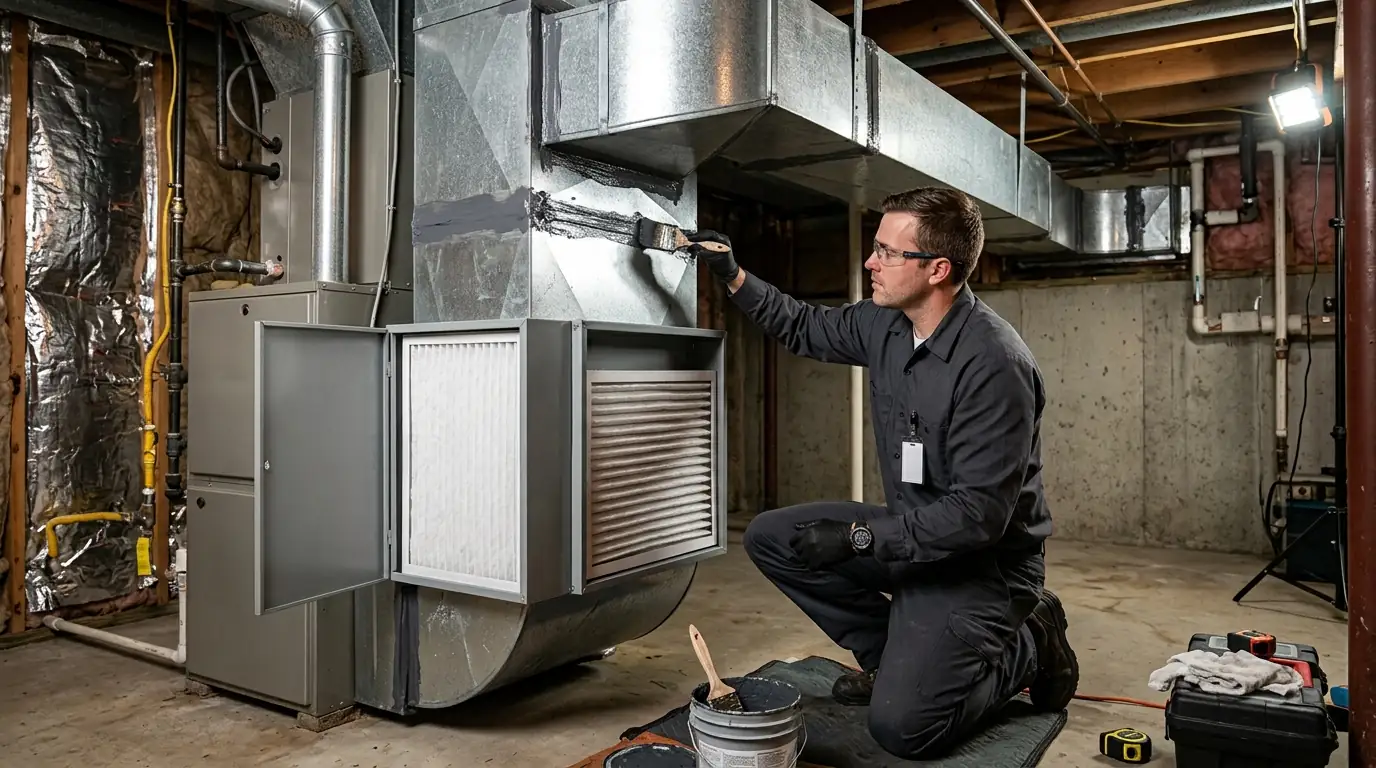
Replacement and new fans
Bathroom fan installation for Minneapolis homes
A fan that dumps wet air into the attic does more harm than no fan at all. We size the fan to the room, run insulated duct to a real roof or wall cap, and wire it so it actually gets used.
- 24/7 calls answered
- Minneapolis service office
- Roof or wall vented outside
- Humidity sensing controls
Quick answer
A bathroom exhaust fan in a Minneapolis house needs roughly 1 CFM per square foot of floor, an insulated duct, and a termination outside the building, never into the attic. We replace noisy or dead fans, add fans to baths that never had one, and correct ducts that end under the roof deck.
Air Quality & Ducts
Why the bath fan matters more in a Minnesota winter
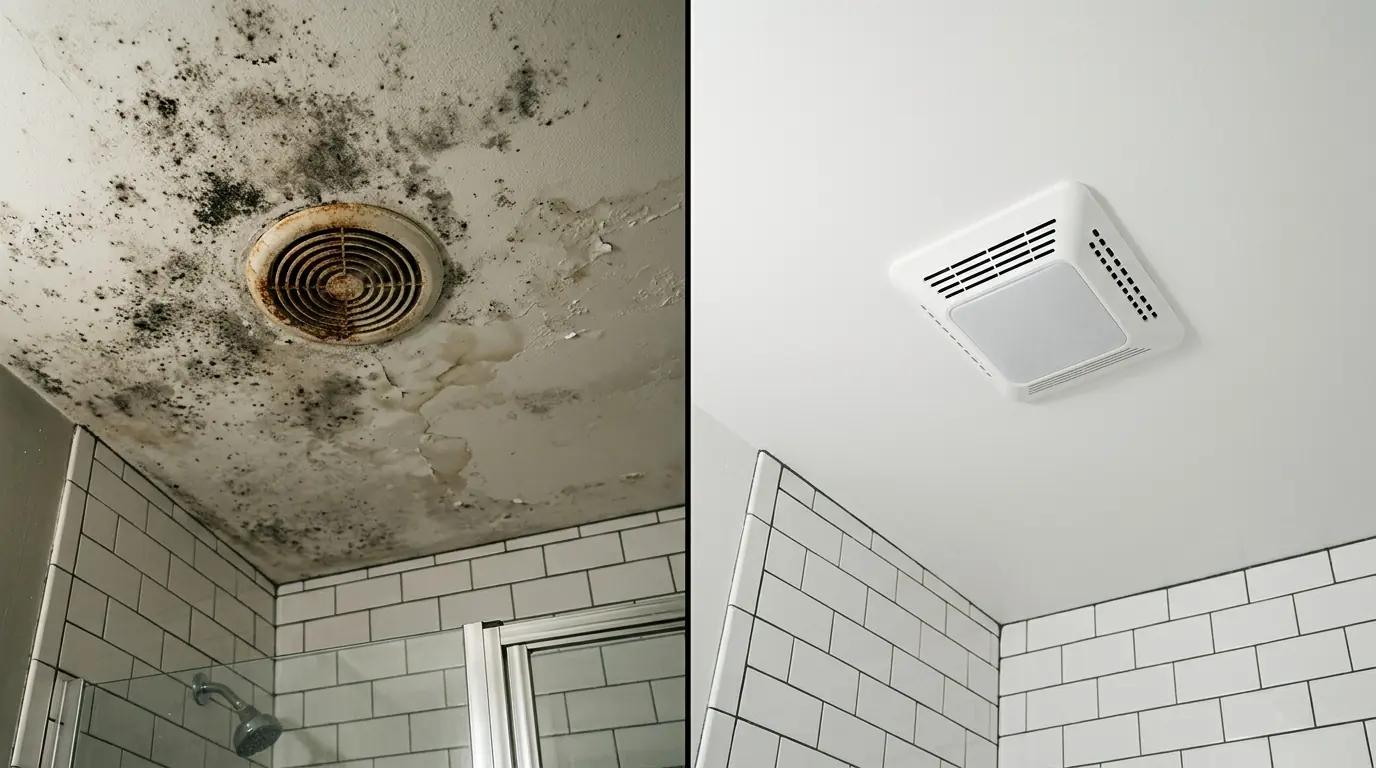
A shower puts close to a pint of water into the air. In July that moisture mostly finds its way out. In January, with an average low near 9 degrees at MSP, it condenses on the coldest surface it touches: the mirror, the window, the ceiling paint, and the underside of the roof deck if the fan ducts into the attic.
Most of the fan calls we take are not about a broken motor. They are about a fan that was never vented properly, a duct that sags and fills with water, or a fan so loud nobody switches it on.
Cost factors
What moves the price
The fan itself is the smallest part of the bill.
- Existing housing or new cut. Swapping a fan into an existing opening is faster than cutting a new one and running new wire.
- Duct route and length. A short run to a wall cap costs less than a long run across the attic to the roof.
- Roof or wall termination. A roof cap needs flashing into the shingles; a sidewall cap needs a clean hole through siding.
- Wiring. Adding a separate switch, timer or humidity control may need a new cable from the switch box.
- Fan size and sone rating. Larger baths and quieter motors cost more but are the ones people actually run.
- Attic access. Tight or insulated-over attics add time for the technician working above the ceiling.
- Ceiling repair. Moving a fan to a better spot can leave drywall patching behind.
Replacing a noisy fan
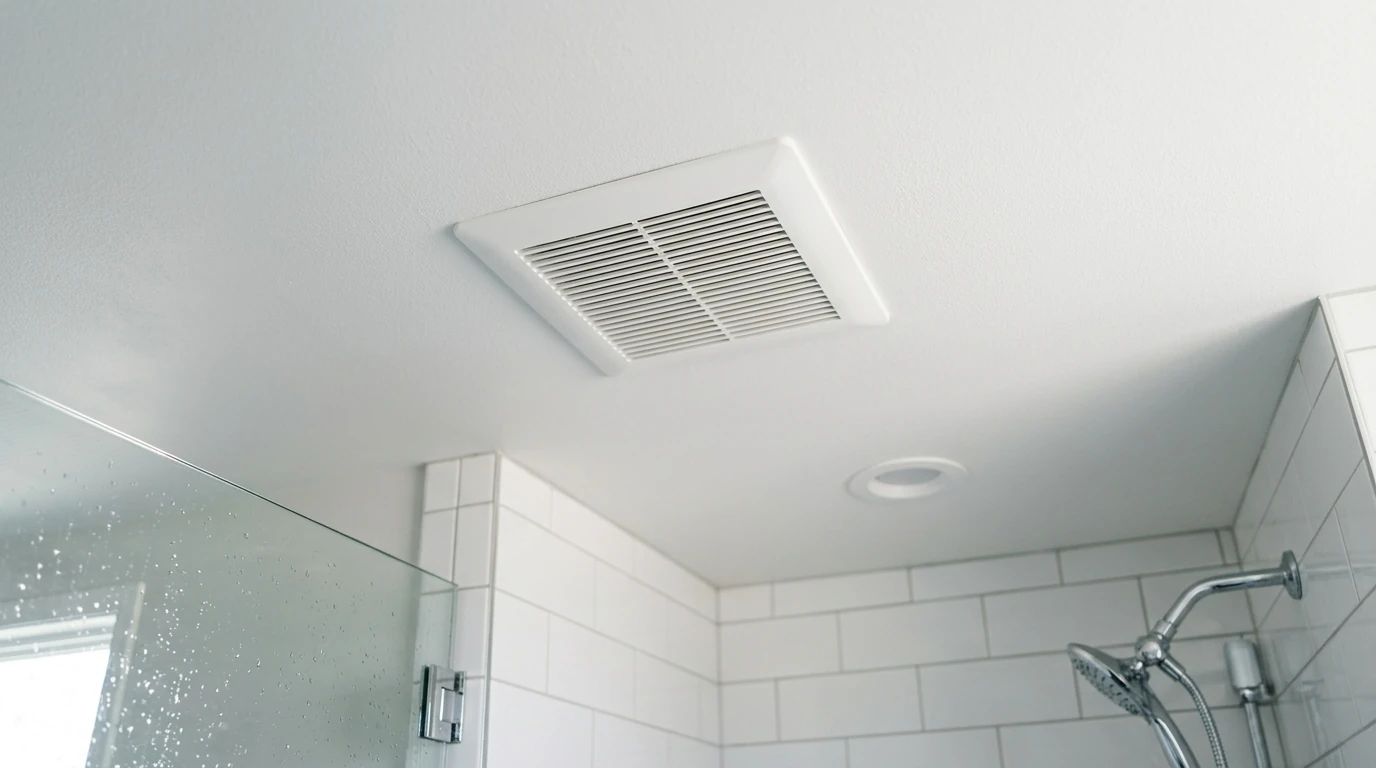
Builder-grade fans from the 1990s and 2000s often run at 3 to 4 sones, loud enough that people skip them. A modern fan rated under 1 sone moves more air while you barely hear it. We check whether the existing housing can take a retrofit grille kit or whether the whole box needs to come out, confirm the duct size matches the new fan's outlet, and replace the damper so cold air stops leaking back down in winter. Most straight replacements finish in a single visit without cutting new drywall.
Venting through the roof vs soffit
A soffit termination looks tidy, but warm wet air leaving under the eave can be pulled straight back into the attic through the intake vents. A roof cap with a proper damper, or a sidewall cap where the bath sits on an outside wall, sends the moisture away from the building. We run insulated flexible or rigid duct with the shortest path we can, slope it so condensation drains out rather than back into the fan, and seal every joint with foil tape. On a steep roof we flash the cap into the shingles rather than relying on sealant alone.
Humidity-sensing fans
The fan only helps if it runs long enough after the shower ends, and most people switch it off with the light. A humidity-sensing fan or a separate humidistat control turns the fan on when the room crosses a set point and leaves it running until the air dries. For kids' baths and rentals that is the most reliable fix we install. We can also add a timer switch where the existing wiring does not allow a sensor, so the fan keeps running twenty minutes after you walk out.
How Minneapolis homes shape this job
Roughly 43 percent of Minneapolis homes were built before 1939, long before a mechanical bath fan was a normal fixture, so a lot of the fans we add go into baths that relied on a window. In winter that window stays shut. With January lows averaging around 9 degrees, a duct run through an unheated attic needs insulation and a steady slope to the cap, or it frosts up and drips back through the grille by February.
What is included
What a fan install includes
- Fan sized to the room's floor area
- Sealed housing fixed to the ceiling joists
- Insulated duct with foil-taped joints
- Roof or sidewall cap with a working damper
- Existing attic-dumping duct removed or rerouted
- Switch, timer or humidity control wired
- Airflow check at the grille
- Old fan hauled away
- Drywall patched where we opened it
Step by step
How a bath fan install runs
- 1
Measure the room and check the old duct
We size the fan by floor area, then follow the existing duct to see where it actually ends.
- 2
Pick the fan and control
We match sone rating, CFM and the control to how the bath is used and what the wiring allows.
- 3
Set the housing
The fan box is fixed to the joists and sealed to the ceiling so it does not leak attic air.
- 4
Run and seal the duct
Insulated duct goes to a roof or wall cap with the shortest path and every joint taped.
- 5
Test airflow and clean up
We check the damper, confirm the fan pulls at the grille, and patch any ceiling we opened.
Brands we service and install
Air quality equipment usually mounts on Carrier, Lennox, Trane or Goodman furnaces, with Honeywell controls.
Questions we get on the phone
Bathroom exhaust fan installation questions from Minneapolis homeowners
A common rule is about 1 CFM per square foot of floor, with a 50 CFM minimum. A bath with a jetted tub or a separate toilet room may need more, or two fans.
No. Attic vents are not sized to carry shower moisture, and wet air ending under the roof deck leads to frost, mold and wet insulation. The duct should end at a roof or wall cap.
Usually warm moist air is condensing in an uninsulated or sagging duct in a cold attic. Insulating the duct and giving it a steady slope to the outside cap normally stops it.
About twenty minutes. A timer or humidity-sensing control handles that without anyone remembering.
It stops new growth once the moisture leaves; existing stains still need cleaning and paint.
More from this category
Related work we handle
Get the bath fan vented the right way
Tell us which bathroom and what the fan is doing, and we will bring the right fan and duct to finish in one visit.