Answering 24/7
Duct sealing and duct repair in Minneapolis
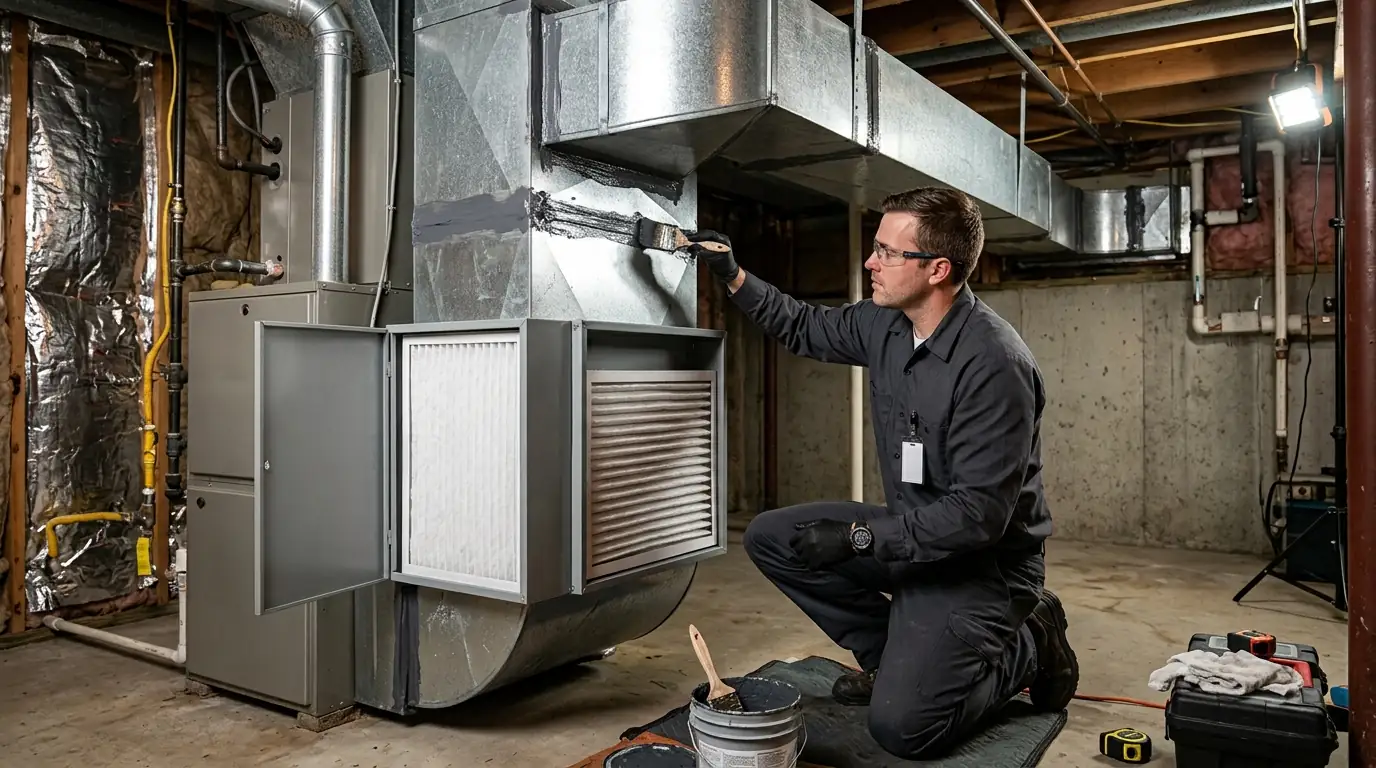
Leaky ducts heat the basement ceiling instead of the bedroom. We find where the air is escaping, seal the joints with mastic, reconnect runs that have come apart, and fix the return side most houses forget.
- 24/7 calls answered
- Minneapolis service office
- Supply and return both sides sealed
- Mastic not cloth tape
Quick answer
Duct sealing in a Minneapolis home means finding leaks at seams, takeoffs and boots and sealing them with mastic or foil tape, not cloth duct tape. Leaky basement trunk lines and disconnected runs are the most common problems, and they leave far rooms cold through a heating season that runs October to April.
Air Quality & Ducts
Where the air actually goes
Sheet metal ducts are assembled from pieces, and every seam, takeoff and boot is a place for air to leak. Over decades the original tape dries out and falls off, screws loosen, and a run in the joists gets knocked loose by a plumber or electrician. The air still leaves the furnace. It just does not reach the room.
Sealing is about the joints you can reach: basement trunk lines, takeoffs, the plenum and accessible branches. We fix those first, check airflow at the registers, and tell you plainly if a room needs a new duct rather than a sealed one.
Cost factors
What moves the price
Duct sealing is priced by how much duct is reachable and how much repair it needs.
- Accessible length. Unfinished basements are quick; finished ceilings limit what can be reached.
- Condition of joints. Loose cleats and missing screws are fixed before sealing.
- Disconnected or crushed runs. Each reconnected or replaced branch adds time and material.
- Return side work. Panned returns and added return paths add scope.
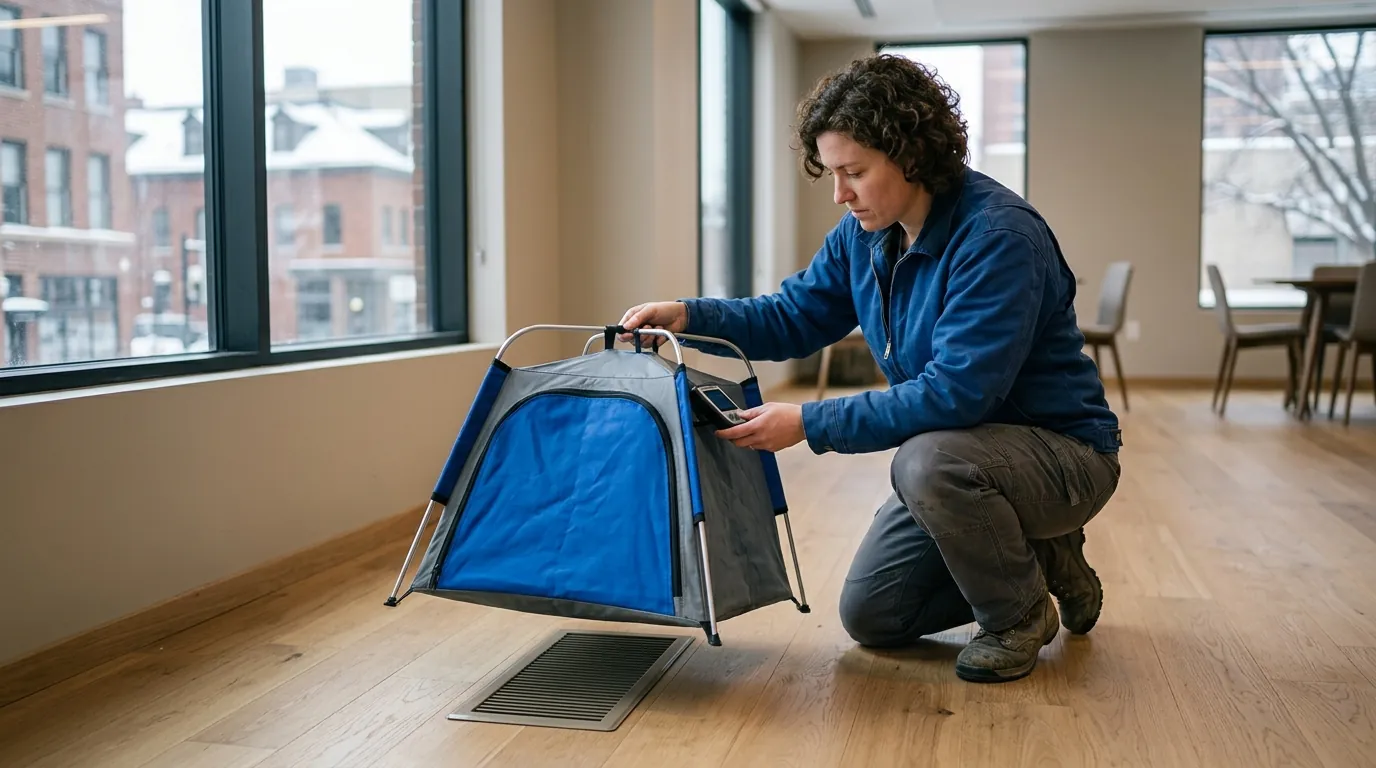
- Airflow testing. Before and after measurements show what changed.
- Insulation. Ducts in unheated spaces may need insulating after sealing.
- Access. Crawl spaces and attics take longer than basements.
Sealing leaky basement trunk lines
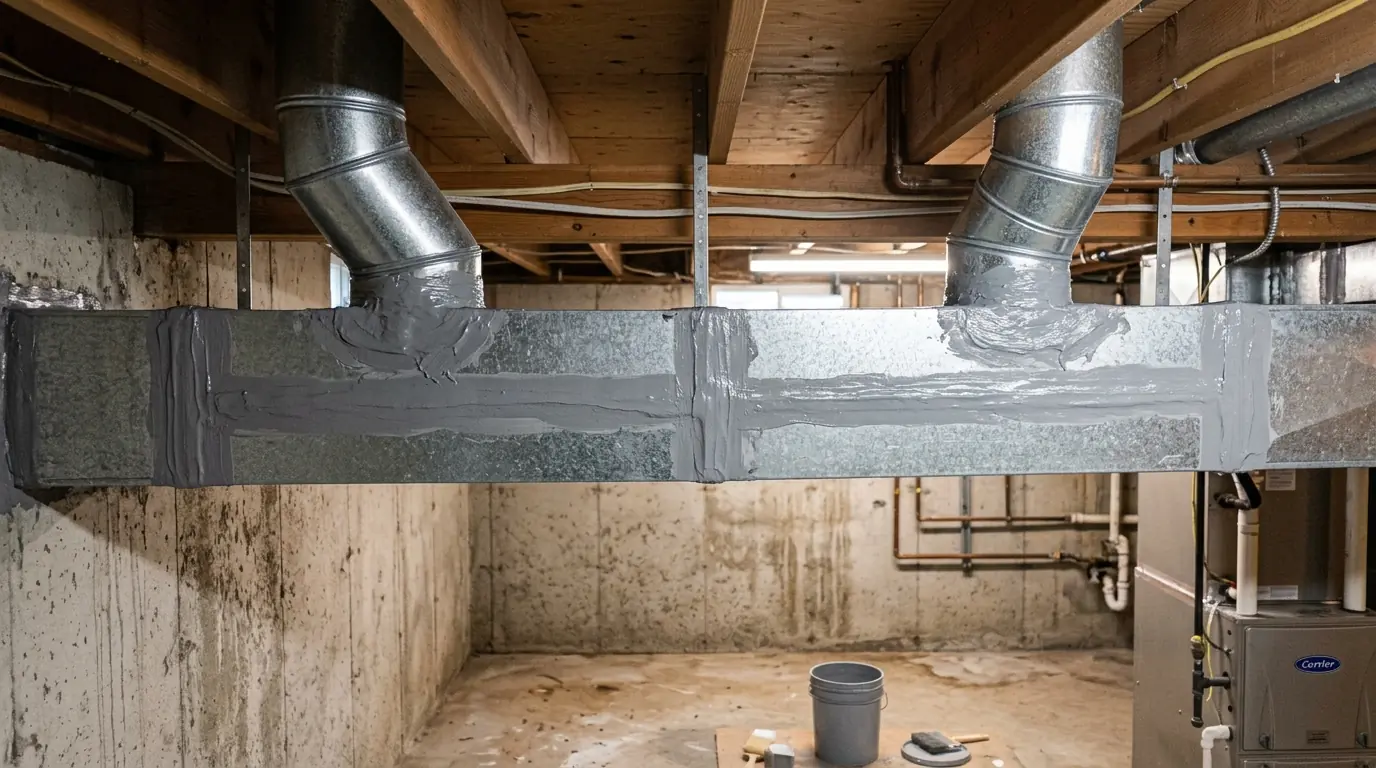
The main trunk lines running along the basement ceiling carry all of the furnace's air, so leaks there cost the most. We clean the seams, brush fiber-reinforced mastic over longitudinal seams, transverse joints and takeoff collars, and use UL-rated foil tape where mastic will not hold. Loose drive cleats and missing screws get fixed first so the sealant is not holding the duct together. In an unfinished basement this work is usually done in a day, and you feel it at the upstairs registers the next time the furnace runs.
Crushed or disconnected runs
A branch that has slipped off its takeoff dumps warm air into a wall cavity or joist bay, and the room it serves gets nothing. Flexible duct that was stepped on, pinched over a pipe or run with a tight bend chokes airflow the same way. We follow cold rooms back to their duct, reconnect and screw separated joints, replace crushed flex with a properly supported run, and seal the boot where it meets the floor or ceiling. It is often the quickest fix for a single cold bedroom.
Return air fixes
Most houses have plenty of supply registers and too few returns. Air that cannot get back to the furnace leaves rooms pressurized and stuffy, and a leaky return in a basement pulls in dusty, damp air instead of house air. We seal return joints and panned joist returns, which are simply joist bays covered with sheet metal and are rarely tight, then check whether upstairs rooms need an added return path or a transfer grille. Better returns quiet the system and let the supply side deliver what it is sized for.
How Minneapolis homes shape this job
Minnesota's heating season runs roughly October through April, so a duct leak here is not a minor loss; it runs for seven months. Much of the Twin Cities housing stock dates from the early 1900s to the 1960s, with small duct runs or forced air added to houses built for boilers, and those retrofit systems are where we find the most open seams and panned returns. Sealing them is usually cheaper than any equipment upgrade that promises the same result.
Step by step
How a duct sealing visit runs
- 1
Measure airflow
Registers checked to find the rooms that are short.
- 2
Trace and inspect
Duct runs followed from the furnace to the weak rooms.
- 3
Repair connections
Loose joints screwed, disconnected runs reattached, crushed flex replaced.
- 4
Seal
Mastic and foil tape applied to seams, takeoffs, boots and returns.
- 5
Measure again
Airflow rechecked so you can see the difference.
Compare
What you can seal yourself
| Homeowner | Our technician | |
|---|---|---|
| Reachable seams in the basement | Possible with mastic, not cloth tape | Every joint sealed and tested |
| Reconnecting a slipped branch | Possible if it is reachable | Screwed, sealed and supported |
| Finding the leak you cannot see | Hard without testing | Airflow measured room by room |
| Returns and plenum | Easy to seal the wrong side | Sealed with the system running |
Cloth duct tape is the one material we remove on nearly every job. It fails within a few years on warm ducts.
Questions we get on the phone
Duct sealing and repair questions from Minneapolis homeowners
When the leaks are in reachable basement trunk lines and returns, yes. Rooms at the end of the runs usually warm up noticeably.
Not by hand. We seal what can be reached and check whether the hidden runs are delivering air.
Cloth duct tape dries out and falls off warm ducts. Mastic and UL-rated foil tape hold for decades.
Most unfinished basements take a day or less.
Yes. The same leaks waste cooled air in summer.
More from this category
Related work we handle
Ductwork Installation
Boiler Home to Forced Air Conversion and more.
Details on adding supply runs to an additionGet the air to the rooms that need it
Call to book an airflow check, and we will show you where your ducts are losing air before sealing anything.