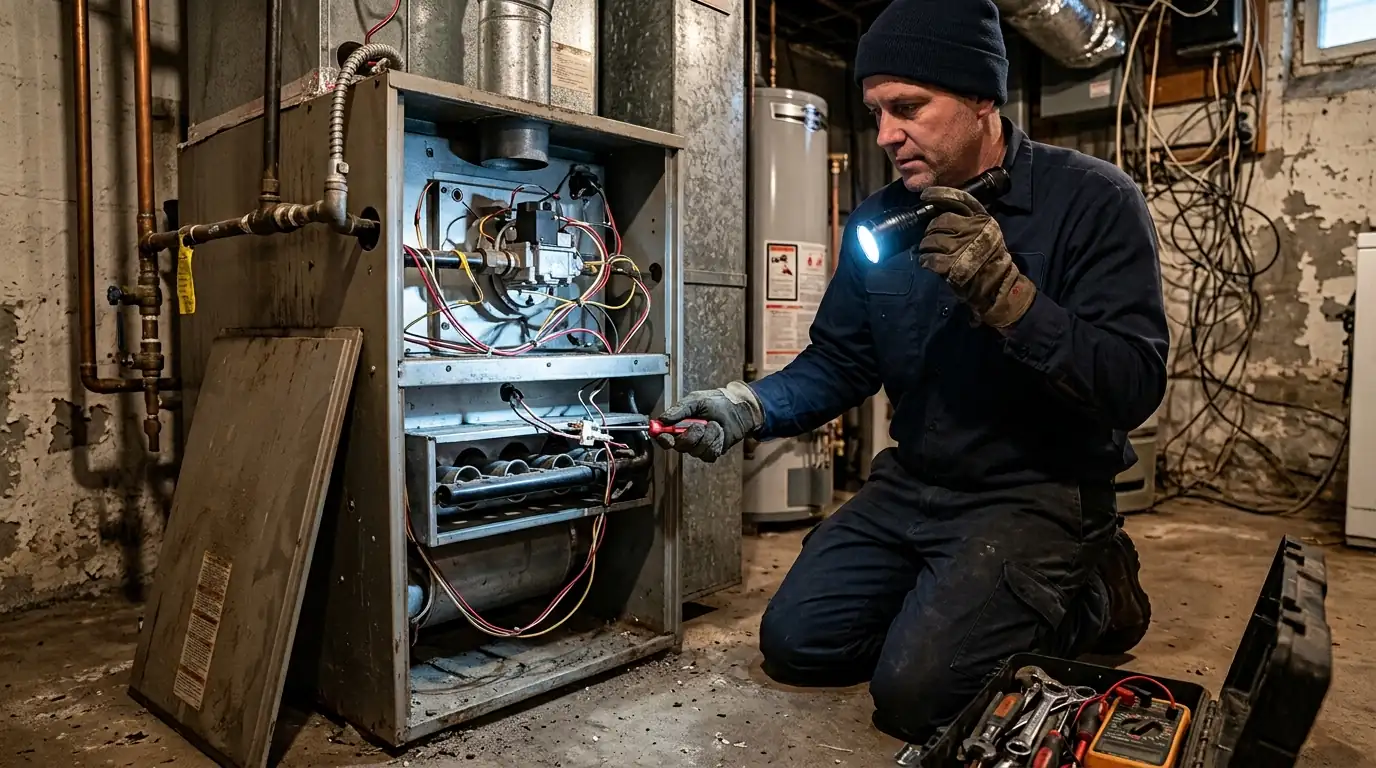
Furnace, boiler, AC, heat pump
Emergency heating and cooling repair in Minneapolis
A furnace that quits at 20 below is not something that waits until Monday. We answer the phone at any hour, tell you what to check while the truck is on its way, and get the heat or cooling back on.
- 24/7 calls answered
- Minneapolis service office
- Any system heat or cooling
- Nights and weekends answered live
Quick answer
For emergency HVAC repair in Minneapolis, call and a person answers 24 hours a day, then a technician is dispatched from our Cahill Rd service office in southwest Minneapolis. Before we arrive, check the thermostat, the furnace switch, the filter and outside vent pipes for snow; those four clear a surprising number of no-heat calls.
Step by step
What happens when you call after hours
- 1
A person answers
Tell us the system, the symptoms and who is in the house.
- 2
Safe checks by phone
We walk you through the checks that are safe to do.
- 3
Technician dispatched
The truck leaves with the common parts for your system.
- 4
Diagnose and restore
Heat or cooling brought back first, safely.
- 5
Plan the rest
Any bigger repair is scheduled or priced on the spot.
Warning signs
Signs it is time to call
- Gas smell near the furnace, boiler or water heater
- Carbon monoxide alarm sounding
- No heat and the house below 60 degrees
- Boiler relief valve discharging water
- Water pouring from the furnace or AC
- Burning smell or smoke from the equipment
Heating
What counts as an emergency
No heat in winter is always an emergency here: pipes freeze and people get cold fast. So is a gas smell, a carbon monoxide alarm, a boiler relief valve discharging, water pouring from equipment, or no cooling during a heat wave when someone in the house is elderly or unwell.
When you call, tell us the system, what it is doing, the indoor temperature and who is in the house. That sets the priority. While the technician drives, we will walk you through safe checks that sometimes fix the problem before we get there.
Timing
How quickly heat or cooling comes back
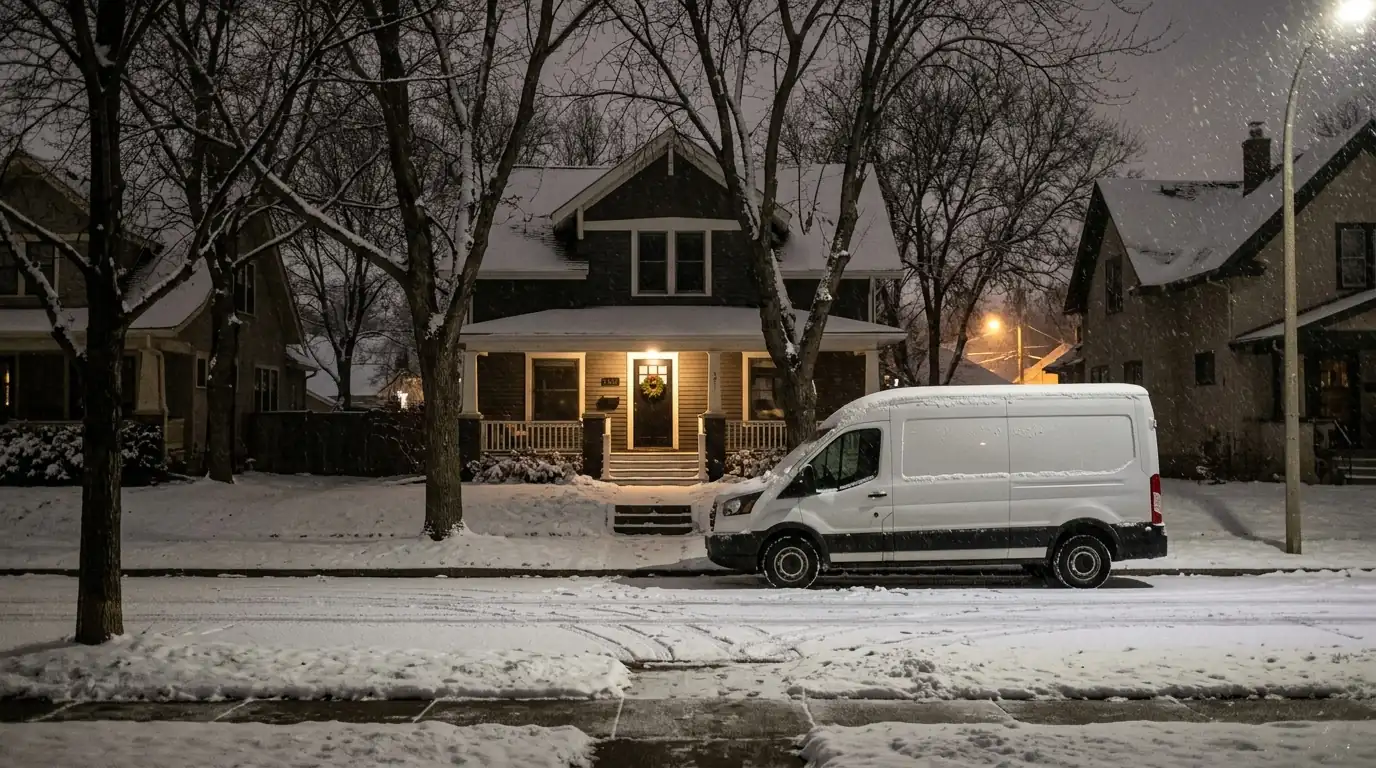
Most emergency calls are ignitors, flame sensors, capacitors, pressure switches and frozen coils, and those are usually fixed within an hour or two of the technician arriving because the parts ride on the truck. When a part has to be ordered, we set up temporary heat so the house and pipes stay safe until the repair is finished.
No heat overnight
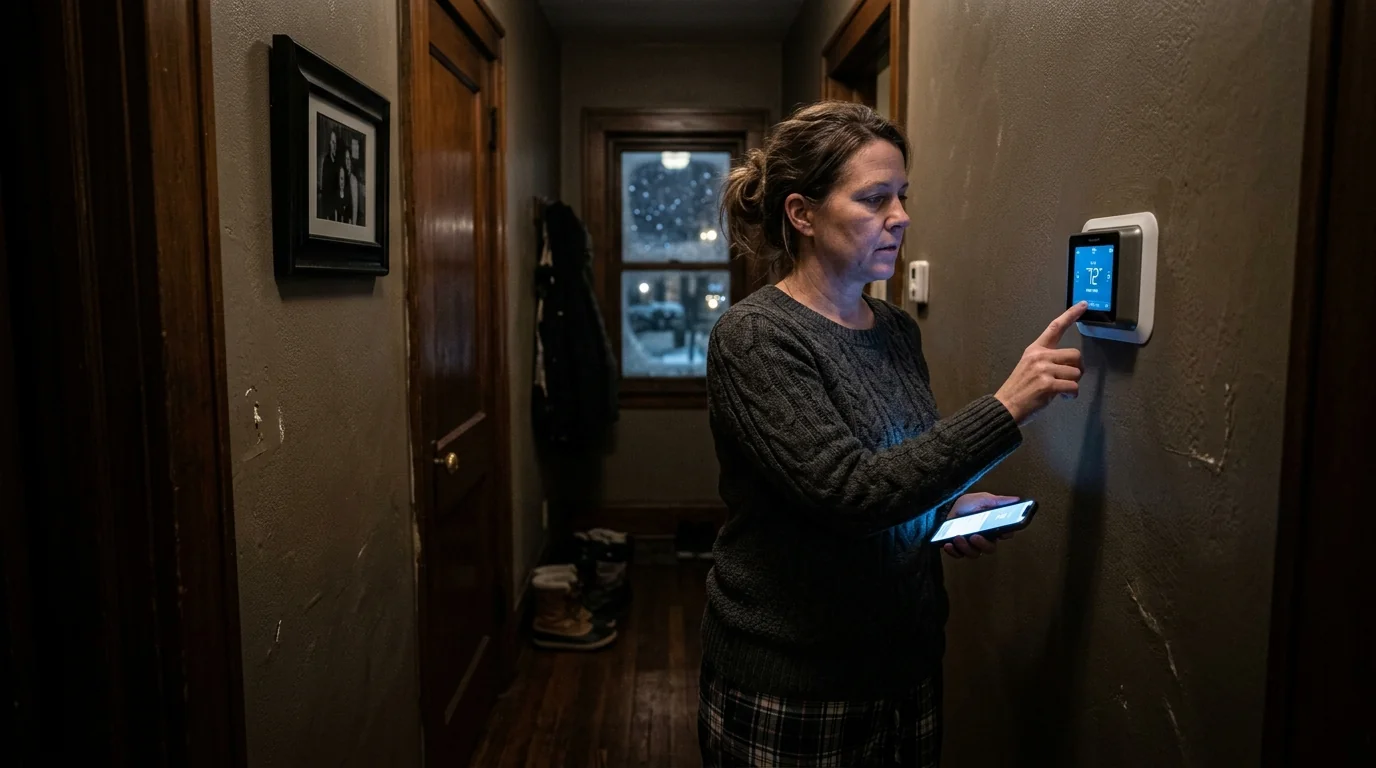
If the furnace or boiler stops at night, first confirm the thermostat is set to heat and its batteries are good, the furnace service switch is on, the filter is not solid with dust, and the white PVC pipes outside are clear of snow. If the furnace control is blinking, note the pattern. Then call. While you wait, open cabinet doors under sinks on outside walls and close off unused rooms. Do not use an oven or grill for heat; space heaters should stay clear of anything that can burn.
No cooling in a heat wave
When the AC quits in July, check that the thermostat is on cool and set below room temperature, the breaker and the outdoor disconnect are on, and the filter is clean. If you see ice on the copper line or the indoor coil, turn cooling off and run the fan so it can thaw. Then call. Keep blinds closed on the sunny side, run fans, and keep anyone vulnerable in the coolest room, usually the basement, until the technician arrives.
Furnace short cycling
A furnace that fires for a minute, shuts off and restarts over and over is protecting itself. The usual causes are a dirty flame sensor, a clogged filter overheating the heat exchanger, a blocked vent tripping the pressure switch, or a failing limit switch. It may keep the house somewhat warm, but it is working toward a lockout, and repeated cycling wears parts fast. Replace the filter if it is dirty, check the outside vents, and call if it continues; this is often a quick fix on the first visit.
Frozen coil or line set
Ice on the indoor coil or the refrigerant line means the system has lost airflow or refrigerant. Running it frozen can send liquid refrigerant to the compressor and damage it. Turn the system off at the thermostat, set the fan to on so the ice melts, and put towels around the furnace for the meltwater. Check the filter. When you call, tell us how long it has been iced; we will find whether it is a blower, a clogged coil or a leak before restarting it.
Local conditions that change the fix
Emergency calls go out from our service office on Cahill Rd, in the Edina postal area of southwest Minneapolis, and from our head office in Carver, about 20 miles southwest along the Highway 212 corridor. Between the two, a no-heat call from the city or from the southwest suburbs is routed to whichever truck can get there soonest, which matters most on the coldest nights when every heating company's phone is ringing.
Brands we service and install
The furnaces we repair and replace most are Carrier, Lennox, Trane, Bryant and Goodman, with Amana and Rheem close behind.
Need help right now?
Call any hour. If you smell gas, leave the house first and call the gas utility, then call us.
Questions we get on the phone
Emergency HVAC repair questions from Minneapolis homeowners
Yes. Calls are answered 24 hours a day, seven days a week.
Leave the house, call the gas utility from outside, and do not switch lights or appliances on or off.
Any time the house is dropping in winter. Call early rather than waiting until pipes are at risk.
We carry the common parts for most brands of furnaces, boilers and air conditioners.
Only if pipes have already frozen or burst. Otherwise keep faucets on outside walls dripping and cabinet doors open until heat is back.
Cost factors
What moves the price
Published 2026 Minneapolis service-call rates run about $115 to $210. Emergency repairs are priced from there by the part and the hour.
- Time of the call. Late-night, weekend and holiday calls may cost more.
- System type. Furnace, boiler, heat pump and AC repairs use different parts.
- The failed part. Sensors and capacitors cost far less than motors or valves.
- Parts availability. Uncommon parts may need a second visit.
- Temporary heat. Electric heaters for a long repair are provided when needed.
- Safety shutdowns. A cracked heat exchanger or gas leak means a safe shutdown first.
- Access. Attics, crawl spaces and roofs take longer at night.
More from this category
Related work we handle
From our guides: What to check first when the heat goes out.
Call now, any hour
A person answers and a technician is dispatched with the parts for your system.