By Eloise Rasmussen, Heating and Cooling Guides Editor. Updated September 2026.
Quick answer
When the heat goes out in a Minneapolis winter, first check four things: the thermostat is set to heat with good batteries, the furnace switch is on, the filter is not clogged, and the white PVC vent pipes outside are clear of snow. If the heat is still off, call, and protect pipes while you wait.
If you smell gas or a CO alarm sounds
Stop here. Do not look for the problem, and do not switch lights or appliances on or off. Get everyone out of the house, then call the gas utility or 911 from outside. Once the utility has cleared the house, call a heating technician to find and fix the cause.
A carbon monoxide alarm is not something to reset and ignore. It can mean a cracked heat exchanger, a blocked flue or a water heater spilling exhaust, and none of those are visible from the basement stairs.
Check the thermostat and the power
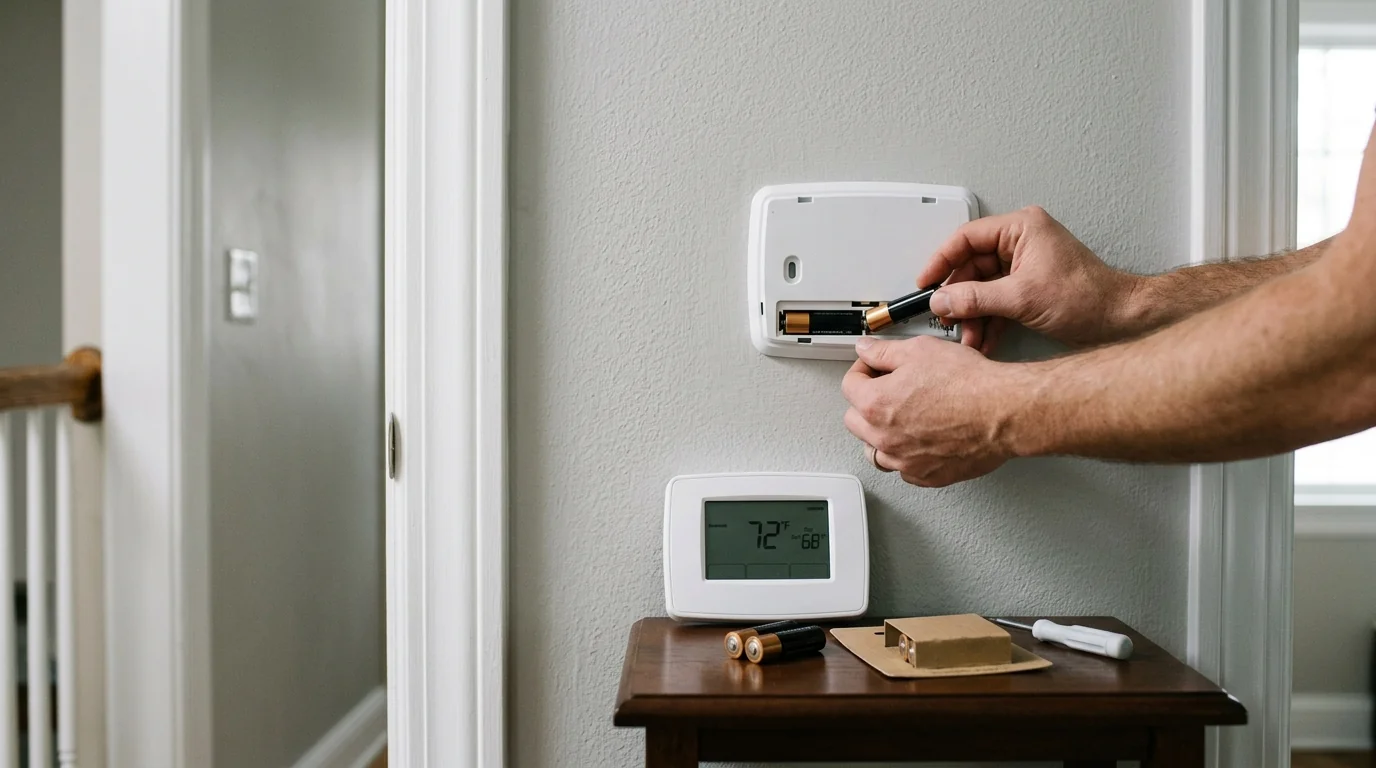
It sounds obvious, but a thermostat set to cool, set to off, or with dead batteries accounts for a real share of no-heat calls. Make sure it says heat, set it a few degrees above room temperature, and replace the batteries if the screen is faint or blank.
Next, find the furnace's service switch. It usually looks like a light switch on the wall or ceiling near the furnace, and it is easy to flip by accident. Check the breaker labeled for the furnace too. Boilers have a similar emergency switch, often at the top of the basement stairs.
Check the filter and the vents outside
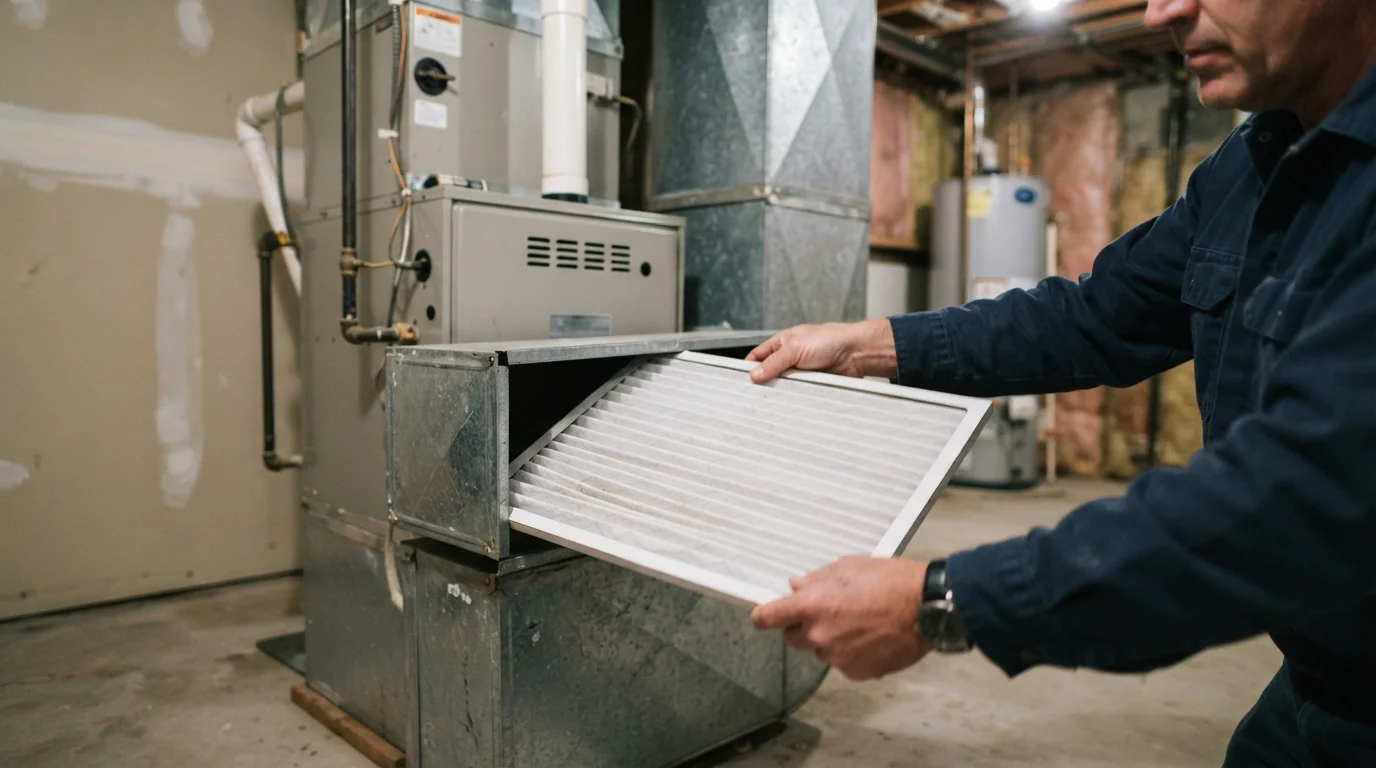
A filter caked with dust can overheat a furnace until it shuts itself off on its safety limit. If yours is gray and solid, replace it or pull it out for now and let the furnace try again.
High-efficiency furnaces vent through two white PVC pipes on an outside wall. After a heavy snow or a drift, those can be buried or iced over, and the furnace shuts down on a pressure switch fault. Clear the snow gently from around both pipes without damaging them. January is the snowiest month here, and this one check clears a lot of midwinter calls.
Read the blinking light
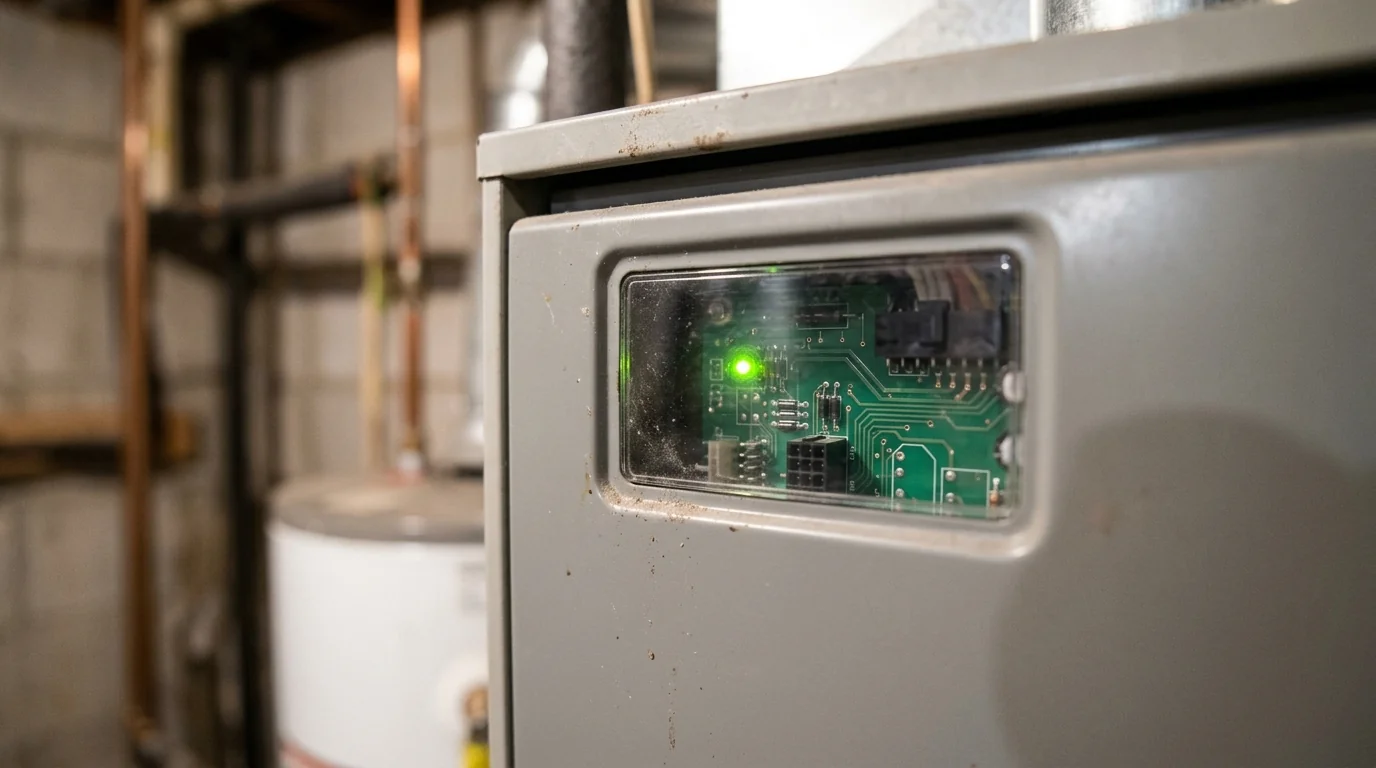
Most furnaces have a small window on the lower panel with a light that blinks a pattern. The label on the inside of the door explains what each pattern means: a flame sensing fault, a pressure switch open, a limit tripped. Write down the pattern before you call; it helps the technician bring the right part.
It is fine to turn the furnace off and on once at its switch to see if it restarts. If it locks out again, stop resetting it. Repeated resets on a furnace with a real fault can make things worse.
If your heat comes from a boiler
On a hot water boiler, look at the pressure gauge. Most residential systems sit around 12 to 15 psi when cold. If it reads near zero, the system has lost water, and the boiler may have shut down to protect itself; do not keep resetting it. If the gauge is near 30 and the relief valve is dripping or spraying, turn the boiler off at its switch and call.
On a steam boiler, check the glass sight tube on the side. You should see water about halfway up. If the glass is empty, the low-water cutoff has done its job and shut the burner off. Adding water to a hot, empty steam boiler can crack it, so leave it for the technician unless you have been shown how. More on both systems is on our radiator and boiler repair page.
If you have a heat pump
A heat pump that stops heating usually hands the job to its backup heat, so the house may stay warm while the electric meter spins. If the thermostat shows auxiliary or emergency heat all the time, or the outdoor unit is a block of ice, the heat pump itself needs attention. Clear snow from around the outdoor unit and make sure nothing is dripping onto it from the roof. Leave emergency heat on only if the heat pump has clearly failed, and call.
Keep the house and pipes safe while you wait
With Minneapolis winters regularly reaching 15 below, pipes on outside walls are the first thing at risk. Open cabinet doors under sinks on exterior walls, let those faucets drip, and close off rooms you are not using. Keep interior doors to the rooms with plumbing open.
Use electric space heaters only with clear space around them and never overnight near bedding or curtains. Never use a gas oven, a grill or a camp heater indoors for heat. If anyone in the house is elderly, very young or unwell, tell us when you call so the visit is prioritized.
When you are ready, our emergency heating and cooling page explains what happens after you call, and the furnace repair guide to common failures covers the parts we replace most often.
Questions we get on the phone
Questions readers ask
It may be failing to light, or the fan is running without heat. Check the thermostat is on heat and read the blinking light; then call.
Once is fine. If it keeps locking out, something is failing and it needs a technician.
Pipes on outside walls can freeze well before the living space feels dangerous. Take the precautions as soon as the heat is out in winter.
Only if a pipe has already frozen and burst. Otherwise keep exterior-wall faucets dripping.
Yes. Blocked PVC vent pipes are a common winter shutdown on high-efficiency furnaces.
The system type, the blinking pattern, the indoor temperature, and whether anyone at home is vulnerable.