By Eloise Rasmussen, Heating and Cooling Guides Editor. Updated September 2026.
Quick answer
When choosing an HVAC contractor in Minneapolis, ask whether they run a room-by-room load calculation, who pulls the city permit, what exactly the written quote includes, whether rebate paperwork is filed for you, and how venting and the water heater will be handled.
Ask how they sized the equipment
The single best question is how the contractor decided what size furnace, air conditioner or heat pump you need. The right answer involves a load calculation: square footage, insulation, windows, air leakage and duct capacity, room by room. The weak answer is that it matches what you have now.
Many Minneapolis homes have been insulated and re-windowed since their original equipment went in, so the old nameplate is often too big. An oversized furnace short cycles and wears out early; an oversized air conditioner leaves the house cold and damp. Sizing is where a careful contractor earns the job.
Ask who pulls the permit
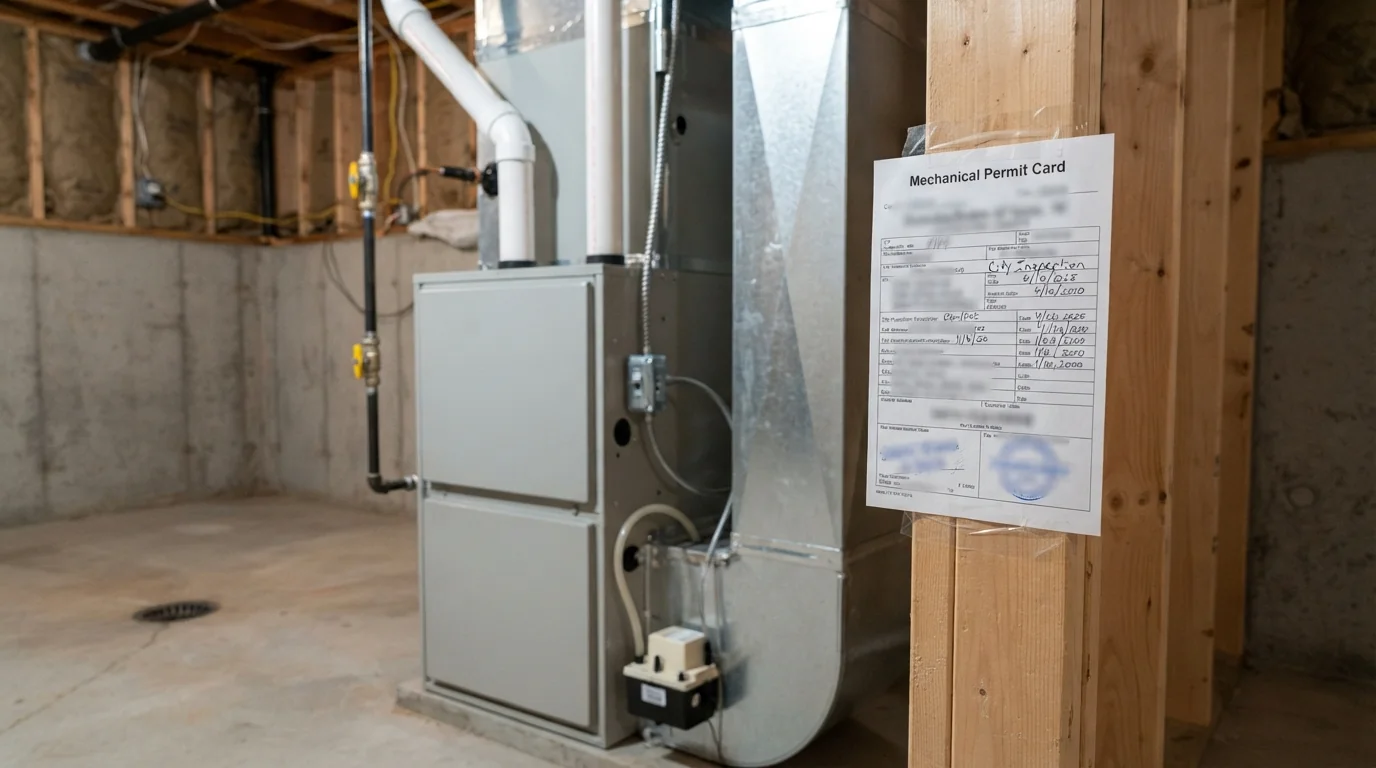
In Minneapolis a furnace replacement needs a permit, with a flat $216.60 fee, and an inspection. Other HVAC permits run $84.20 to $216.60. The contractor should pull the permit in their name and meet the inspector.
A contractor who suggests skipping the permit to save a little money is also skipping the inspection that checks their gas connection and venting, and leaving you a question to answer when you sell the house. It is a reasonable reason to keep looking.
Get a written quote that lists the scope
A good quote names the equipment by model, its efficiency and staging, and lists the work: removal of the old unit, venting plan, condensate drain, gas connection, duct or return changes, thermostat, permit, and startup. It should say what happens to the water heater if the furnace moves off the chimney.
Compare quotes line by line. When one is much lower, it usually leaves out one of those items, and the item comes back later as an extra.
Ask what happens to the water heater and venting
In older Minneapolis homes the furnace and water heater often share a chimney. When the furnace is replaced with a 95 percent unit venting through PVC, the water heater is left alone in a flue that may now be too large for it to draft safely, especially in cold weather. A careful contractor raises this before you ask, and the quote says whether the fix is a chimney liner, a power-vent water heater, or a draft test showing the existing setup is fine.
Ask too where the new PVC vent pipes will exit. They need clearance from windows, doors, the gas meter and the typical snow line, and a termination that ends up under a deck or behind a shrub will shut the furnace down every time it snows.
Ask about rebates and paperwork
Xcel Energy and CenterPoint Energy rebates of roughly $200 to $400 apply to qualifying 95 percent and higher furnaces, and Xcel offers up to $1,500 on qualifying cold-climate heat pumps. The federal 25C tax credit expired at the end of 2025. Ask the contractor to confirm your equipment qualifies before you sign and whether they file the forms, because a missed deadline or a wrong model number is the most common way rebates get lost.
Ask what happens on installation day
Installation is not finished when the furnace fires. Ask what the startup includes: a combustion check and carbon monoxide test, gas pressure and temperature rise measured against the furnace's rating, a draft test on the water heater if it stays on the chimney, and airflow checked at the registers. For an air conditioner or heat pump, ask how the refrigerant charge is set; weighing it in and verifying with temperatures is the right answer.
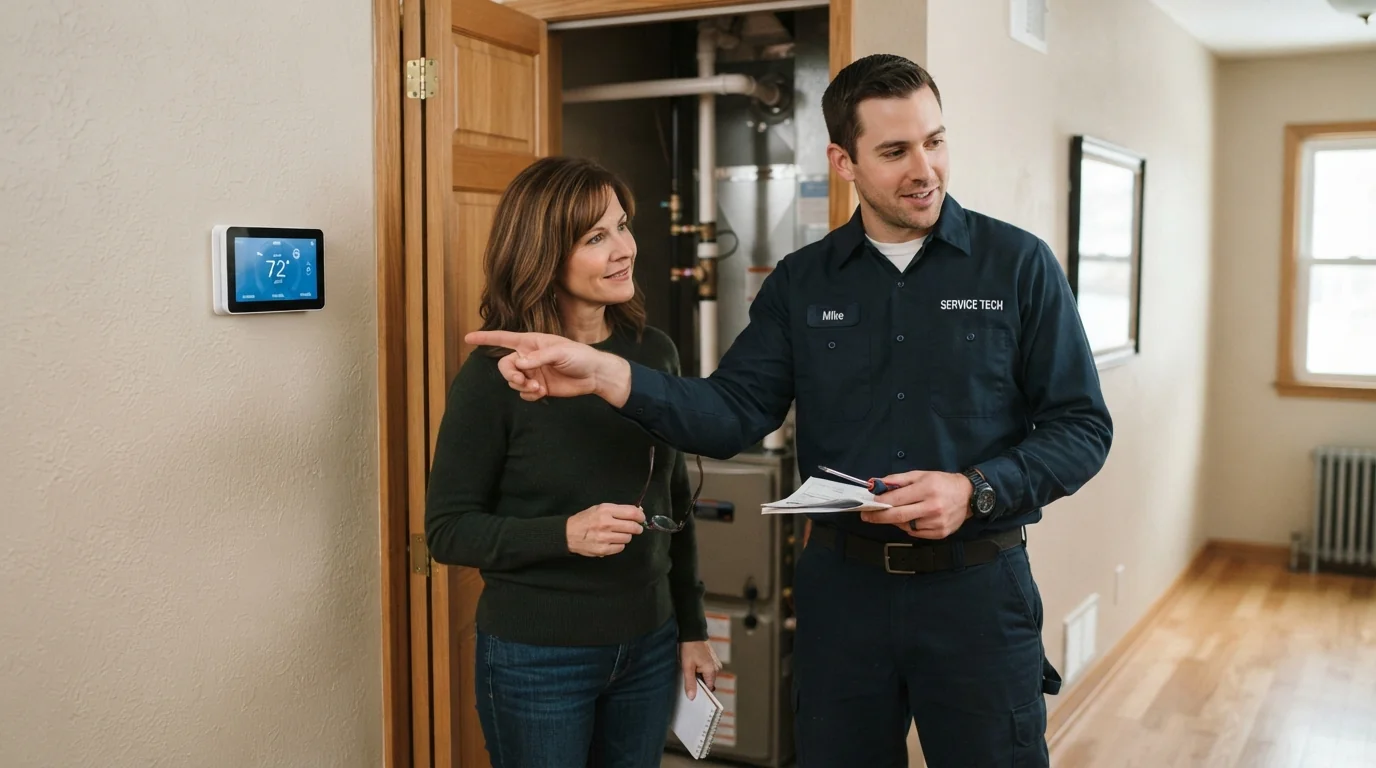
Ask who shows you the new system before the crew leaves: the filter size and location, the thermostat settings, where the condensate drains, and who to call if something is off the first cold night. A contractor who plans that walkthrough usually plans the rest of the job carefully too.
Red flags worth walking away from
A price given over the phone for a replacement without anyone seeing the house. Pressure to sign the same day. A recommendation to replace a furnace without showing you the reason, such as the crack, the reading or the repair history. A plan to reuse a chimney for a new condensing furnace. No mention of the permit.
None of those prove a contractor is bad, but each one is a reason to ask more questions. When you are ready, our furnace installation page and the furnace cost guide show how we price and install.
Questions we get on the phone
Questions readers ask
Two or three is reasonable for a replacement. Compare them by scope, not just price.
Yes, for any replacement. Equipment should be sized from the house.
The installing contractor pulls it and meets the inspector.
Startup checks, combustion and CO testing, airflow measurement and a walkthrough of the new system.
They help, but the quality of the quote and the questions asked are better signals.
Not by itself, but check that it includes the same scope as the others.