By Eloise Rasmussen, Heating and Cooling Guides Editor. Updated September 2026.
Quick answer
A furnace replacement in Minneapolis typically costs $3,800 to $9,500 installed in 2026, with most two-stage 95 to 96 percent AFUE furnaces landing between $5,000 and $7,500, according to Northern One Hour's Twin Cities figures. Add the city's flat $216.60 permit, and subtract $200 to $400 in utility rebates on qualifying units.
The published 2026 ranges
Several sources publish Minneapolis and Twin Cities furnace prices, and they broadly agree. Northern One Hour puts installed replacement at $3,800 to $9,500, with most homeowners paying $5,000 to $7,500 for a mid-tier two-stage condensing furnace. Angi's Minneapolis figures put most new furnaces at $2,819 to $6,879, with some projects reaching $13,100.
The gap between those ranges is mostly scope. A low number usually means a straight swap of similar equipment with no venting changes. A high number usually means a premium modulating furnace, a venting conversion, duct changes, or a furnace and air conditioner replaced together. Treat any range as a planning figure; the price for your house comes after someone measures it.
What pushes a quote up or down
Efficiency and staging are the biggest equipment choice. Single-stage 95 percent furnaces cost least; two-stage 96 percent units are the most common choice here; modulating furnaces cost the most and make sense mainly in larger homes, zoned systems or heat pump pairings.
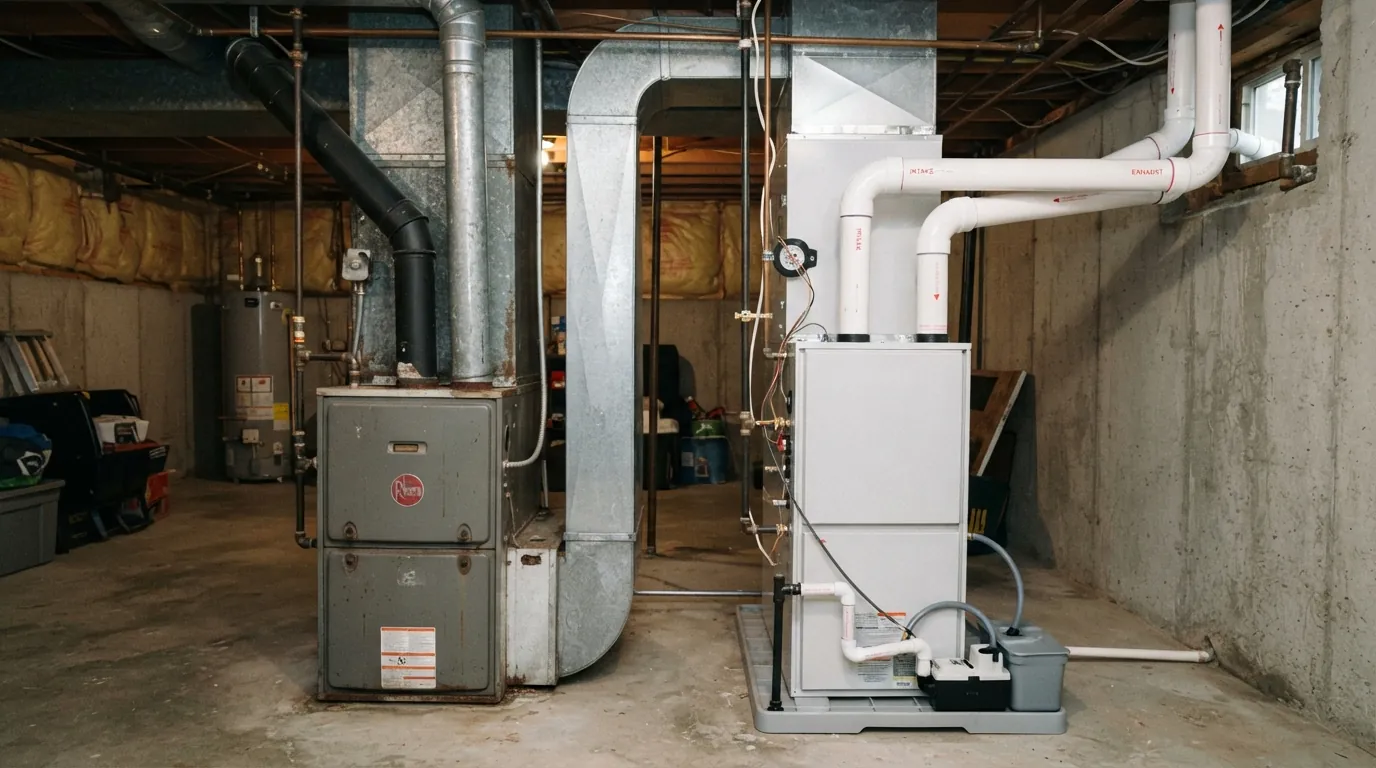
Venting is the most common surprise. Minnesota code steers most replacements away from 80 percent chimney-vented furnaces, so an older house usually converts to PVC intake and exhaust pipes through a side wall. Furnace Direct's 2026 guide puts that conversion at about $400 to $800. It can also leave the water heater alone in a chimney that is now too large for it, which may mean a liner or a power-vent water heater.
Size matters less than people think, and it cuts both ways. A proper load calculation often shows an older, since-insulated house needs a smaller furnace than the one it has. Undersized ducts or returns, on the other hand, may need sheet metal work so the new furnace can breathe.
Permits, inspections and rebates
The City of Minneapolis charges a flat $216.60 permit fee for a furnace replacement, according to Angi, and the job is inspected. A contractor who offers to skip the permit is saving you very little and leaving a problem for your next home sale.
Rebates offset part of the cost. Northern One Hour reports that Xcel Energy and CenterPoint Energy rebates of roughly $200 to $400 each still apply to qualifying 95 percent and higher furnaces in 2026, with larger amounts for income-qualified customers. The federal 25C tax credit expired at the end of 2025, so it no longer applies to equipment installed this year. Ask whoever quotes you to confirm the model qualifies before you sign, and to file the paperwork.
Replacing the air conditioner at the same time
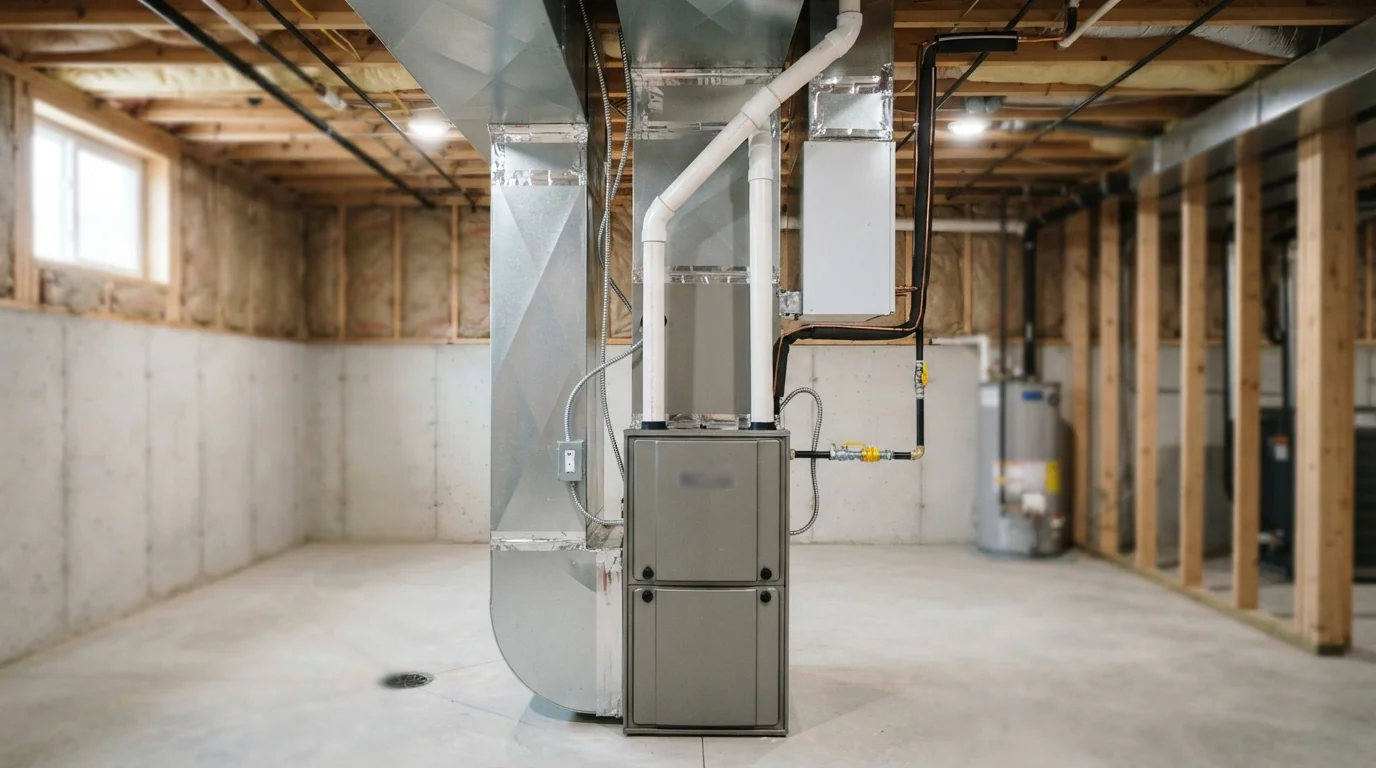
If the air conditioner is about the same age as the furnace, it is worth pricing both together. The indoor coil sits on top of the furnace and has to be removed during a furnace swap anyway, and newer AC systems use R-454B refrigerant that an old coil cannot handle. Angi puts the average Minneapolis furnace and AC replacement at $7,860, with most homeowners spending $5,240 to $13,100.
If the AC is younger and working well, there is no reason to replace it with the furnace. A good contractor will price the furnace alone and the pair together and let you compare, rather than bundling by default.
Repair or replace: the honest signals
Not every furnace that breaks needs replacing. An ignitor, flame sensor, capacitor or pressure switch is a routine repair even on an older furnace, and it would be poor advice to replace a sound 12 year old unit over a part that costs a fraction of a new one.
The signals that point toward replacement are different: a cracked heat exchanger, which is a safety problem rather than a comfort one; a furnace past 15 to 20 years that has needed several repairs in one season; a repair quote approaching a third of the cost of a new furnace; or an 80 percent furnace in a house where the family also wants lower gas bills. Minnesota's heating season runs roughly October through April, and Furnace Direct estimates moving from 80 to 95 percent efficiency saves about $300 to $600 a year on gas here, which shortens the payback on an older unit.
If a technician recommends replacement, ask to see the reason: the crack on the camera, the combustion reading, or the repair history. A recommendation you can see is one you can trust.
How to compare quotes fairly
Line the quotes up by the same items: furnace model and efficiency, staging, whether a load calculation was done, venting plan, water heater plan, duct or return changes, permit, rebate filing, and removal of the old unit. A quote that is much lower often leaves one of those out.
Ask each contractor what size furnace they are proposing and how they got that number. If the answer is that it matches the old furnace, ask for a load calculation. Our furnace replacement service starts with one, and you can see the whole process there.
Questions we get on the phone
Questions readers ask
Published 2026 Twin Cities figures put most installed replacements between $3,800 and $9,500, with typical two-stage condensing furnaces at $5,000 to $7,500.
Yes. The city charges a flat $216.60 fee and inspects the installation. Your contractor should pull it.
The federal 25C credit expired at the end of 2025. Utility rebates from Xcel Energy and CenterPoint still apply to qualifying high-efficiency furnaces.
Differences in efficiency, staging, venting changes, duct work and whether the AC is included. Compare line by line.
Usually one day. A straight swap takes four to six hours, plus one to three hours if the venting changes to PVC.
If it is over 15 to 20 years old and needing repairs, planning ahead lets you choose equipment and timing rather than replacing it in a January emergency.